
The Town vs Portland Timbers II: Clash of Styles at PayPal Park
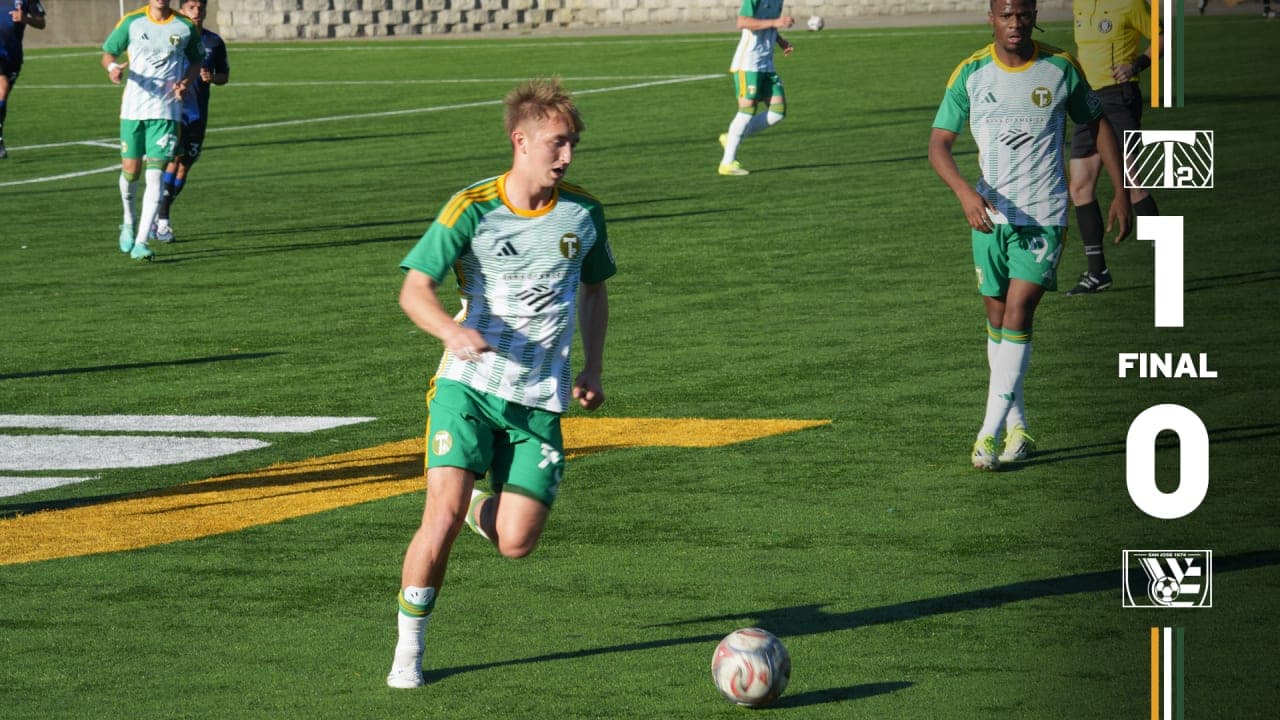
Under the lights of PayPal Park, this MLS Next Pro group-stage meeting between The Town and Portland Timbers II always felt like a clash of identities as much as a clash of standings. Heading into this game, The Town were an attacking outlier in the Pacific Division, fourth in their group and seventh in the Eastern Conference table with 17 points from 10 matches, built on a bold front‑foot approach. Portland, top of the Pacific and fourth in the Eastern Conference on 20 points, had lived a harder, more pragmatic life: 10 matches, six wins, no draws, four defeats, and a goal difference of 2 carved out of narrow margins.
Following this result, a 0–1 defeat at home, The Town’s season-long numbers tell a story of risk and reward that finally met a more disciplined traveler. Overall they had scored 21 and conceded 10 before kick-off, a goal difference of 11, with a striking split: at home they were averaging 2.8 goals for and 0.8 against, on their travels 1.7 for and 1.5 against. Portland, by contrast, arrived with perfect symmetry: 15 goals for and 15 against overall, 1.7 scored and 1.7 conceded at home, 1.3 scored and 1.3 conceded on their travels. Where The Town leaned into chaos, Portland had become experts at surviving it.
I. The Big Picture: A free-scoring host meets a ruthless visitor
The Town’s 5–0–5 record heading into this game was the embodiment of their form line “LWLWWLWWLL”: streaky, explosive, and unforgiving of their own mistakes. At home they had been devastating: three wins from four, 11 goals scored and just 3 conceded. Their biggest home win, 6–1, underlined a ceiling as high as any in the league.
Portland Timbers II came in as a different beast. Six wins from 10, no draws, and a profile that suggested knife‑edge football: 10 home goals for and 10 against, 5 goals scored and 5 conceded away. Their biggest away win, 0–3, sat uncomfortably beside a 5–0 away defeat; when Portland traveled, the floor could collapse, but the ceiling was high enough to blow teams away.
At PayPal Park, with The Town chasing a statement win against the Pacific Division leaders, the narrative was simple: could the home side’s attacking wave overwhelm a Portland team that, on their travels, had learned how to close games out?
II. Tactical Voids and Discipline: Edges in the margins
There were no confirmed absences in the data, so both coaches, Daniel de Geer for The Town and Jack Cassidy for Portland, had the luxury of full squads. That placed the spotlight squarely on tactical selection and in‑game discipline.
Season-long card distributions sketched two very different emotional profiles. The Town’s yellow cards peaked late, with 29.41% of their cautions arriving between 76–90 minutes, and another 23.53% in each of the 16–30 and 46–60 windows. They had also seen a red card between 31–45 minutes (100.00% of their reds in that period), hinting at a side that can boil over as the tempo spikes before half-time and down the stretch.
Portland’s yellows, by contrast, clustered in the middle and late phases: 32.00% between 61–75 minutes and 24.00% between 76–90, with a significant 16.00% from 46–60. They tend not to lose their heads early but become combative as matches tighten. No red cards across any time band underscored a controlled aggression, the kind of edge that travels well.
The penalty data added another layer. The Town had not taken a penalty this season: 0 total, 0 scored, 0 missed. Portland had stepped up twice and converted both, a 100.00% return. In a match decided by a single goal, that composure from the spot loomed in the background even if it did not directly feature on the night.
III. Key Matchups: Hunter vs Shield, Engine Room vs Enforcer
Without explicit positional data, the shapes had to be inferred from personnel and season tendencies. For The Town, the spine of F. Montali in goal and the outfield core of J. Heisner, A. Cano, N. Dossmann, and M. Kwende suggested a back line tasked with balancing the side’s aggressive attacking DNA. Ahead of them, the presence of R. Rajagopal and G. Bracken Serra offered connective tissue, while the attacking trident of Z. Bohane, K. Spivey, S. de Flores, and J. Donnery gave de Geer options to stretch the pitch horizontally and vertically.
The “Hunter vs Shield” battle, in structural terms, was The Town’s home attack against Portland’s away defense. At home, The Town were scoring 2.8 goals per game and conceding just 0.8. On their travels, Portland were conceding 1.3 and scoring 1.3. Portland’s away clean-sheet record of three from four overall clean sheets, combined with The Town’s single home clean sheet, suggested that if any side could bend the other out of its comfort zone, it would be the visitors’ defensive block.
For Portland, the presence of S. Joseph and D. Cervantes in the XI hinted at a stable defensive base and goalkeeping platform. The inclusion of C. Ondo and C. Ferguson added physical presence in the back line, while V. Enriquez and E. Izoita gave Cassidy the option of a double pivot or a staggered midfield screen. The creative and attacking load naturally gravitated toward L. Fernandez‑Kim, N. Santos, and, crucially, Colin Griffith.
Griffith’s statistical profile is curious: listed as a forward, rated first in the league’s scoring, assists, and card charts but without a recorded goal, assist, or card. It speaks less to his output and more to his prominence in this young season’s dataset. Yet his presence in the starting XI, combined with his designation as a forward, made him the natural “Hunter” in Portland’s structure, the player expected to exploit any gaps left by The Town’s high‑risk approach.
In the “Engine Room” duel, The Town’s midfielders like Rajagopal and Bracken Serra were charged with setting the tempo against Portland’s more balanced trio of Enriquez, Griffith, and Fernandez‑Kim. With The Town’s season form line showing surges of consecutive wins followed by sharp drops, their ability to control emotional and tactical rhythms through this central group was always going to be decisive.
IV. Statistical Prognosis: xG shadows and defensive reality
We do not have explicit xG numbers, but the season profiles allow a reasoned tactical prognosis. The Town’s overall averages of 2.1 goals for and 1.2 against, combined with their 11 goal difference (21 scored, 10 conceded before this fixture), paint them as a side whose matches tend to be high‑value in attacking terms. Portland’s 1.5 goals for and 1.5 against overall, with a goal difference of 2 (14 scored, 12 conceded before this match), suggest tighter margins, where chances are fewer but often decisive.
Translating those numbers into xG‑like expectations, The Town’s home attack would be projected to generate a higher shot volume and chance quality, especially in front of their own supporters. Portland’s away profile, with three wins from four and three clean sheets overall on their travels, points to a side comfortable conceding territory but protecting the central lane and penalty area with discipline.
Following this result, the 0–1 scoreline feels like the purest expression of Portland’s identity. They came into the home of one of the league’s most potent attacks and bent the game toward their own script: control the defensive box, manage the emotional spikes where The Town’s cards usually flare up, and trust that one moment of quality from the front line—likely through the movement and presence of players like Griffith, Santos, or Fernandez‑Kim—would be enough.
For The Town, the defeat is a reminder that their high‑ceiling model still needs a sturdier floor. With only one clean sheet overall before this match and a card profile that spikes late, their next evolution will depend on turning those late‑game surges into controlled pressure rather than frantic chases. For Portland Timbers II, this narrow win at PayPal Park reinforces their status as a playoff‑calibre traveler: not always pretty, rarely expansive, but relentlessly effective when the margins are thin.
Related News

MLS Winners and Losers: Cavan Sullivan’s USMNT Rise, St. Louis City SC’s Smart Moves, and Chicago Fire’s Hugo Cuypers Gap

MLS Winners and Losers: Portland Timbers' Historic Hat-Trick, Josh Sargent Shines, and Cavan Sullivan's Rising Star
Tacoma Defiance Injury List: Players Out and Return Dates vs Colorado Rapids II

Carolina Core injury list: Players out, potential return dates
Tacoma Defiance vs Colorado Rapids II Predicted Lineups and Team News

Orlando City II vs Huntsville City Predicted Lineups and Team News