
Thierno Barry: From Drought to Deliverer at Everton
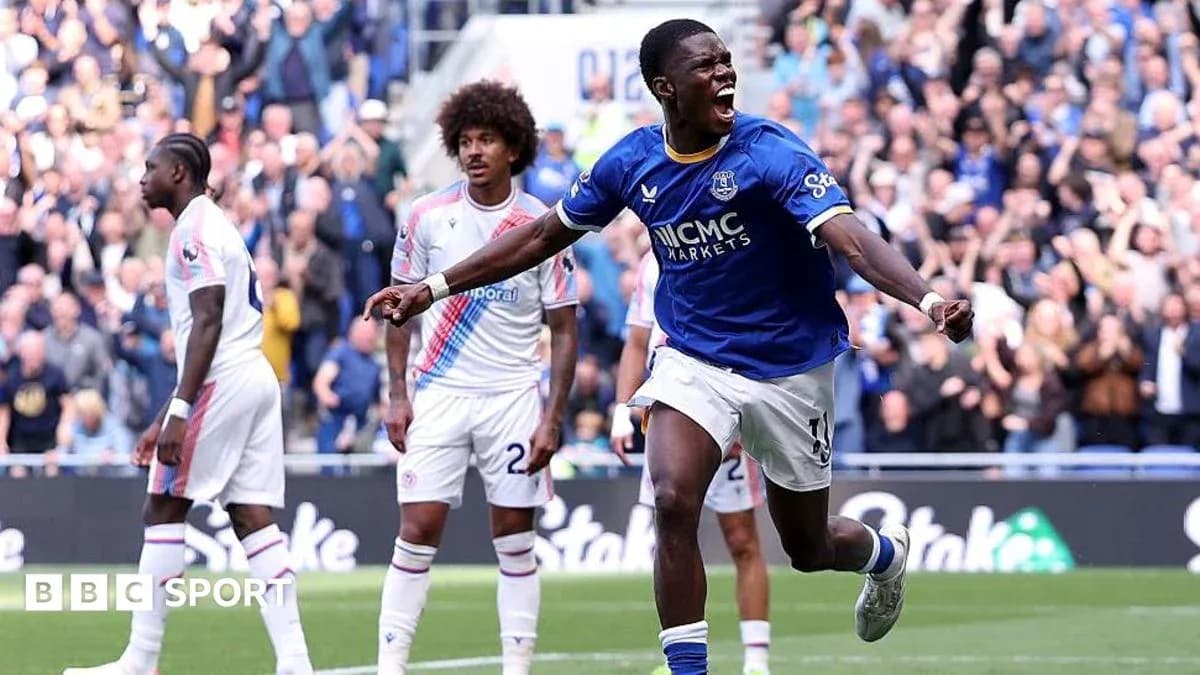
Thierno Barry walked towards the touchline with the game won and the noise rising. Less than 15 minutes remained of Everton’s opening-day victory over Crystal Palace at Hill Dickinson Stadium when the stadium announcer confirmed the change: the match-winner was making way for Beto.
Barry slowed his stride. The 23-year-old took it all in – the applause, the songs, the sense that this might be the day his Everton story truly started to make sense.
From drought to deliverer
His big moment had come early in the second half. Iliman Ndiaye arced in a teasing cross, and Barry attacked it with conviction, timing his run and planting a header that doubled Everton’s lead and, realistically, killed off any Palace resistance. He wheeled away grinning, swallowed by the roar from the blue half of Merseyside.
It felt a long way from the muttering and doubts of last winter.
Barry arrived from Villarreal for £27m, a sizeable outlay for a club still wrestling with the aftershocks of points deductions and Profit and Sustainability Rules sanctions. He came with promise – 11 La Liga goals – but not as the finished article. Everton knew that. David Moyes knew that. The message was patience.
Patience, though, has a short shelf life in the Premier League. By the halfway point of the season, Barry had only one goal in 18 league appearances. Fourteen games without scoring. The price tag became a stick to beat him with. The sighs grew louder.
Then January came, and the season flipped.
Barry found rhythm, found confidence, found the net. By May, he had eight Premier League goals in 38 games – not spectacular, but significant for a debut campaign in a side still learning to attack with authority. The numbers backed it up: eight goals from an expected goals tally of 8.1, a shot conversion rate of 21.1%, nudging just under Erling Haaland’s 21.4%.
The context matters too. Half of those goals came after Jack Grealish, Everton’s main creator, suffered a season-ending injury in January. As others faded under the strain of a European push, Barry’s form sharpened. He stepped into a vacuum when his team needed him most.
Moyes’ demanding eye
So when Moyes sat down to dissect the 2-0 win over Palace deep inside Hill Dickinson Stadium, he resisted the temptation to get swept away by the narrative of redemption. The goal was vital, the performance promising, but the standards remain high.
“Look, strikers will probably be judged on their goals, so he can walk away and be really happy with it,” Moyes said. He quickly turned the spotlight to the supply line. “I thought it would be wrong not to mention the quality of the cross from Ndiaye. Thierno getting in the right spot was huge and scoring with a header was really big for us because it was an important time in the game.”
Then came the manager’s caveats. The kind a young forward hears if he’s going to be pushed to the next level.
“I need his build-up play to be better,” Moyes admitted. “I need him to be able to retain the ball for us so we can play into him more often.
“I want him to get in the right spaces, which he did today for the cross. He had a couple where the ball got played to him and he didn’t quite deal with it with his feet.
“Sometimes he is out linking up when he doesn’t need to be linking up. I think there is a lot to his game.”
This is familiar ground for Moyes. Two decades ago, in his first spell at Everton, he helped mould Wayne Rooney’s raw talent into Premier League menace. He understands the difference between a striker who scores occasionally and one who leads a team.
A new talisman in the making?
When Barry signed last summer, he walked into a club trying to turn a page. Years of managerial churn, repeated brushes with relegation, financial strain and the psychological drag of PSR punishment had left Everton bruised and cautious.
Moyes and his recruitment team knew they were shopping in a different aisle now. The budget and the club’s pulling power would not stretch to a ready-made superstar. Barry was a bet on potential, on upside, on what he might become with time and coaching.
That time might be starting to pay off.
“I said last year that when you’re a young striker coming in, it’s not always easy,” Moyes reflected. “I think he’s come in with a really, really positive attitude this year.
“I think he’s come back with something that has stirred him up a little bit more, as if he’s got something to prove.”
The evidence is there in flashes: the penalty-box instincts, the improved movement, the willingness to shoulder responsibility in a side still evolving. There are rough edges too – the loose touches on the break, the tendency to drift wide when Moyes wants him central, the moments when he chases the game instead of owning it.
But as he left the pitch against Palace to a standing ovation, Barry looked less like a project and more like a focal point. Not the finished article, not yet, but a striker who now carries the weight of expectation rather than being crushed by it.
Everton have been searching for a forward to define their new era. If Barry keeps walking off to that kind of noise, he might just be the one.
Related News
Genoa Fury as De Bruyne's Goal Sparks VAR Controversy
Leipzig Near Nkunku Reunion as Newcastle Pursues Permanent Transfer
Victor Osimhen Makes Galatasaray History with Latest Brace

Hull Stun Manchester United as Spurs Humiliated by Brentford
Thierno Barry: From Drought to Deliverer at Everton
Oxford United Secures First League Win Under Ramsey at Stevenage