
Thomas Tuchel Defends Jude Bellingham Amid Media Speculation
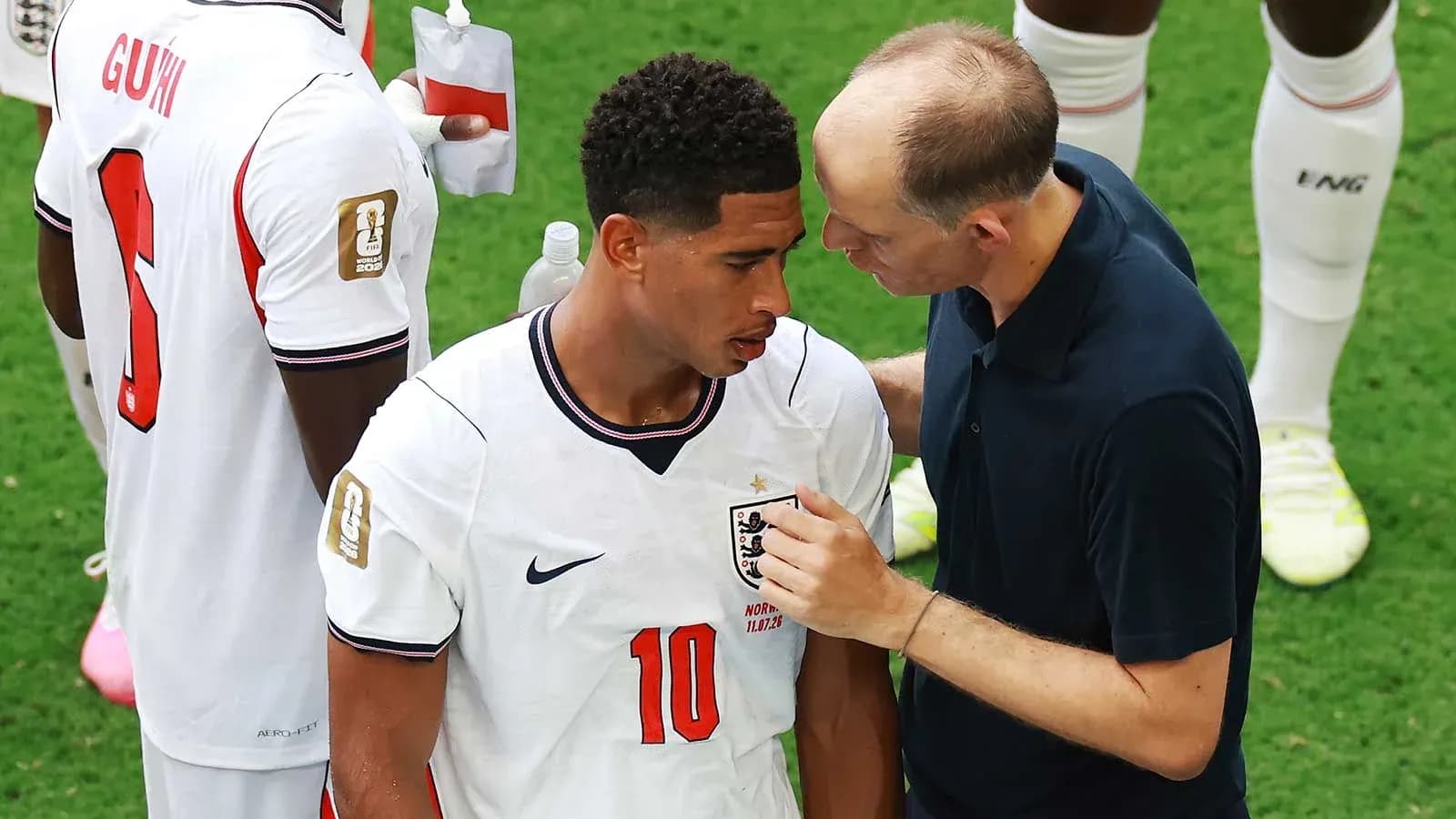
Thomas Tuchel insists the storm has passed. Or at least, that it only ever really existed outside the England camp.
The relationship between the German head coach and his on‑field general, Jude Bellingham, has been prodded and pulled apart all summer, dragged back into the spotlight after England’s laboured 2-1 extra‑time win over Norway in the quarter‑finals. Tuchel’s blunt assessment of the display – “not happy with the team performance” – collided head‑on with Bellingham’s demand for more positivity. Cue headlines, speculation and talk of a rift.
Inside camp, Tuchel says, the reality is very different.
Clearing the air
The England boss moved quickly. The morning after that draining 120‑minute tie, he gathered the squad for a meeting designed to puncture the narrative before it grew any bigger.
“I wonder who blows these things up, eh?” he told talkSPORT, leaning into the idea that the drama lives more in studios and columns than in the dressing room. “So, there is nothing to blow up and if it's blown up, it's blown up in the media, of course.”
Tuchel did not walk back his criticism of the performance. Instead, he framed Bellingham’s reaction as the natural response of a player who had emptied the tank.
“What do you expect of a player that just played 120 minutes and gave literally everything,” he said, explaining how a clipped version of his comments had reached his star midfielder. “If you shorten the comment of his coach, if you don't tell him that ‘he was world class,’ if you don't tell him that ‘he has world class actions’… If you just cut all this and tell him ‘oh, your coach said you were sloppy’ what do you expect?”
The pressure finally told in front of the microphones. Bellingham bristled. The media circled. And Tuchel, ever combative, pushed back at the framing of the story.
“People try to create misunderstandings and cracks where no cracks are,” he said. “We come from the same place. We come from being competitive and I am a competitive coach. I push this team to the limit and that was my assessment.”
For Tuchel, the flashpoint lay not in the dressing room, but in the way the question was put to Bellingham in the mixed zone.
“I think the question was unfair in this moment towards Jude because he cut all the compliments out of my assessment and just asked about the critical points, so I can understand. What do you expect of a player that just gave everything and stands there in front of a microphone in a flash interview?”
Bellingham’s barb and the coach who never played at the top
In the heat of that moment, Bellingham appeared to aim a barb at Tuchel’s modest playing background, suggesting his manager “maybe doesn’t know what it’s like to play in those kind of conditions” or to face a striker of Erling Haaland’s level.
For some coaches, that would sting. Tuchel shrugged it off.
The England boss has never pretended to be something he is not. His own career on the pitch never reached the heights of the players he now commands, and he freely admits he once dreamed only of being out there himself, not on the touchline.
“I would still like to have a player's career, that was my dream,” the former Chelsea manager said. “I never thought about being a coach, never dreamt about being a coach on that kind of level, so I think this is basically the dream. I just feel also on the sideline very humbled, and from time to time it just strikes me on the sideline right before the match ‘I couldn't play here on this occasion.’”
Yet he refuses to accept that a lack of elite playing pedigree weakens his authority or his eye for the game.
“I don't think that you have to play [to be a coach]. A funny quote, you don't have to be a horse to be a good jockey!” he joked, turning the old debate into a punchline rather than a point of vulnerability.
“As close as ever”
Strip away the noise and Tuchel insists his bond with Bellingham remains strong. Stronger, even.
“It's just what it is but we're as close as ever, and close more than ever before,” he said. “You can see that on the field. The energy and mentality in camp is excellent in the last days and we are ready to go for it tomorrow.”
That “tomorrow” is Argentina in a European Championship semi‑final, a stage where relationships between coach and leader, between touchline and pitch, are tested under the brightest lights.
Tuchel has chosen his side in this story: not against Bellingham, but alongside him, shoulder to shoulder in the same competitive trench. The next 90 minutes – or 120, if England are dragged there again – will show whether that unity holds when it matters most.
Related News

India's Record Chase of 406 Against West Indies Highlighted by Gill's 223 and Rohit's Century

Alex Pereira Hints at Major UFC Bout: 'Big Challenge' Ahead
Three Hall of Famers, Ten Fights, 109 Rounds: The Forgotten Rivalry That Shaped Lightweight Boxing's Golden Era
Khamzat Chimaev and Colby Covington Set for RAF Abu Dhabi Title Clash in November
Thomas Tuchel Confident Harry Kane Will Join 100-Goal Club for England Soon
Cristiano Ronaldo Vows to Reveal Truth After Leaving Portugal Squad Amid Conflict