
Top 10 World Cup Legends: From Pele to Kylian Mbappe
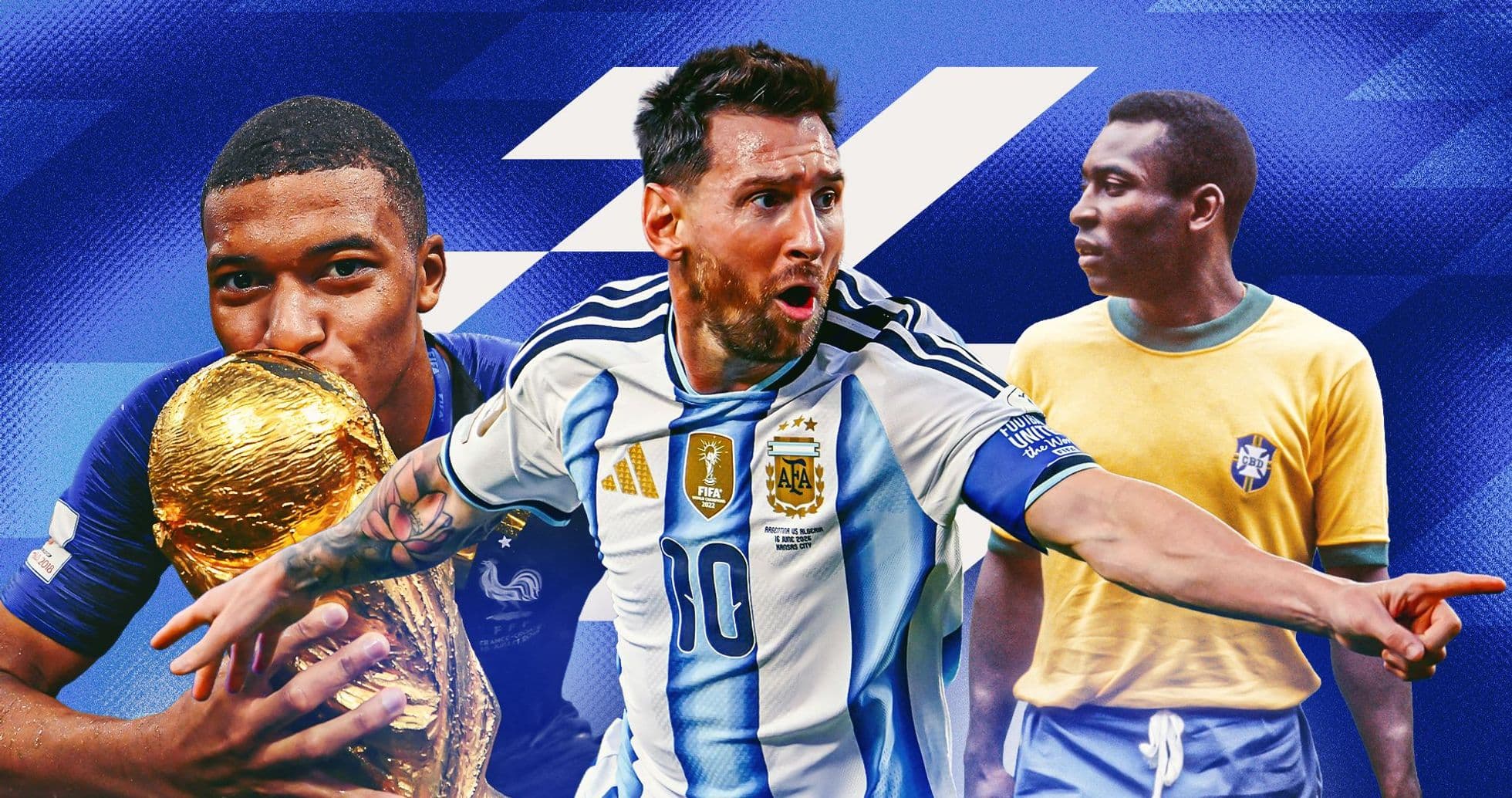
The World Cup stands as football's grandest stage, where careers are defined, legends arise, and unforgettable moments unfold. Sometimes a single play is enough to immortalize a player in their nation's heart. But who truly ranks among the best to ever grace this tournament across multiple editions? We've taken on the challenging task of listing the ten most impactful World Cup players, sparking debate as some greats missed out.
10. Miroslav Klose (Germany)
Klose never reached legendary status at club level but transformed into an unselfish and efficient striker for Germany. Scoring 71 goals in 137 appearances, he holds the World Cup record with 16 goals, surpassing Ronaldo in 2014. His aerial ability was exceptional, highlighted by five headed goals in the 2002 tournament alone. Remarkably, Germany never lost a match when he scored. Klose retired after winning the 2014 final against Argentina and remains humble about Lionel Messi matching his tally, calling himself a fan of the Argentine star.
9. Zinedine Zidane (France)
Zidane embodied elegance and volatility, a flawed genius shining brightest on the World Cup stage. He nearly saw his 1998 campaign cut short by a red card but bounced back to score twice in the final, handing France a shock victory over Brazil. Despite France’s early exit in 2002 and his brief retirement, Zidane returned in 2006 to lead France to the final again. The tournament ended in infamy with his headbutt on Marco Materazzi, yet his Golden Ball award reflected his brilliance, vision, and decisive influence.
8. Gerd Muller (Germany)
Muller was a goal-poaching machine, renowned for his speed and aerial prowess despite his stocky frame. His instinct inside the penalty area was unmatched. With 69 goals in 62 international games, he maintained a prolific strike rate in two World Cups, scoring 14 times including the winner in the 1974 final. His goals may not always have dazzled, but they were often the most crucial, cementing his legacy as a World Cup icon.
7. Cafu (Brazil)
Nicknamed Il Pendolino in Italy, Cafu was a tireless right-back known for relentless runs along the flank. His stamina led Sir Alex Ferguson to joke that Cafu must have two hearts. He played in four World Cups, featuring in three finals. Though he came off the bench in the 1994 final, he captained Brazil to victory in 2002. His leadership and dual role as defender and winger inspired a generation of fullbacks.
6. Franz Beckenbauer (Germany)
Beckenbauer redefined football roles as a versatile player who moved from midfield to defense, becoming the archetype of the sweeper position. He starred in three consecutive World Cups during a time of tactical evolution. Known as Der Kaiser, he played through injury in the epic 1970 semi-final and eventually lifted the trophy in 1974. Karl-Heinz Rummenigge described him as the perfect player, blending style with substance.
5. Kylian Mbappe (France)
At just 27, Mbappe has already secured his place among World Cup legends. In 2018, he won the Young Player award while helping France win the title, scoring in the final and joining Pele as a teenage final scorer. Four years later, he recorded a hat-trick in the final, a feat only Sir Geoff Hurst had previously achieved. Becoming the all-time World Cup top scorer with 22 goals, Mbappe also earned his second Golden Boot, setting records rarely matched.
4. Ronaldo (Brazil)
Ronaldo was once the most feared striker worldwide, combining blistering pace with skillful dribbling. Despite a convulsive fit before the 1998 final, he still earned the tournament’s best player award. His redemption came in 2002, scoring eight goals including two in the final to secure Brazil’s fifth title. He overcame years of injuries to reach this pinnacle, calling the victory a testament to his recovery and teamwork.
3. Diego Maradona (Argentina)
Few have dominated a World Cup like Maradona did in 1986. Having prepared intensely after a disappointing 1982 campaign, he guided Argentina to their second title with 14 team goals, being involved in 10 himself. His quarter-final performance versus England combined controversy and genius with the 'Hand of God' and a stunning solo goal. Although his later career faced controversy, his 1986 impact remains unmatched.
2. Lionel Messi (Argentina)
Messi spent over 15 years maintaining extraordinary form but faced criticism for not winning a World Cup until 2022. After a narrow loss in 2014, many thought his chance had passed following 2018’s last-16 exit. Yet at 35, he delivered arguably the greatest individual World Cup campaign since Maradona, scoring and assisting throughout every knockout round and winning a record second Golden Ball. Returning in 2026, he carried Argentina to another final with an impressive eight goals and four assists, solidifying his GOAT status.
1. Pele (Brazil)
Pele stands alone as the King of the World Cup. The only player to be part of three winning squads, he shone brightest in 1958 and 1970. At just 17, he dominated the 1958 tournament with key goals in the quarters, semis, and final, inspiring even the tournament’s top scorer to consider retiring. In 1970, he led one of the finest international teams ever, scoring four goals including in the iconic final against Italy. Pele’s talent and impact remain a benchmark for greatness.
Related News

FIFA Opens New Football Arenas in Palestine to Support Youth in the West Bank

FIFA World Cup 2026: Complete List of Commentators and Presenters
World Cup 2026 Best XI: Messi, Rodri, Mbappe Lead the Team of the Tournament
Spain's Tactical Mastery Secures Second World Cup Victory in 2026
Top 10 Players of the 2026 World Cup: Mbappe or Messi at the Summit?
Gianni Infantino Responds to Critics Amid 2026 World Cup Celebrations