
Tottenham Hotspur's Struggles Continue in 0-0 Draw Against Everton
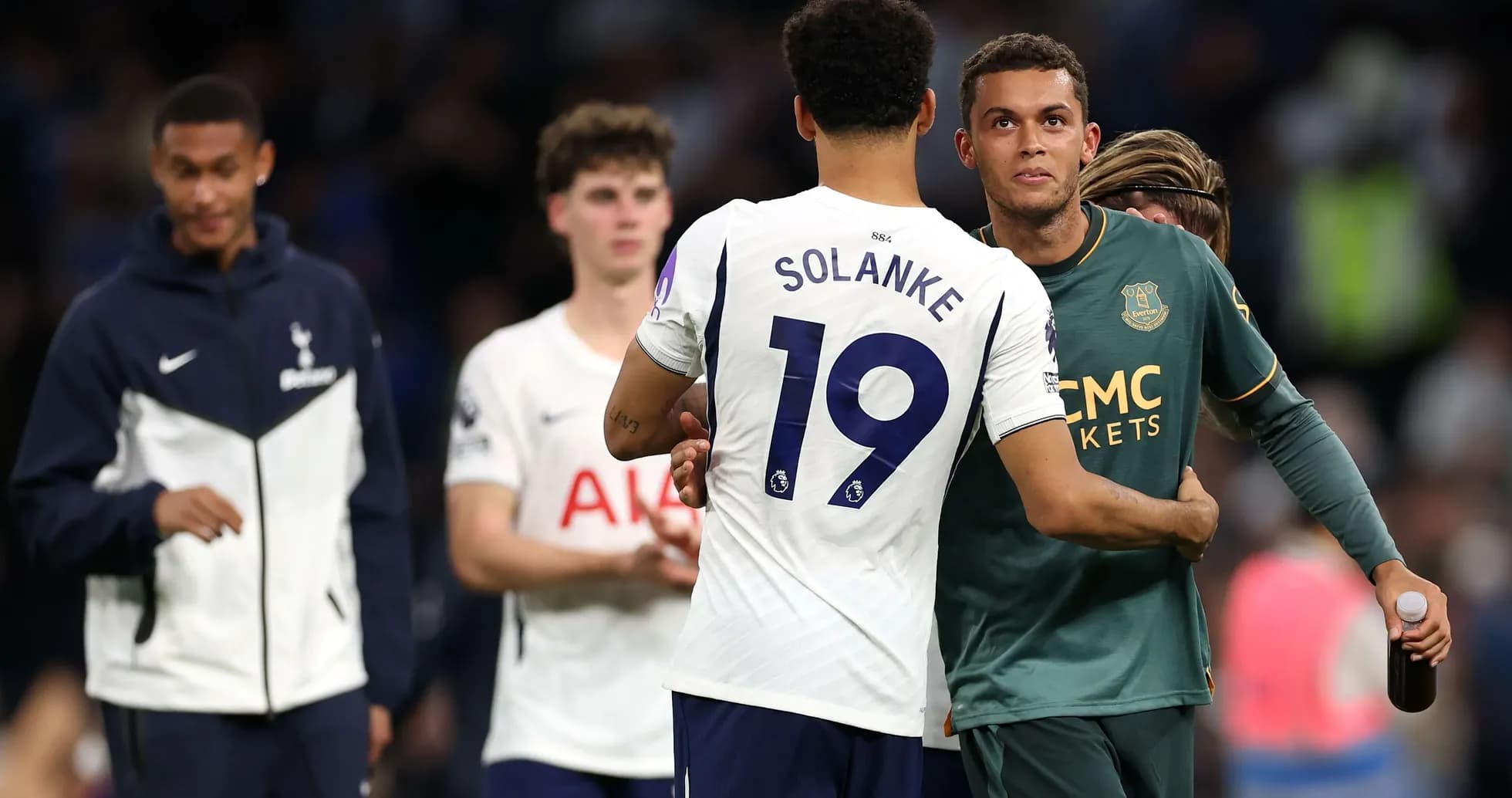
Under the grey North London sky, the Tottenham Hotspur Stadium felt oddly muted at full time. A 0-0 draw against Everton, on paper, is a point gained for a side in trouble; in reality, it underlined the strange, brittle identity Tottenham are carrying into this Premier League season.
I. The Big Picture – Two Stories, One Stalemate
Following this result, the table tells a stark tale. Tottenham sit 17th with 2 points from 4 matches, their goal difference at -5 after scoring 0 and conceding 5 overall. Everton, by contrast, look quietly stable in 8th, on 6 points with a positive goal difference of 2, built from 5 goals scored and 3 conceded overall.
Both sides lined up in a mirrored 4-2-3-1, but their seasonal DNA could not be more different. Tottenham’s campaign has been defined by absence and bluntness: no goals at home, no goals away, no goals at all. Across 4 league fixtures, they have failed to score in every single one, with their average goals for standing at 0.0 at home, 0.0 away, 0.0 overall.
Everton arrived as a side that knows its limits but plays within them effectively. Overall they average 1.3 goals for and 0.8 against per match, with a sharp split between a vibrant attack at home (2.0 goals for on average) and a more cautious, compact approach on their travels (0.5 goals for and 0.5 against away). On their travels, they are hard to beat: 2 away games, 0 defeats, 2 draws, just 1 goal conceded.
II. Tactical Voids – Absences and the Shape of the Game
The team sheets revealed why Tottenham’s attack feels so disjointed. D. Kulusevski, M. Mudryk, W. Odobert and X. Simons were all ruled out, officially missing the fixture with knee and ankle injuries. Richarlison’s absence, due to transfer negotiations, stripped away another potential focal point. For a side already failing to score, that cluster of unavailable forwards and creators left R. De Zerbi leaning heavily on improvisation.
Into that vacuum stepped D. Solanke as the lone forward, with Savio, Mateus Fernandes and Omar Marmoush forming the line of three behind him. Behind them, R. Bentancur and S. Tonali were tasked with both protecting and progressing – a double pivot asked to be shield and launchpad at once.
At the back, A. Kinský in goal was screened by a back four of A. Robertson, M. van de Ven, J. van Hecke and A. Gray. It is a line designed to be aggressive in possession, but with Tottenham conceding 1.0 goals per game at home and 1.5 away, the defensive structure has often been exposed by the lack of control further forward.
Everton had their own notable absentee in C. Norgaard, missing through injury, removing a natural screen from in front of the defence. Yet D. Moyes compensated by doubling down on discipline. J. Pickford anchored a settled back four of A. Maitland-Niles, J. Tarkowski, J. Branthwaite and V. Mykolenko. In front, H. Armstrong and J. Garner formed a combative double pivot, with B. Johnson, K. Dewsbury-Hall and Tyrique George supporting T. Barry.
Disciplinary trends framed the tempo. Heading into this game, Tottenham’s yellow cards were heavily backloaded: 40.00% of their cautions arrived between 76-90 minutes, a clear pattern of late frustration and fatigue. Everton’s bookings were more evenly spread, but with a noticeable spike between 61-75 minutes at 28.57%, a period where their intensity often tips into risk. Yet there were no red cards for either side this season heading into this fixture, and that restraint showed in a match more about structure than chaos.
III. Key Matchups – Hunter vs Shield, Engine Room vs Enforcer
This was a contest where the “hunter vs shield” dynamic was more conceptual than statistical. Tottenham had no standout scorer to lean on, no one with a season tally to frame the threat. The “hunter” became the system itself: the layered movement of Marmoush drifting inside, Savio attacking the half-spaces, and Solanke trying to pin Tarkowski and Branthwaite.
Everton’s shield, though, has been quietly effective. On their travels they concede just 0.5 goals per game, and the pairing of Tarkowski and Branthwaite, protected by Armstrong and Garner, again reduced the penalty-box chaos to a minimum. The away side’s discipline in deep zones smothered Tottenham’s attempts to combine centrally, forcing the hosts into slower, more predictable patterns.
The true tactical theatre unfolded in the engine room. S. Tonali and R. Bentancur tried to dictate through short circulation and vertical passes into the three behind Solanke. Opposite them, J. Garner – already one of the league’s leading figures in the card charts, with 2 yellows this season but no reds – played the role of Everton’s enforcer-playmaker hybrid. Across the campaign he has completed 128 passes with 3 key passes, won 16 of 27 duels, and made 11 tackles. In this match, his presence allowed Everton to compress the central lanes, forcing Tottenham wide and away from the dangerous pockets between the lines.
IV. Statistical Prognosis – What This Draw Really Says
Following this result, the numbers deepen the narrative rather than contradict it. Tottenham’s overall record of 0 wins, 2 draws and 2 defeats, with 0 scored and 5 conceded, speaks of a side that can sometimes shut games down – 2 clean sheets overall – but has no attacking edge. They have already failed to score in all 4 league fixtures, both at home and on their travels. Even their penalty profile tells of a team that has not yet forced the high-leverage moments: no penalties awarded, none scored, none missed.
Everton, by contrast, extend an unbeaten start: 1 win and 3 draws overall, with just 3 goals conceded and 2 clean sheets. On their travels, they remain undefeated, with 2 draws, 1 goal scored and 1 conceded. They are not explosive away from Goodison Park, but they are dependable, and in a league of fine margins, that matters.
From an xG-style lens, even without explicit data, the patterns are clear. Tottenham’s inability to score despite sustained possession phases and a full 90 minutes at home suggests low-quality chance creation rather than bad luck. Everton’s away defensive averages and structural discipline point to a side that systematically suppresses opposition xG, content to take a point when the game state suits them.
The tactical preview from this stalemate, then, is stark. Tottenham must find a way to translate their 4-2-3-1 into real threat once their injured and absent forwards return; until then, every match risks becoming another sterile exercise in sterile domination. Everton, meanwhile, will leave London satisfied: their compact 4-2-3-1 travels well, their engine room is hard to play through, and their defensive metrics on the road are the platform for a quietly effective season.
Related News
Liverpool vs Fulham: Goalless Draw Reflects Early Season Realities
Manchester City vs Sunderland: Head-to-Head Stats and Historical Overview
Chelsea and Hull City Draw 2–2: A Tactical Stalemate
Brighton vs Arsenal Stats: Head-to-Head Record and Recent Meetings

Tottenham vs Aston Villa Stats: Head-to-head Record Before September 2026 Clash
Brentford vs Chelsea Stats: Head-to-head and Recent Form