
Tottenham's Structural Woes: A Fragile Start to the Season
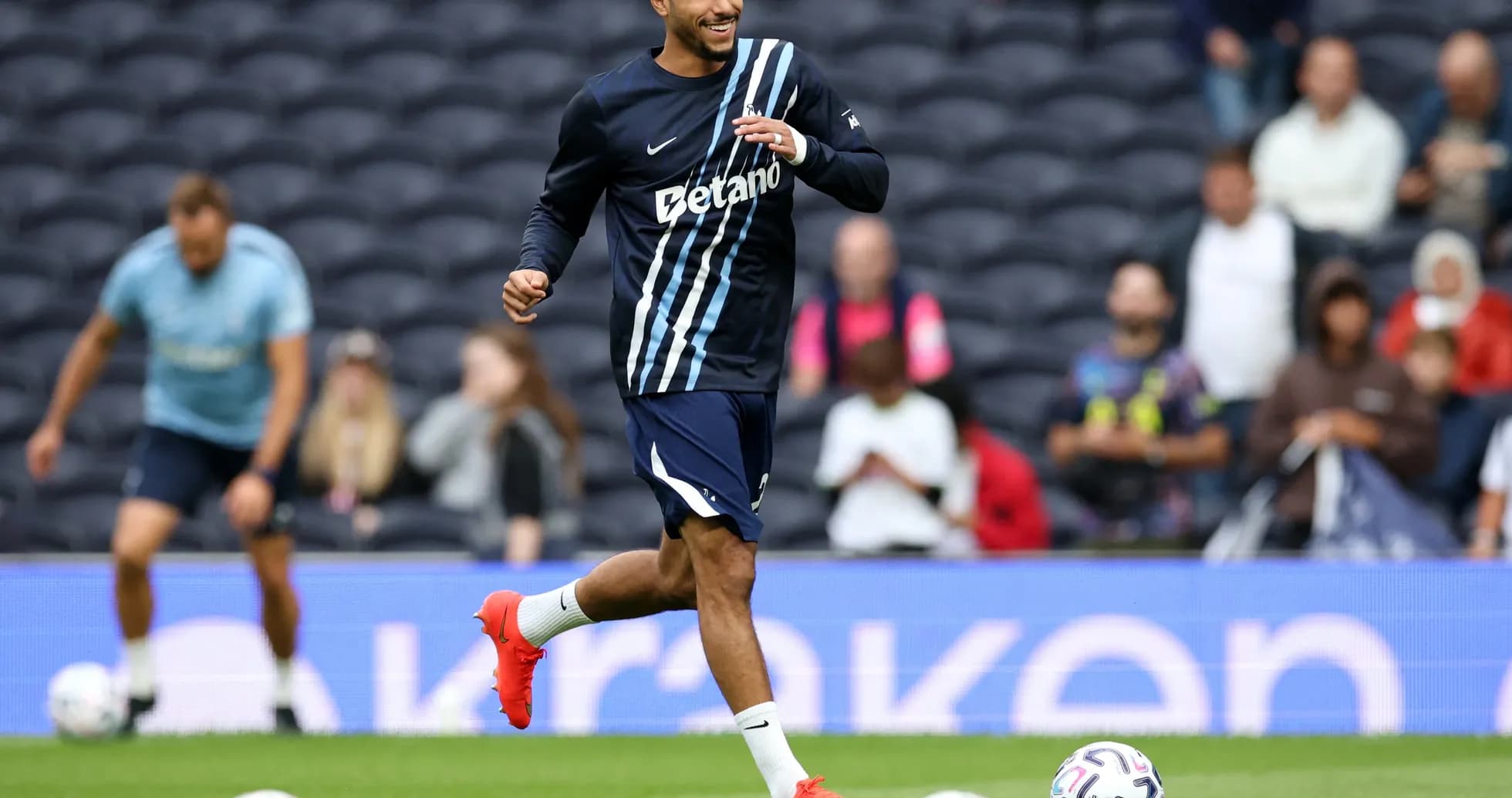
Under the grey north London sky, the early-season optimism around Tottenham felt fragile even before kick-off. By full time, after a 0–2 defeat to Newcastle at Tottenham Hotspur Stadium, that fragility had hardened into something more worrying: a structural problem rather than a bad day.
I. The Big Picture – Two clubs on diverging tracks
Following this result, the table tells a stark story. Tottenham sit 20th in the Premier League with 0 points from 2 matches, a total goal difference of -5, and not a single goal scored overall. At home, they have played 1, lost 1, with 0 goals for and 2 against; on their travels, 1 played, 1 lost, 0 for and 3 against. The seasonal DNA so far is brutally clear: they are conceding an overall average of 2.5 goals per game while averaging 0.0 going forward.
Newcastle, by contrast, leave London looking like a side already in Europa League contention. They are 5th with 4 points from 2 games, an overall goal difference of +2 (4 scored, 2 conceded). At home, they have drawn their only match 2–2; away, they have now played 1, won 1, scoring 2 and conceding 0. Their overall scoring rate sits at 2.0 goals per game, with the away defence yet to be breached.
Both coaches leaned into continuity. Roberto De Zerbi and Matthias Jaissle each deployed a 4‑2‑3‑1, but the systems expressed very different personalities: Tottenham’s iteration, shorn of creativity, looked sterile; Newcastle’s, powered by vertical runners and disciplined full-backs, felt razor-sharp.
II. Tactical Voids – Missing creators and patched edges
Tottenham’s absentees were not just names on an injury list; they were missing functions in the system. Dejan Kulusevski (knee injury), James Maddison (knock), W. Odobert (knee), P. M. Sarr and X. Simons (both injured) all missed the fixture. That stripped De Zerbi of three natural line-breaking technicians between the lines and one of his most dynamic box-to-box links.
In their place, the double pivot of R. Bentancur and S. Tonali was asked to do too much: circulate under pressure, shield transitions, and somehow also inject progression into the final third. Ahead of them, M. Fernandes, P. Porro and M. Tel formed the attacking band behind O. Marmoush, but without Maddison or Kulusevski, there was no true central orchestrator to knit it all together.
Defensively, Tottenham’s season profile already hinted at fragility. At home, they are conceding an average of 2.0 goals per game; away, that climbs to 3.0, for an overall 2.5. They have failed to score in both matches, and have yet to keep a clean sheet in any venue. The card distribution is telling too: 50.00% of their yellow cards so far have come in the opening 15 minutes, and another 50.00% between 31–45', suggesting a side that oscillates between early anxiety and late-half frustration rather than controlled aggression.
Newcastle also arrived with notable absentees. D. Burn (ankle injury), Joelinton, V. Livramento and W. Osula were all ruled out, forcing Jaissle to lean on the mobility of L. Hall at left-back and the athletic pairing of M. Thiaw and S. Botman at centre-half. Yet their squad depth held: the structure remained intact, and the roles clearly defined.
III. Key Matchups – Hunter vs Shield, Engine vs Engine
The “Hunter vs Shield” duel was embodied by Newcastle’s front quartet against Tottenham’s improvised back line. Yoane Wissa, starting as the nominal forward, came into the game with 1 goal and 1 assist from 2 appearances, supported by A. Elanga, already on 2 league goals and rated 7.75 across his early-season minutes. J. Willock added another scoring threat from midfield.
Against that, Tottenham fielded A. Kinsky behind a back four of A. Gray, J. P. van Hecke, M. van de Ven and A. Robertson. On paper, it is a back line capable of building from deep, but the season data is unforgiving: overall they have conceded 5 goals in 2 matches, with no venue showing defensive solidity. Without any clean sheets and with an overall average of 2.5 goals conceded, the “shield” has yet to prove it can withstand sustained pressure.
Newcastle’s “Hunter” unit is not just about finishing; it is about repetition of threat. Elanga has 4 shots (3 on target) in the league so far, plus 2 successful dribbles, constantly testing the defensive line. Wissa has 6 shots, 2 on target, and 8 fouls drawn, which stretches and irritates back fours. When that level of activity meets a defence conceding 3.0 goals per game away and 2.0 at home, the balance of probabilities tilts heavily toward the visitors.
In the “Engine Room” matchup, the contrast was just as stark. Bentancur and Tonali were tasked with outplaying Newcastle’s double pivot of Nico and L. Miley. Yet Jaissle’s midfield had more verticality in front of them. Willock, who already has 1 goal this season, offers late runs and a willingness to crash the box, while Elanga and Wissa pull wide and attack half-spaces. That gives Newcastle multiple lanes of entry into the final third, whereas Tottenham’s central trio often received to feet rather than on the move.
Behind them, Newcastle’s right-back A. Dedic quietly tilted the pitch. He has already supplied 1 assist this season, completed 47 passes at 89% accuracy, created 2 key passes and won 10 of 19 duels, while blocking 2 shots. In London, that profile translated into a constant overlap threat down Tottenham’s left, pinning A. Robertson deeper than De Zerbi would like and reducing Tottenham’s ability to use him as an outlet in build-up.
IV. Statistical Prognosis – A Newcastle side built on repeatable patterns
Even without explicit xG numbers, the underlying patterns are clear. Newcastle are averaging 2.0 goals per game overall and conceding 1.0, with a clean sheet already banked away from home. They have yet to fail to score in any venue. Tottenham, conversely, have failed to score in both matches and are conceding heavily everywhere.
Discipline also edges toward Newcastle despite their aggression. Their yellow cards are spread across the match, with a notable late-game surge at 76–90' (28.57%), reflecting a side that pushes the limits as they protect leads or chase margins. Yet there are no red cards and no penalties missed or conceded, suggesting controlled intensity rather than chaos.
Tottenham’s card profile, clustered early and late in the first half, hints at a team still emotionally volatile under pressure. With no penalties taken at all this season, there is no safety net from the spot to compensate for open-play bluntness.
The 0–2 scoreline in London fits the season-long script rather than defies it. Newcastle’s 4‑2‑3‑1, with Elanga and Wissa as the twin hunters and Dedic as the underlapping creator, is a repeatable, data-backed model: high output in attack, acceptable risk in defence, and a bench featuring disruptive options like N. Woltemade and J. Murphy, both already on the assist and card charts respectively.
Tottenham, by contrast, are a system waiting for its missing pieces. Until Maddison, Kulusevski, Simons or Sarr return, De Zerbi will have to conjure chance creation from a midfield built more for control than incision. The standings, the goals columns, and the eye test at Tottenham Hotspur Stadium all align: this is not just a slow start, it is a structural warning.
Related News

Nottingham Forest vs Tottenham Stats: Head-to-Head Record Before Match

Liverpool and Nottingham Forest Draw 2–2: Tactical Insights

Ipswich vs Liverpool Stats: Head-to-head Record and Historical Context

Crystal Palace vs Manchester City: Tactical Analysis of Premier League Clash
Aston Villa vs Arsenal Predicted Lineups: Team News and Insights
Aston Villa vs Arsenal: Premier League Clash Overview