
Trabzonspor vs Ferencvarosi TC: Tactical Analysis of 0-1 Defeat
Trabzonspor’s 0-1 home defeat to Ferencvarosi TC at Papara Park was defined by a sharp contrast between territorial dominance and penalty-box efficiency. In a UEFA Europa League Play-offs tie where the hosts controlled 66% of the ball and racked up 18 attempts (3 on goal, 15 off target, plus 6 blocked), their structure in possession repeatedly broke down in the final third. Ferencvarosi TC, set up in a compact 4-4-2, accepted long spells without the ball, committing 24 fouls and absorbing pressure, yet still produced 4 shots on goal and the game’s only finish. The visitors’ defensive discipline, aggressive duels, and well-timed counter-attacks outweighed Trabzonspor’s sterile control, especially once the late red card further tilted the tactical balance.
Trabzonspor's Formation
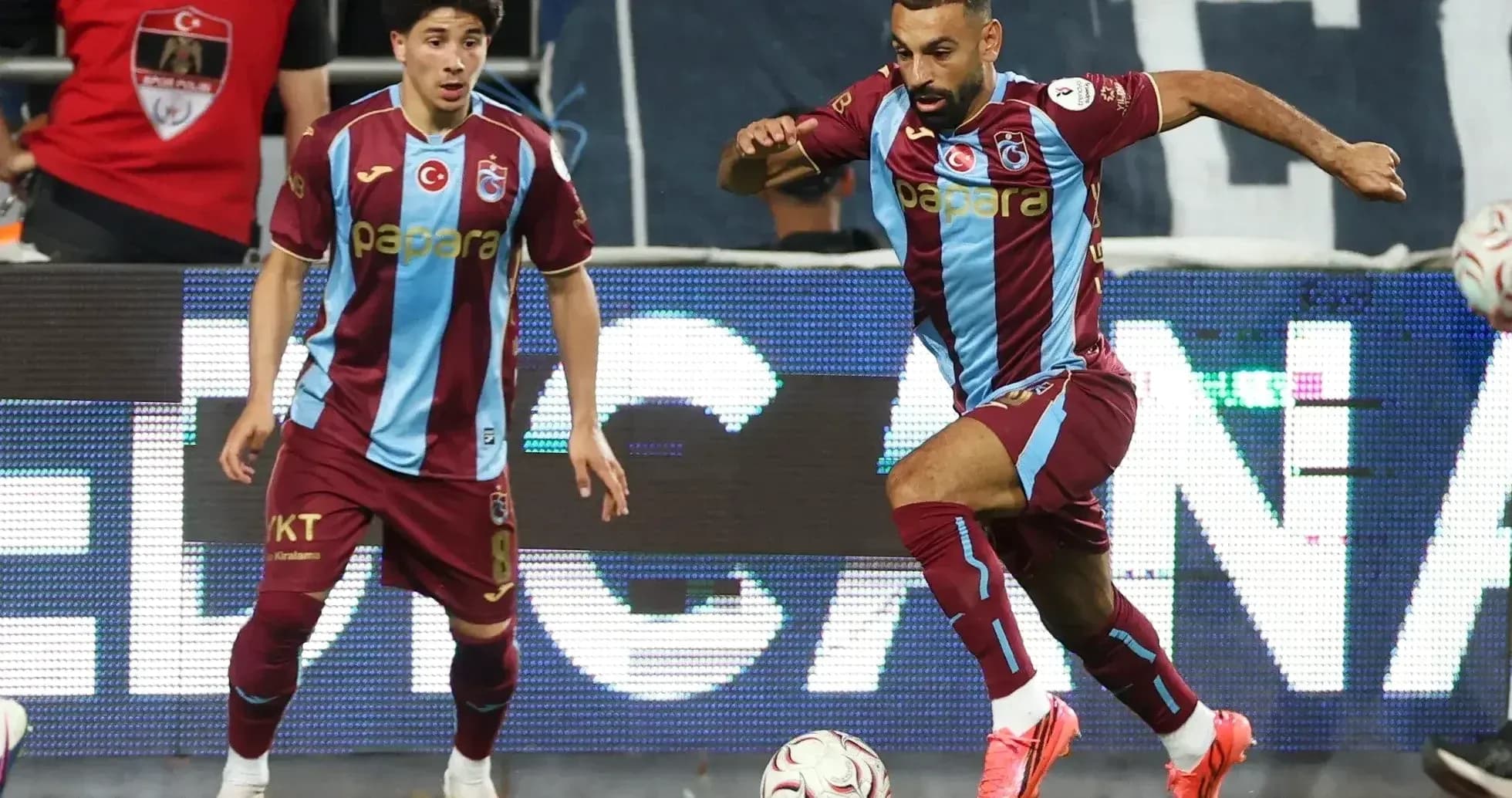
Trabzonspor’s 4-2-3-1 under Fatih Tekke was designed to dominate the ball and territory. The double pivot of B. Bouchouari and M. Kabasakal (before Bouchouari’s half-time withdrawal) aimed to dictate tempo and circulate play from deep, with full-backs S. Lopes Cabral and C. Ozkacar pushing high to pin Ferencvarosi TC’s wide midfielders. M. Salah operated between the lines as the central creator, while N. Saviolo and U. Nayir supported P. Onuachu from the flanks and the second line. The structure did achieve sustained possession and a steady supply of crosses and shots, as reflected in the volume of attempts and 7 corner kicks. However, the shot profile betrayed a lack of clarity: 15 efforts off target and 6 blocked underline rushed decision-making and predictable routes into the box, especially once Ferencvarosi TC dropped deeper after taking the lead.
Key Tactical Turning Point
The key tactical turning point came early. In the 17th minute, K. Zachariassen’s goal for Ferencvarosi TC, assisted by O. Nagy, validated the visitors’ 4-4-2 blueprint. With Dele and L. Joseph leading the line, they pressed selectively, then sprang forward once possession was regained. Zachariassen’s advanced midfield role allowed him to attack the box late, and his finish from Nagy’s service showed how Ferencvarosi TC exploited the spaces behind Trabzonspor’s advanced full-backs and around the pivots. From that moment, the Hungarian side were content to compress the central corridor, conceding width but defending their box with numbers.
Half-Time Adjustments
Fatih Tekke’s half-time double substitution underlined Trabzonspor’s attacking frustration. B. Bouchouari (OUT) made way for R. Malinovskyi (IN), adding long-range shooting and more vertical passing from midfield. Simultaneously, U. Nayir (OUT) was replaced by A. Simsir (IN), shifting the attacking mix toward more mobility and combination play around Onuachu rather than a dual-target setup. Later, at 64', N. Saviolo (OUT) was replaced by E. Muci (IN), further increasing creativity in the half-spaces. At 83', W. Pina (OUT) made way for M. Eskihellac (IN), a move that suggested an even more aggressive late push, likely freeing a full-back to overlap relentlessly. Despite these adjustments, Trabzonspor’s shot quality did not improve enough; they continued to encounter a crowded central block and often resorted to low-percentage efforts from distance or hopeful balls toward Onuachu.
Ferencvarosi TC’s In-Game Management
Ferencvarosi TC’s in-game management was more about preserving structure than chasing a second goal. Coach Balazs Borbely’s substitutions were targeted at energy and defensive stability. At 61', Dele (OUT) was replaced by A. Nagy (IN), signaling a shift toward a more conservative shape and extra midfield legs. Simultaneously, P. Rommens (OUT) gave way to G. Kanichowsky (IN), refreshing the central band’s work rate. Later, at 78', K. Zachariassen (OUT) was replaced by A. Osvath (IN), removing a goal-scoring midfielder but adding further defensive reliability as the game state demanded protection of the lead. L. Joseph (OUT) for K. Lisztes (IN) at the same minute maintained a forward outlet while injecting fresh running. Finally, at 89', Cadu (OUT) was replaced by N. Zohore (IN), a late adjustment that likely reinforced the back line or aerial presence in the box as Trabzonspor launched a final wave of attacks.
Disciplinary Patterns
The disciplinary pattern is revealing tactically. Ferencvarosi TC collected 5 yellow cards, all rooted in their combative, stop-start defensive plan: Dele (29', “Roughing”), K. Zachariassen (43', “Roughing”), P. Rommens (50', “Holding”), A. Osvath (89', “Roughing”), and G. Kanichowsky (90+1', “Unsportsmanlike conduct”). These infractions were the cost of consistently disrupting Trabzonspor’s rhythm, especially in central areas where Salah, Malinovskyi, and later Muci tried to combine. By contrast, Trabzonspor committed only 3 fouls but suffered the more damaging disciplinary moment: at 90+6', C. Nwaiwu was shown a straight red card for “Roughing”. That incident encapsulated the home side’s late-game frustration and further undermined any chance of a composed final push.
Statistical Overview
Statistically, the match paints a classic picture of dominance without incision versus compact efficiency. Trabzonspor’s 66% possession and higher shot volume suggest territorial control, yet their 3 shots on goal failed to sufficiently test D. Dibusz’s goal (Ferencvarosi TC), whose exact save count is not specified but whose defensive unit limited clear chances. Ferencvarosi TC, with only 34% possession, still produced 4 shots on goal and converted one, underlining their superior shot selection and counter-attacking clarity. The blocked shots numbers — 6 for Trabzonspor, 4 for Ferencvarosi TC — highlight how often both teams faced packed defenses when shooting, but the visitors’ earlier lead allowed them to dictate where and when those blocks occurred.
In sum, Trabzonspor’s 4-2-3-1 provided control but not penetration, even after a series of attack-minded substitutions. Ferencvarosi TC’s 4-4-2, anchored by disciplined midfield lines and pragmatic fouling, maximized the value of their limited possession. The single Zachariassen goal, combined with a dense defensive shell and aggressive game management, was enough to turn Papara Park into a stage for an away tactical masterclass rather than a home European statement.
Related News
Beşiktaş Dominates Kauno Žalgiris in 3-0 Victory
Trabzonspor vs Ferencvarosi TC: Tactical Analysis of 0-1 Defeat
Egnatia Rrogozhinë vs Lillestrom: Tactical Analysis of a 0-0 Draw
Craiova vs Ararat-Armenia: Tactical Analysis of 1-1 Draw
Lech Poznan's Tactical Masterclass Against FC Thun
Jagiellonia Dominates FC Iberia 1999 with Tactical Superiority