
Trent Alexander-Arnold's Role in Midfield: A Tactical Gamble
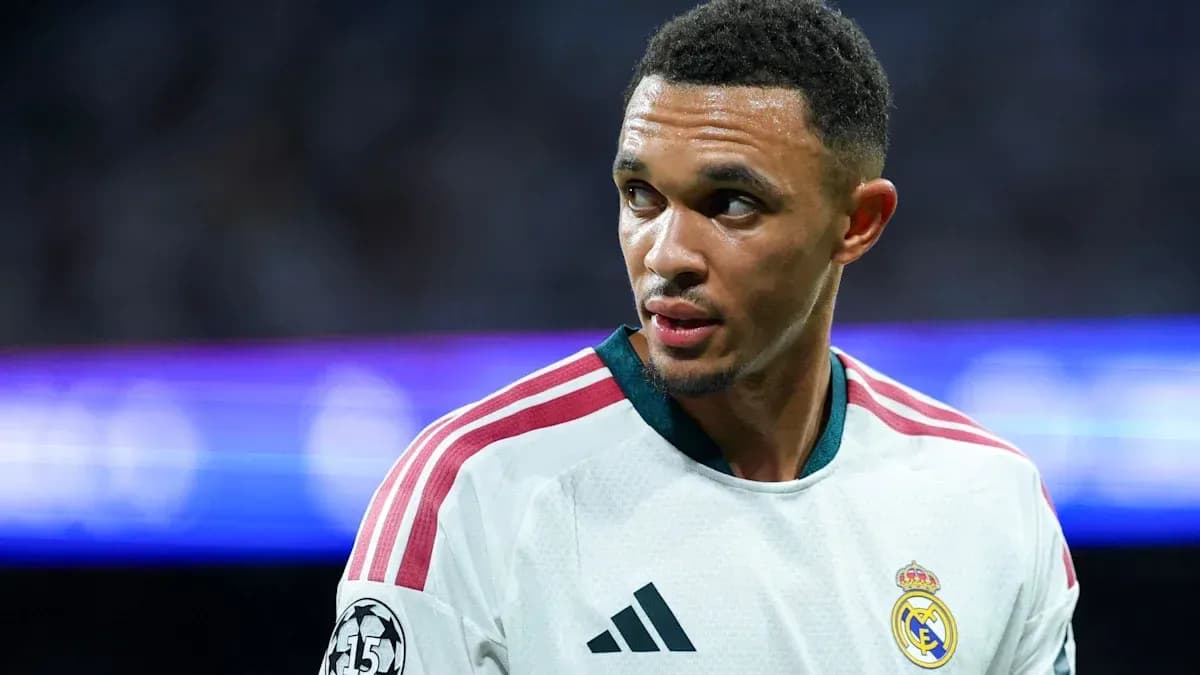
The Trent question just will not die.
Can Trent Alexander-Arnold really live in midfield, not just visit it?
Gareth Southgate tried to make it work at Euro 2024, then walked away from the idea after two group games. Jurgen Klopp built an entire Liverpool structure around Trent drifting into central areas, but always from the safety of a right-back starting position.
Now it is Jose Mourinho’s turn to experiment. And his verdict, after one tense Champions League night in Madrid, was blunt.
Mourinho’s midfield gamble
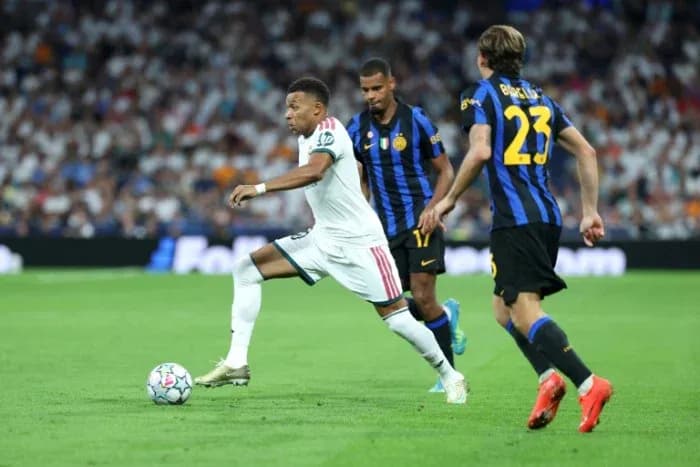
Real Madrid’s 2-1 win over Inter Milan on Tuesday was not about a grand tactical revolution. It was about necessity.
Eduardo Camavinga, Arda Guler and Bernardo Silva were all suspended, and Mourinho needed bodies in the middle of the pitch. So he pushed Alexander-Arnold in alongside Federico Valverde and asked him to run the game from there.
“He has played midfield with England and Liverpool... but he is not a midfielder,” Mourinho said afterwards, cutting through the noise in a single line.
The Portuguese coach was not criticising the performance. Far from it. He praised Alexander-Arnold’s tactical discipline, how he “interpreted what he needed to really well”, and grouped him with Valverde as having “worked very well at this level”.
But the message was clear: this was a solution for a specific night, not a new identity for his number 66.
Mixed night in the middle
The numbers told the story of a player still adjusting to life in traffic.
Alexander-Arnold created two chances and slung in more crosses than any of his team-mates. His passing accuracy, though, dipped to 83.3%, and he did not win a single tackle. For a central midfielder in a Mourinho side, that last detail matters.
The tension in the Bernabeu rose when Inter pulled a goal back on 77 minutes. Moments later, Alexander-Arnold’s number went up. As he walked off, whistles rolled around the stadium. They sounded more like anger at Madrid’s overall display than at one player, but the soundtrack underlined how little margin for error there is when you are auditioning for a new role.
By then, his race was run. As Mourinho later put it, “He has given 100%. He left the pitch with nothing left to give.”
Still no settled right-back
This was also the first competitive match in which Alexander-Arnold and fellow right-back Denzel Dumfries started together.
Mourinho had tried the pairing in pre-season against Fiorentina, with Alexander-Arnold at right-back and Dumfries further forward on the same flank. On Tuesday, he flipped the script, pushing Trent inside instead.
The bigger picture is obvious: Mourinho still does not have a nailed-on first-choice right-back. Last season, Alexander-Arnold had to scrap with Dani Carvajal for minutes. This year, the battle is with Dumfries.
Yet inside the club, there is respect for what he brings. BBC Sport understands Mourinho has been impressed by Alexander-Arnold’s professionalism, his performances and, crucially, his versatility. The coach sees him as a different kind of full-back, one who can step into central pockets and shape attacks from there.
His long passing, whipped crosses, through balls and dead-ball delivery remain elite weapons. The question is where on the pitch you best unlock them.
Southgate’s abandoned plan
The debate is not new.
Southgate’s attempt to rebrand Alexander-Arnold as a central midfielder for England peaked in June 2023, when he handed him the number 10 shirt for a Euro 2024 qualifier in Malta. England won 4-0, Alexander-Arnold scored from midfield, and for a moment the idea looked seductive.
“I haven't played it too much, but it feels comfortable,” he told Channel 4 after that game. “It feels natural, I will say that. It's somewhere I can see myself playing.”
Southgate kept flirting with the experiment over the next year. Then came Euro 2024. Two group games in midfield, a laboured 1-1 draw with Denmark, and Alexander-Arnold was hooked before the hour. The plan was quietly shelved.
Mourinho’s comments after the Inter win hinted at the same underlying issue.
“He has lost some balls because it is not the same to play in this position compared to at right-back,” he said. “The intensity of physical work is quite difficult. He has a different engine.”
The engine that makes him devastating as an adventurous right-back does not automatically translate to the constant, 360-degree demands of a Champions League midfield.
A role, not a reinvention
So where does that leave the Trent-in-midfield saga?
For now, in Madrid at least, it looks like a tactical option rather than a permanent move. A role he can fill when injuries and suspensions pile up, when Mourinho wants an extra passer between the lines, when a game needs unlocking from deep.
He is still fighting Dumfries for the right-back berth. He is still the same creative force, still the same risk-taker on the ball, still the same set-piece specialist.
The question is no longer whether Trent Alexander-Arnold can play in midfield. He can. The real question, for club and country, is starker: will anyone be brave enough to build a team around him there, rather than just dropping him into the middle when circumstances demand it?
Related News
Serhou Guirassy: Milestone of 100 Games for Dortmund
Julián Álvarez Returns for Atlético Madrid's Clash at Anfield
Trent Alexander-Arnold: Can He Succeed as a Midfielder?

Allan Saint-Maximin Shines in MLS Debut for Charlotte FC
Champions League Opening Night: Mourinho's Madrid Triumphs Over Inter
Enzo Fernández and Erling Haaland Shine in Champions League Opener