
Vancouver Prepares for FIFA World Cup 2026 Changes
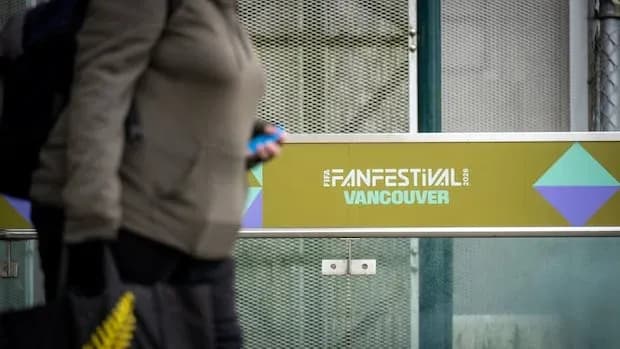
Vancouver is about to change gear.
On Wednesday, the city officially steps into its FIFA World Cup 2026 "event period" — a two‑month stretch that will bring more structures, louder nights and tighter control over what happens in public spaces around B.C. Place and the fan festival at Hastings Park.
City hall calls it a necessary reset to host one of the planet’s biggest sporting spectacles. Critics see something else entirely: a tournament that hands unusual power to FIFA and reshapes the streets at the expense of those with the least.
A city rewired for the World Cup
The FIFA World Cup 2026 Bylaw runs from May 13 to July 20, 2026, and it quietly rewrites how Vancouver can look, sound and feel.
The province expects roughly 350,000 visitors to pass through B.C. Place during the tournament. With seven matches on the slate and total hosting costs projected between $532 million and $624 million — up to $281 million of that on the city’s books — officials are determined to keep the stage spotless.
The bylaw gives Vancouver expanded powers over advertising, vending, noise, graffiti removal and the management of public space. It is designed, the city says, to deliver a "clean, safe, and organized" experience.
In practice, that means:
- Looser rules for putting up temporary event infrastructure — fan zones, towers of signage, and other installations near key venues.
- New limits on street vending, busking and certain advertising in designated event areas.
- Faster removal of unauthorized commercial signs that might clash with FIFA’s branding.
- Extended noise allowances to fit international broadcast schedules and late‑running operations.
- Adjusted truck routes and deliveries in parts of the downtown core to clear room for security and logistics.
Most of these measures lock into place inside a two‑kilometre "controlled area" around B.C. Place and the FIFA Fan Festival site at Hastings Park. Within that ring, bylaw officers can hand out tickets of $250 to $1,000 for common violations. Enforcement will fall jointly to the City of Vancouver and the Vancouver Police Department.
For visitors, the transformation may feel like a festival overlay. For people who live and work in those neighbourhoods, it will be the daily reality for more than two months.
Whose public space?
That’s where the fault lines start to show.
Some housing advocates and legal scholars warn that the bylaw’s emphasis on "cleanliness" and "beautification" risks becoming a pretext to push unhoused residents out of sight.
"This is basically the privatization of public space," said Penny Gurstein, professor emeritus at the University of British Columbia’s School of Community and Regional Planning. "I think people should be worried, especially people who are experiencing homelessness, living on the streets."
The city insists the new rules do not roll back existing protections. Officials say people experiencing unsheltered homelessness will still be allowed to erect temporary overnight shelter in parks where current bylaws permit it. Beautification, they argue, refers to infrastructure work — repairing sidewalks, dressing up construction sites — and they maintain this has "no assessed impact on human rights."
On paper, the right to exist in public remains. The concern from advocates is what happens on the ground when the countdown clock is ticking and the world’s cameras arrive.
A divided experience
Margot Young, a constitutional law professor at UBC’s Allard School of Law, frames the World Cup as an uneven experience baked into the city’s social and economic divides.
"There will be disruption, but that disruption will be different for different groups in the city depending really upon their … social and economic status," Young said.
For affluent residents, she said, the tournament can look like a month‑long party: match tickets, fan zones, late‑night celebrations. For those at the bottom of the income and wealth ladder, the same event can feel like a force pushing them around.
"For those with money, they maybe can go to games, they can take part in the parties," she said. "But for individuals who are at the bottom of our ... income and wealth distribution … they will be moved around by the reordering of city space by FIFA."
Young also cast doubt on how the city’s promises of "trauma‑informed" enforcement will play out under pressure.
"There's no system in place to sort of monitor what is happening with respect to the vulnerable populations," she said.
That absence of oversight leaves a key question hanging over the bylaw: who will actually see, document and challenge the way it is used on the street?
Services under strain
City officials stress that homelessness services and outreach will not pause for the tournament.
They point to more than 1,500 shelter beds and approximately 8,100 supportive housing units in Vancouver, backed by outreach teams, hygiene services and storage programs. Those supports, they say, will continue through the World Cup window even as security tightens and event infrastructure rises.
In a written statement, the city called the tournament a "once-in-a-generation opportunity" to showcase Vancouver.
The opportunity is undeniable. So is the risk. Over the next two months, the city will find out whether it can stage a World Cup and still keep its promise that the streets belong to everyone.
Related News
FIFA Opens New Football Arenas in Palestine to Support Youth in the West Bank
FIFA World Cup 2026: Complete List of Commentators and Presenters
World Cup 2026 Best XI: Messi, Rodri, Mbappe Lead the Team of the Tournament

Spain's Tactical Mastery Secures Second World Cup Victory in 2026
Top 10 Players of the 2026 World Cup: Mbappe or Messi at the Summit?
Gianni Infantino Responds to Critics Amid 2026 World Cup Celebrations