
Negreira Case: Real Madrid's Push Against Barcelona's Scandal
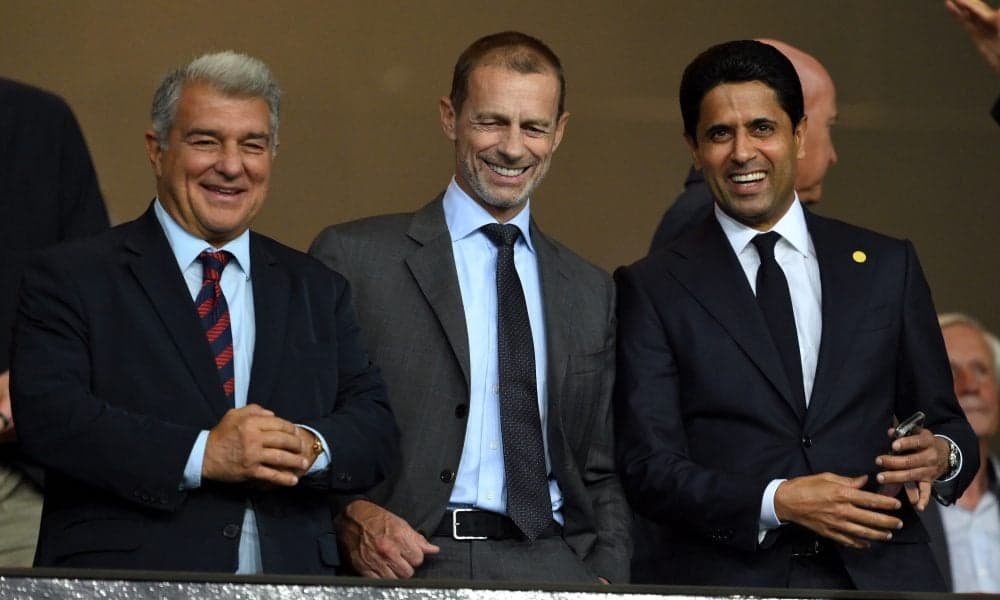
The Negreira case is back at the centre of Spanish football’s storm, dragged there again after Real Madrid president Florentino Pérez publicly tore into Barcelona, calling it the “biggest scandal in history”. One day later, the political temperature has only risen.
Barcelona have already fired back, defending their position and denouncing Madrid’s stance, but at the Bernabéu the strategy is clear: keep pushing, and push hard, for UEFA to step in and punish the Catalan club.
On paper, Madrid believe they have an opening. They point to UEFA’s disciplinary framework, to Article 4, to the notion that European football’s governing body can act where Spanish institutions have stalled. They see a lever. They want it pulled.
The law, though, is less flexible than the rhetoric.
The clock that saved Barça
A detailed breakdown from Mundo Deportivo cuts through the noise. The key isn’t intent, or ethics, or even politics. It’s time.
The payments at the heart of the Negreira case stretch from 2001 to 2018. The scandal only exploded into public view in 2023, when Cadena SER revealed the existence of those alleged payments to José María Enríquez Negreira, former vice-president of the referees’ committee.
By then, the decisive clock had already run out.
Article 9 of the RFEF Disciplinary Code is blunt. Very serious infractions expire after three years. The countdown starts the day after the infringement is committed. No interpretation, no wiggle room.
If the last alleged payment was made in 2018, the disciplinary window closed in 2021. The case did not surface until 2023. That gap is not a detail; it is the shield that currently protects Barcelona from sporting sanctions within Spain.
Neither the CSD nor the RFEF has been able to move against the club on a disciplinary level for that precise reason. The offences, even if proven, would be time-barred in sporting terms.
UEFA’s hands tied
This is where Real Madrid hoped UEFA might break the stalemate. Article 4 of UEFA’s disciplinary regulations allows the body to act to protect the integrity of its competitions, even when national authorities have not.
But the same legal trap waits there too.
UEFA’s own disciplinary rules operate under a similar statute of limitations logic. The European body is not bound by Spanish courts, nor does it need a final national ruling to open a case. What it cannot do is ignore the expiry of its own disciplinary deadlines.
If the alleged conduct ended in 2018, the same time-bar principle applies at European level. The case arriving on UEFA’s desk in 2023 comes too late for a standard disciplinary process. The window is shut before the door can even be opened.
That is why, despite the noise from Madrid and the fury in the public debate, UEFA’s margin for manoeuvre looks minimal. The institution may scrutinise, request information, even issue stern language about integrity, but transforming that into a formal sporting sanction against Barcelona collides head-on with its own rulebook.
For now, the Negreira case continues to rage in the courts of opinion and in the ordinary justice system. In the world that really matters to clubs – the one of bans, suspensions and exclusions from competitions – the decisive battle may already have been lost, not on the pitch or in a courtroom, but on the calendar.
Related News
Carlos Alcaraz Urges an End to Matches Ending in the Early Hours
Carlos Alcaraz Criticizes Late US Open Finish After 3:30 a.m. Match
Jannik Sinner Set for ATP 500 Return in Beijing with Novak Djokovic Also Competing

Meet Iva Jovic: The American Tennis Prospect Making Waves
Flavio Cobolli Shares Insights on Practice Session with Jannik Sinner Ahead of Comeback

Till vs Romero: Fight Details, Undercard, and Viewing Info for This Weekend