
Michael O’Neill Stays as Northern Ireland Manager
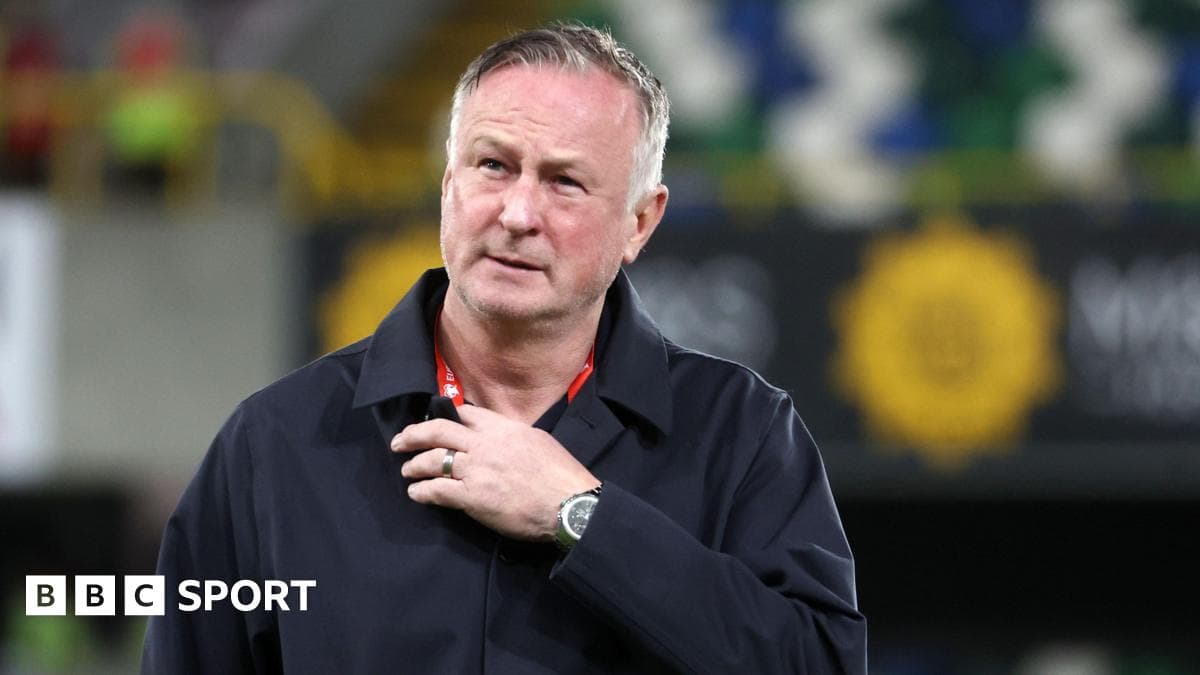
Michael O’Neill’s phone stopped buzzing. The debate, for now, is over. Northern Ireland keep their manager, and with that decision a nervous nation quietly exhales.
Blackburn Rovers wanted him to stay. They had every reason. O’Neill walked into Ewood Park in crisis mode, steadied a listing Championship side and dragged them away from the relegation trapdoor during his interim spell. Clubs take note when a manager turns a “lost cause” into survival.
He listened. He weighed it up. Then he turned his back on the club game and chose the international stage again.
Country over club
For the Irish FA, it is more than a relief; it is a reprieve. O’Neill, 56, remains the man tasked with guiding a young, restless Northern Ireland squad towards Euro 2028, a tournament that will unfold across Great Britain and the Republic of Ireland. He has been here before, of course. The architect of that unforgettable run to Euro 2016 in France is staying on to try to script a sequel.
This is not just about nostalgia. It is about timing.
Northern Ireland’s squad is being rebuilt around emerging talents such as Conor Bradley, Trai Hume, Dan Ballard and Shea Charles. They have injected pace, hunger and a sense of possibility into a team that, not long ago, looked stuck between eras.
Former international defender Stephen Craigan sees the decision as critical to that evolution.
“I’m delighted he’s staying. I think the progress of the young group over the past two or three years has been a joy to watch,” he told BBC Sport NI. In his view, a managerial change now would have risked disrupting the rhythm, fluency and cohesion that has slowly taken shape.
O’Neill’s choice, Craigan argues, is a short-term commitment with long-term implications. It gives Northern Ireland stability heading into summer friendlies and the Nations League campaign that follows in September and October.
Belief runs both ways
Craigan is convinced there is more to come from this group, and he is just as sure O’Neill feels the same.
“They know there’s more to come from them. Michael knows there’s more to come from them, otherwise he wouldn’t have agreed to stay,” he said.
That mutual belief matters. When players sense their manager is fully invested in their development, when they know he trusts them and is excited by their potential, the effect can be transformative. Confidence grows. Risk-taking increases. The performances start to follow.
Craigan, capped 54 times for his country and now a regular analyst on Northern Ireland games, also sees a broader context. O’Neill’s impact at Blackburn will not have gone unnoticed in boardrooms across Britain. Other clubs may yet circle.
“There is no doubt he will have turned heads, making such an impact in what almost looked like a lost cause,” he said. The reality of modern football is clear: contracts come with release clauses, and international managers are no exception.
Which is why Craigan believes the Irish FA must act decisively.
Time to lock it in
For him, this is not just about O’Neill staying now. It is about both sides nailing down what comes next.
He argues that any new deal should be weighted heavily in the association’s favour, offering them protection if clubs come calling again. No more short-term “loan” arrangements to help out clubs. No more half-measures.
“It would either have to be a clean break or it’s not,” he said. In his eyes, the IFA should push for a stronger, longer commitment – extending O’Neill’s current contract by another three years and setting clear terms that end the uncertainty.
“Michael has to think about putting down some roots and saying, ‘I’m going to be an international manager, that’s it’,” Craigan suggested. If the conditions are right, he sees no reason why O’Neill would not sign.
The message is blunt: protect the project, or risk losing its leader at a critical moment.
A generation grows up
For the players, the decision lands like a jolt of electricity.
“The one thing you always hear when the players are interviewed, they speak very highly of Michael, they like the way he works,” Craigan said. O’Neill has sharpened them tactically, refined their shape, and pushed individuals to new levels. The caps are starting to add up; the experience is starting to show.
The roadmap is clear. Euro 2028 has always been the long-term target for this group. On the way, there have been important staging posts: promotion to Nations League B, the bonus of a World Cup play-off spot, the steady accumulation of big-game minutes.
Now the next phase begins.
Northern Ireland face Guinea in Cadiz and France in Lille in early June. Those friendlies will roll into an autumn Nations League group with Georgia, Hungary and Ukraine. Useful tests, all of them, but not the ultimate prize.
The priority is simple: qualify for the next European Championships.
Craigan believes O’Neill’s presence on the touchline could be decisive. He has done it before. That experience, he says, will give this young squad “plenty of hope” as they try to bridge the gap between promise and achievement.
There is still work to do. Creativity in the final third remains an issue. A reliable goalscorer has yet to emerge. Those solutions often arrive as players mature, as combinations settle and confidence hardens into conviction.
Yet the foundations look solid. The unit looks strong. And now, crucially, the man who built the first great modern Northern Ireland side is staying to oversee the next one.
Had O’Neill walked away before those June fixtures, the camp might have felt flat, even fractured. An interim coach, a sense of limbo, players tempted to sit out friendlies with little at stake. It would all have looked, as Craigan put it, “a little bit untidy”.
Instead, Northern Ireland head into the summer with clarity. The manager is in place. The direction is set. The question now is not who leads them, but how far this group can go with him.
Related News
Carlos Alcaraz Urges an End to Matches Ending in the Early Hours
Carlos Alcaraz Criticizes Late US Open Finish After 3:30 a.m. Match
Jannik Sinner Set for ATP 500 Return in Beijing with Novak Djokovic Also Competing
Meet Iva Jovic: The American Tennis Prospect Making Waves
Flavio Cobolli Shares Insights on Practice Session with Jannik Sinner Ahead of Comeback
Till vs Romero: Fight Details, Undercard, and Viewing Info for This Weekend