
World Cup Final: Messi vs Mbappé in the Ultimate Showdown
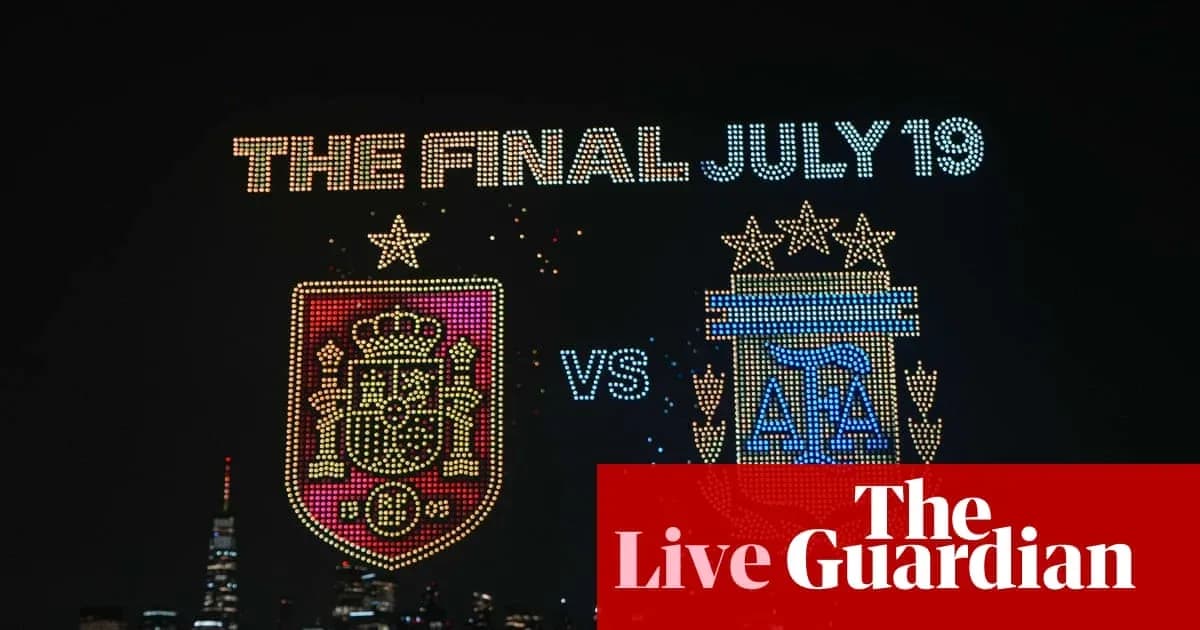
The World Cup is down to its last two matches, but the tournament refuses to quieten. England are still dissecting their own collapse, Spain and Argentina are tightening the screws before Sunday’s final in New Jersey, and the game’s great powerbrokers are already plotting the next four years.
Somewhere in the middle of it all, Lionel Messi and Kylian Mbappé are level on goals and still locked together in the Golden Boot race. Messi leads the charts only because he has one more assist. The debate now is pure World Cup theatre: should a goal in the final carry more weight than one in a third‑place play-off that half the world forgets as soon as it ends? It is the kind of argument that fills the gaps between matches and reveals how much this tournament has got under the skin.
Messi, Mbappé and the last dance
For Messi, Sunday is another tilt at history. For Mbappé, it is a chance to muscle into it. Both have dragged their teams to the brink. The margins are now microscopic. One pass, one slip, one loose ball in the box could decide not only the World Cup but the Golden Boot as well.
The contrast could hardly be sharper. Messi, orchestrator-in-chief, topping the scoring charts by virtue of creation as much as finishing. Mbappé, a blur of acceleration and ruthless precision. If the final breaks open, their duel could define the night.
Rodri’s renaissance and a City sub-plot
Away from the headline acts, this World Cup has quietly belonged to Rodri. His return from an ACL injury came with serious doubt attached: would he trust his body again, would he still dominate games at the same tempo and intensity? The answers have been emphatic.
He has been outstanding throughout the tournament, dictating rhythm, snuffing out danger, and playing with the assurance of a man who has finally made peace with his own recovery. There is, though, a lingering suspicion that these might be his last performances as a Manchester City player. If that proves true, this World Cup will have been both a reminder of his class and a shop window for Europe’s elite. The next few weeks will tell.
England’s postmortem and Tuchel’s tightrope
Back in England’s camp, the inquest continues. Thomas Tuchel is staying on, despite the tactical chaos that helped send England out. His substitutions were lauded earlier in the tournament as game‑changing; by the semi-final, they looked like guesswork.
One reader’s verdict cuts to the bone: if your subs are winning every game, what does that say about your starting line‑ups? In the age of five substitutions, managers talk about “finishers” and “plans for the last half-hour”, but England’s reliance on late rescues underlined a deeper problem. They were, by that account, fortunate to reach the last four at all, and the worst of the semi-finalists by some distance.
The third-place match now looms, unloved but unavoidable. What should Tuchel do? Chase a hollow medal or spread minutes around? There is a strong case for rotating heavily: share the goalkeeping duties, give Ollie Watkins and Ivan Toney the stage, hand Kobbie Mainoo the responsibility he has earned. The players were reportedly bemused by the tactics that undid them. Ninety more minutes might at least offer a measure of clarity.
Power, politics and Infantino’s grip
Far from the training pitches, the political machinery of football is humming. Gianni Infantino has secured formal endorsement from more than 200 of Fifa’s 211 member associations for a fourth term as president, despite the unrest that followed Folarin Balogun’s controversial reprieve from suspension.
Only a handful of countries are yet to send their letters of support, with a small cluster of European federations among the holdouts. Germany is the most prominent of those still withholding official backing. Barring a shock of historic proportions, Infantino will be re‑elected by a landslide at Fifa’s congress in March.
The game has survived Blatter, Warner, Blazer. It will, as one observer put it, survive Infantino too. But the direction of travel is clear: the president’s grip has rarely looked stronger.
A final with presidents and prime ministers
Sunday’s final will not lack for political theatre. Spanish prime minister Pedro Sánchez will be in the stands to watch his country face defending champions Argentina. He will share the stage, in a sense, with Donald Trump, who is also due to attend.
The White House framed Trump’s presence as a celebration of the United States’ ability to host the world “on the grandest stage”. For Sánchez, it is an opportunity to stand alongside a Spanish side that has played some of the tournament’s most incisive football and now stands on the brink of a defining triumph.
Off the pitch, Argentina’s players face scrutiny of their own. Keir Starmer backs calls for Fifa to investigate the display of a banner asserting the country’s claim to the Falkland Islands after their semi-final win over England. The politics of this World Cup will not be boxed off easily.
Real Madrid, Mourinho and Alexander-Arnold’s reset
Club football is never far from the conversation. At Real Madrid, the summer has brought a reunion and a reset. José Mourinho is back at the Bernabéu for a second spell, tasked with restoring a club that fell short in LaLiga and exited the Champions League in the quarter-finals last season.
Trent Alexander-Arnold, who swapped Liverpool for Madrid last year, now finds himself at the heart of that project. After an injury-hit first campaign, he has spoken of the “pleasure” of working under Mourinho, a coach he has long admired from across the technical area. The demands are high, the sessions intense, and the expectations clear: trophies must follow.
Dani Carvajal’s departure in May has opened a lane for Alexander-Arnold to become the undisputed first-choice right-back. At 27, and finally fit, he talks about laying a “solid foundation” for a successful season. For a player whose career has always seemed to move at speed, this feels like a chance to rebuild on his own terms.
Romero, La Albiceleste and the edge of a final
Inside Argentina’s camp, Cristian Romero embodies the national mood. In club football he is a rugged, sometimes volatile defender. In the white and blue of La Albiceleste, he becomes something else again: one of 11 “bleeding hearts”, as one account put it, covering every yard and leaving every stud in the service of the cause.
Alongside Lisandro Martínez, Romero is the enforcer, the last obstacle before Emiliano Martínez. Strip away the star power of Messi and the penalty-box theatrics of the Aston Villa goalkeeper, and Romero has arguably been Argentina’s most consistent performer on the road to a third World Cup final in four tournaments. His duels with Spain’s forwards on Sunday will go a long way to deciding whether Messi climbs one more mountain.
The broadcast circus prepares its exit
In the United States, Fox’s coverage is taking its final bow. Geoff Shreeves, long a familiar sideline voice, signs off. Tom Rinaldi packs away his pocket squares and his grandiose, sometimes overwrought set‑pieces about balls, planets and stars. Chef Nick tones down his more outlandish culinary experiments – the kangaroo corndogs and fufu chicken tikka masala – as the tournament’s gastronomic imagination narrows with the field.
Then there is Jameis Winston, the fan correspondent whose breathless, sweat‑drenched dispatches from the stands have looked, at times, like a man being electrocuted mid‑baptism. It has been chaotic, occasionally compelling, often excessive – a fitting mirror to a World Cup that has rarely known when to stop.
Waiting for the last roar
And so it comes down to this. Lionel Messi against Lamine Yamal. Spain’s whirring, intricate machine against Argentina’s street‑wise resilience and their enduring No 10. One very good team against an excellent one; you can take your pick which is which.
The third-place match will arrive first, offering England a final, faintly awkward outing. The final will follow, presidents and prime ministers in attendance, the world watching, the arguments about Golden Boots and legacies ready to ignite.
Soon enough, the midnight kick-offs and early alarms will end. The biological clocks that bent themselves to this tournament will snap back. Some will drift towards the Brasileirão, others to MLS, searching for a fix to replace the nightly drama.
But before that comes one last roar, one last game to bend the sport’s history. Who writes their name into it now?
Related News
India's Record Chase of 406 Against West Indies Highlighted by Gill's 223 and Rohit's Century
Alex Pereira Hints at Major UFC Bout: 'Big Challenge' Ahead
Three Hall of Famers, Ten Fights, 109 Rounds: The Forgotten Rivalry That Shaped Lightweight Boxing's Golden Era
Khamzat Chimaev and Colby Covington Set for RAF Abu Dhabi Title Clash in November
Thomas Tuchel Confident Harry Kane Will Join 100-Goal Club for England Soon
Cristiano Ronaldo Vows to Reveal Truth After Leaving Portugal Squad Amid Conflict