
World Cup Friday: Key Matches and Stakes for Teams
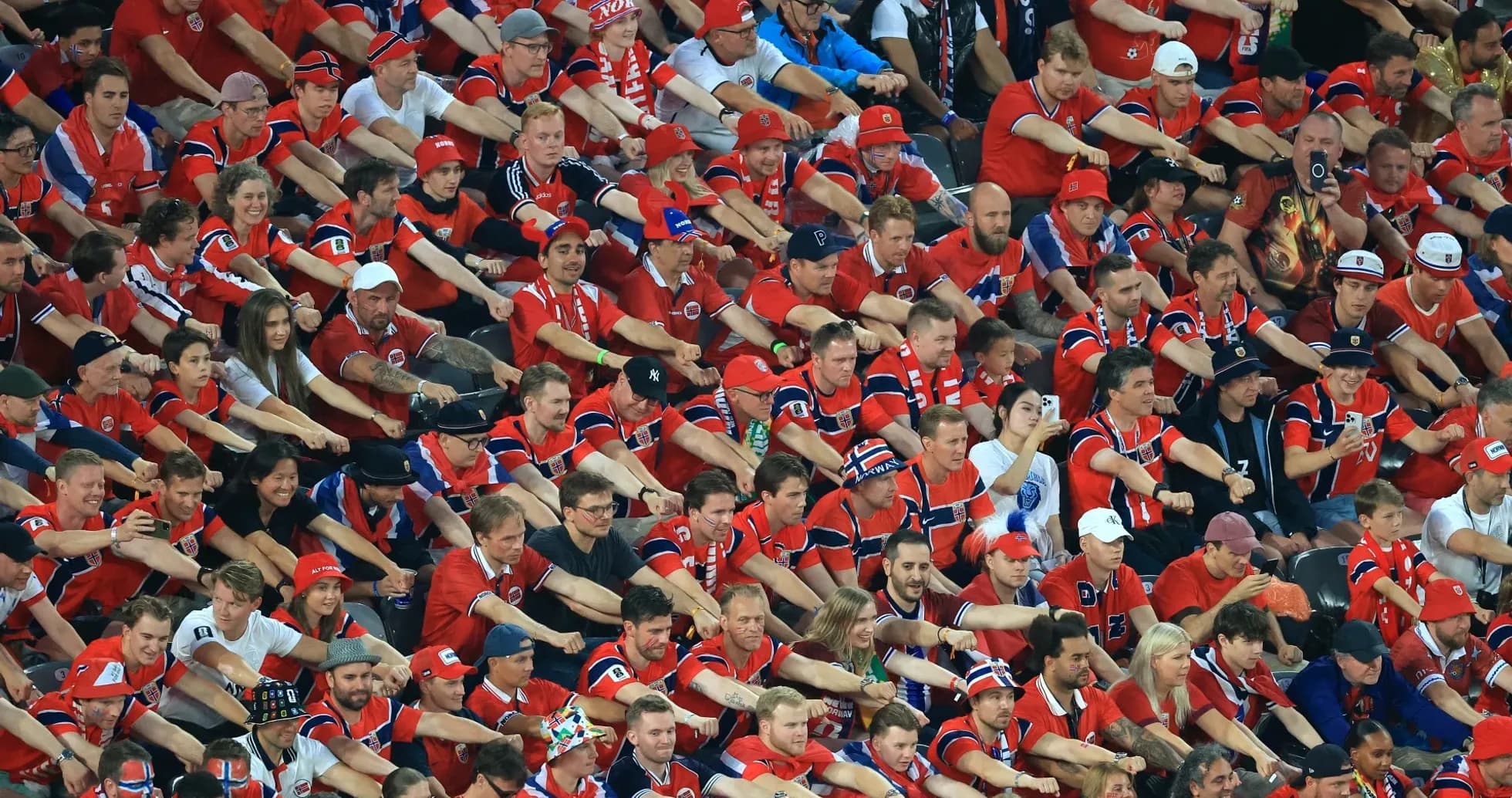
The World Cup tightens its grip on Friday. No dead rubbers here. Groups G, H and I close out with places, pride and prime seeding all on the line, as a sprawling tournament finally starts to narrow its field.
France and Norway stare each other down for top spot in Group I. Spain look to slam the door on any late drama in Group H. Egypt, Iran, Belgium, Cape Verde and Saudi Arabia all arrive at the brink, one result away from either liftoff or the long flight home.
Around them, Mexico glide into the knockouts with a perfect record, Dutch fans turn Kansas City into a travelling carnival of orange, African sides chase a landmark collective showing, and the stands keep producing moments that say as much about this World Cup as anything on the pitch.
This is where the group stage stops meandering and starts cutting.
Friday’s fixtures: six games, thirteen tickets left
By the end of play, the picture will be sharper, but the schedule is brutal.
- Norway vs France – Boston Stadium, United States – 3pm EDT (19:00 GMT)
- Senegal vs Iraq – Toronto Stadium, Canada – 3pm EDT (19:00 GMT)
- Cape Verde vs Saudi Arabia – Houston Stadium, United States – 7pm CDT (00:00 GMT Saturday)
- Uruguay vs Spain – Estadio Guadalajara, Mexico – 6pm CST (00:00 GMT Saturday)
- Egypt vs Iran – Seattle Stadium, United States – 8pm PDT (03:00 GMT Saturday)
- New Zealand vs Belgium – BC Place, Vancouver, Canada – 8pm PDT (03:00 GMT Saturday)
Kickoff times overlap, pressure does not. For some, the task is simple: win and breathe. For others, the calculators are out.
Norway vs France: a heavyweight shootout for first place
They have not met at a World Cup since 2014, when France dismantled Norway 4-0 in a friendly. This will be their 16th meeting, but the stakes now are sharper: Group I’s top seed and a cleaner path through the bracket.
History tilts heavily towards Les Bleus. Norway have only two competitive wins over France, the last way back in a European Championship qualifier in 1987. Their record against European opposition at World Cups is just as unforgiving: no wins, two draws, three defeats. They are still hunting that first scalp.
France walk in with the numbers on their side and the form to match. They have won their last five World Cup games against European teams. Opta’s supercomputer agrees with the eye test, handing them a 59.4 percent chance of victory.
A draw, rated at 20.6 percent, would be enough to lock in first place for France. Norway sit on a 20 percent chance of snatching all three points. The margins are clear: France are expected to control the night; Norway must disrupt the script.
Senegal vs Iraq: one side clinging to hope, the other chasing history
Senegal and Iraq have never crossed paths at a World Cup. They meet now with wildly different odds but the same basic need: survive.
Senegal’s track record against AFC opposition is clean. A draw with Japan in 2018, a win over Qatar in 2022. No defeats. Iraq, by contrast, have never faced an African team at this stage, stepping into the unknown with their tournament hanging by a thread.
The numbers are ruthless. Opta gives Senegal a 77.2 percent chance of victory, Iraq just 8.6 percent, with the draw at 14.2 percent. Senegal can no longer win Group I, but their route to the last 32 remains open: a 72.2 percent chance of progressing. Iraq’s hopes are almost theoretical at this point, rated at just 1.1 percent.
For Senegal, this is about avoiding a missed opportunity. For Iraq, it borders on miracle territory.
Cape Verde vs Saudi Arabia: a knife-edge in Houston
Another first-time World Cup meeting, another game where the stakes are out of proportion with the histories involved.
Saudi Arabia arrive with a quietly impressive record against African opposition on this stage: only one defeat in five, with two wins and two draws. Cape Verde, one of the tournament’s more intriguing newcomers, carry the weight of a nation that suddenly believes knockout football is not just a dream.
Opta’s model leans slightly towards Cape Verde, giving them a 40.8 percent chance of victory. Saudi Arabia sit at 33.9 percent, with the draw at 25.3 percent.
The qualification math underlines how tight this is. Cape Verde hold a 66.7 percent chance of reaching the last 32. Saudi Arabia’s hopes stand at 33.3 percent. One big moment in Houston could flip those numbers on their head.
Uruguay vs Spain: old rivalry, new era
Two former world champions meet again, more than three decades after they last shared a World Cup pitch.
Their history in this competition is balanced on a knife-edge. A 2-2 draw in the final round of the 1950 tournament. A 0-0 stalemate at Italia ’90. No winner yet, just echoes of past battles.
This time, the context is different. Spain arrive as reigning European champions, a side rebuilt and re-energised. Opta’s supercomputer backs them strongly: Spain win 62.4 percent of 25,000 simulations, Uruguay just 15.7 percent, with a draw in 21.9 percent.
The numbers say Spain. The shirt, the history, the chaos of a World Cup night say Uruguay will not go quietly.
Egypt vs Iran: fine margins in Seattle
On paper, it is a first World Cup meeting. In reality, there is a tiny thread connecting these sides: the 2000 LG Cup in Tehran, a 1-1 draw settled by Egypt on penalties, 8-7. Hossam Hassan scored that day; he now stands on the touchline as Egypt’s coach. Ali Daei equalised for Iran, a reminder of the pedigree that runs through both football cultures.
Iran bring an unbeaten World Cup record against African teams. Wins over Morocco in 2018, draws with Angola in 2006 and Nigeria in 2014. They know how to grind these games.
Even so, Opta leans slightly towards Egypt. They are given a 42.9 percent chance of victory, Iran 24.9 percent, with a draw at 32.2 percent. It feels like the sort of match where one mistake, or one flash of nerve, decides a season’s work.
New Zealand vs Belgium: underdogs against the odds
They have never faced each other at any World Cup. They meet now with the form book screaming in one direction.
New Zealand come armed with a curious statistic: unbeaten in their last two World Cup games against European teams, both draws, against Slovakia and Italy in 2010. Belgium, though, carry a different kind of quirk. They could become the first European side since their own 1998 team to draw all three group matches at a World Cup.
Opta is unmoved by romance. Belgium are overwhelming favourites, with an 80.3 percent chance of victory. A draw sits at 11.8 percent. New Zealand win in just 7.9 percent of simulations.
The All Whites have lived this role before: the stubborn spoiler. Belgium, for all their talent, have to prove they can actually finish a game off.
The table: who’s safe, who’s scrambling
By Friday morning, six groups are done. Groups G to L still hold the remaining tickets, with 13 places in the Round of 32 up for grabs.
One team stands alone with a perfect record: Mexico, on nine points, the only side to sweep their group.
A long list have already booked their place in the knockouts: Mexico, South Africa, Switzerland, Canada, Bosnia and Herzegovina, Brazil, Morocco, USA, Australia, Germany, Ivory Coast, Ecuador, Netherlands, Japan, Sweden, France and Norway.
The live battles:
- Group G: Egypt lead with 4 points. Iran and Belgium sit on 2, New Zealand on 1.
- Group H: Spain top with 4 points. Uruguay and Cape Verde lurk on 2.
- Group I: France and Norway are through, but first place remains up for grabs.
Groups J, K and L will have their say on Saturday. For now, Friday belongs to the anxious, the ambitious and the sides trying to avoid an early obituary.
Turkiye stun the US in a game that “didn’t matter”
On paper, Turkiye vs USA in Group D meant nothing. The US had already secured top spot. Turkiye were already out. At SoFi Stadium, nearly 70,000 people turned up anyway and got a 3-2 thriller decided in the 98th minute.
Turkiye walked away with the win, a late strike snatching a game that could easily have drifted. US coach Mauricio Pochettino rang the changes, making nine alterations to his starting XI and handing seven players their first World Cup starts.
It was supposed to be a gentle rotation exercise. It turned into one of those chaotic group finales that lives longer in the memory than some knockout ties.
African surge: a continent on the brink of a landmark
Ten African teams reached this expanded 48-team World Cup. Remarkably, as many as eight could yet make the knockouts.
Morocco and South Africa are already through. Ivory Coast have also punched their ticket to the Round of 32. Behind them, Egypt, Algeria, DR Congo, Ghana and Cape Verde all go into their final group games with qualification in their own hands.
It is not just a feel-good subplot. If the results fall right, this could be the most significant collective performance by African sides in World Cup history. The opportunity is there. Now it needs to be taken.
A lone voice, thousands listening: Colombia fans’ moment of grace
Some of the defining images of this World Cup are not goals but gestures.
Before Colombia’s Group K match against DR Congo, something rare happened. As the national anthems began, thousands of Colombian fans fell completely silent. They allowed a single DR Congo supporter to sing his anthem alone, his voice carrying around the stadium.
When he finished, the Colombian end erupted in applause and cheers, embracing him in a show of respect and sportsmanship that cut straight through the noise of the tournament.
The clip raced around social media. Colombia later won 1-0 to secure their place in the Round of 32, but the moment that lingered came before a ball was kicked.
The Infantino double: one president, two screens, many questions
Then came one of the stranger scenes of 2026.
During the final Group E matches, Gianni Infantino appeared on the big screen at both Ecuador vs Germany and Curacao vs Ivory Coast – two games being played at the same time in different cities.
The reaction was instant. Videos flew around social media. Fans joked that the FIFA president had discovered a way to be in two places at once, a fitting trick for a tournament stretched across the US, Canada and Mexico.
The oddity played out on a night of real drama on the pitch. Ecuador stunned Germany 2-1. Ivory Coast beat Curacao 2-0 to reach the Round of 32. Amid it all, the image of Infantino’s double presence became yet another talking point in a World Cup already full of them.
Mexico perfect, Azteca roaring
Mexico’s group-stage job could hardly have been more emphatic.
A 3-0 win over Czechia at the Azteca Stadium sealed three wins from three in Group A. They had already locked up top spot before kickoff, but they finished like a side intent on sending a message.
After a quiet first half, Mateo Chavez broke the deadlock. Julian Quinones added a second, his second goal of the tournament, and substitute Alvaro Fidalgo wrapped it up. Czechia’s hopes of the last 32 died on the spot. Mexico advanced with maximum points and now wait for one of the best third-placed teams in the next round.
The cohosts wanted momentum. They have it.
Kansas City turns orange
On another part of the continent, it felt like a little slice of Amsterdam had been dropped into the American Midwest.
Local reports estimated more than 35,000 Netherlands supporters flooded downtown Kansas City for the famous Oranje Fanwalk before their match against Tunisia. They gathered at the Power & Light District, then marched behind the iconic orange bus, draped in flags, singing, chanting, turning the streets into a moving wall of colour.
It was not just Dutch fans. Locals and neutrals joined in, drawn by the spectacle. By the time the crowd reached the FIFA Fan Fest, Kansas City had staged one of the biggest fan marches of the tournament so far.
Borders, visas and the World Cup’s uneasy mirror
For all the noise inside the stadiums, one of this World Cup’s most important conversations is happening outside them.
Speaking on The Take, journalist Boima Tucker argued that the tournament has laid bare the tension between football’s message of global unity and increasingly restrictive border policies. Moving through host cities, he visited immigrant communities living the World Cup in their own way: Moroccan and Senegalese fans in New York, Cape Verdean supporters in Massachusetts, thousands of Ghanaians packing a watch party in Toronto.
“It’s been wonderful to get an intimate look at how the World Cup has affected people in their homes,” he said. “People are excited to talk about their teams and their countries.”
At the same time, he pointed to the barriers many have faced just getting into the US. Iran’s national team have been based in Tijuana, Mexico, crossing the border only for matches. Football officials and relatives of players have struggled with visas.
Those hurdles, Tucker said, inevitably seep into the sport. “When you’re an athlete, you want to be locked in. You want to be concentrating on the field, on the results. If you have to jump through hurdles, that’s definitely going to affect the field of play.”
For him, the World Cup is a reflection of wider global inequalities. “We live in a global system that restricts people’s movement,” he said, warning that even when high-profile cases are resolved, “their reunion is not going to lead to systemic change.”
And yet, amid that backdrop, football still carves out its own kind of space. Tucker described watching immigrant communities celebrate side by side, using the World Cup as a rare chance to connect across cultures and classes.
“I hope people remember this World Cup as one in which people across ethnic lines, national identities and class lines were able to briefly mingle and learn something about each other,” he said. “More than anything, those borders that we have in our daily lives were briefly overcome.”
On Friday, as France chase top spot, Egypt fight for survival and Mexico bask in perfection, that is the question hanging over the tournament: when the final whistle blows on 2026, will those brief cracks in the walls stay open, or will football’s greatest show slip back behind the borders it briefly outran?
Related News
Anthony Joshua Names Murat Gassiev as Next Opponent if He Defeats Tyson Fury

UFC 332: Start Time and Fight Highlights for Natalia Silva vs. Wang Cong

Court McGee Opens Up About Choosing UFC 332 as His Final MMA Fight
WBC Orders Lightweight Title Unification: William Zepeda vs Jadier Herrera
BCCI Pension List: Monthly Payments to Retired Indian Cricketers in 2025
Why Fury vs Joshua Is Set for Cardiff, and Dua Lipa’s Unexpected Role