
York United's Tactical Boldness Defeats Vancouver FC 3-1
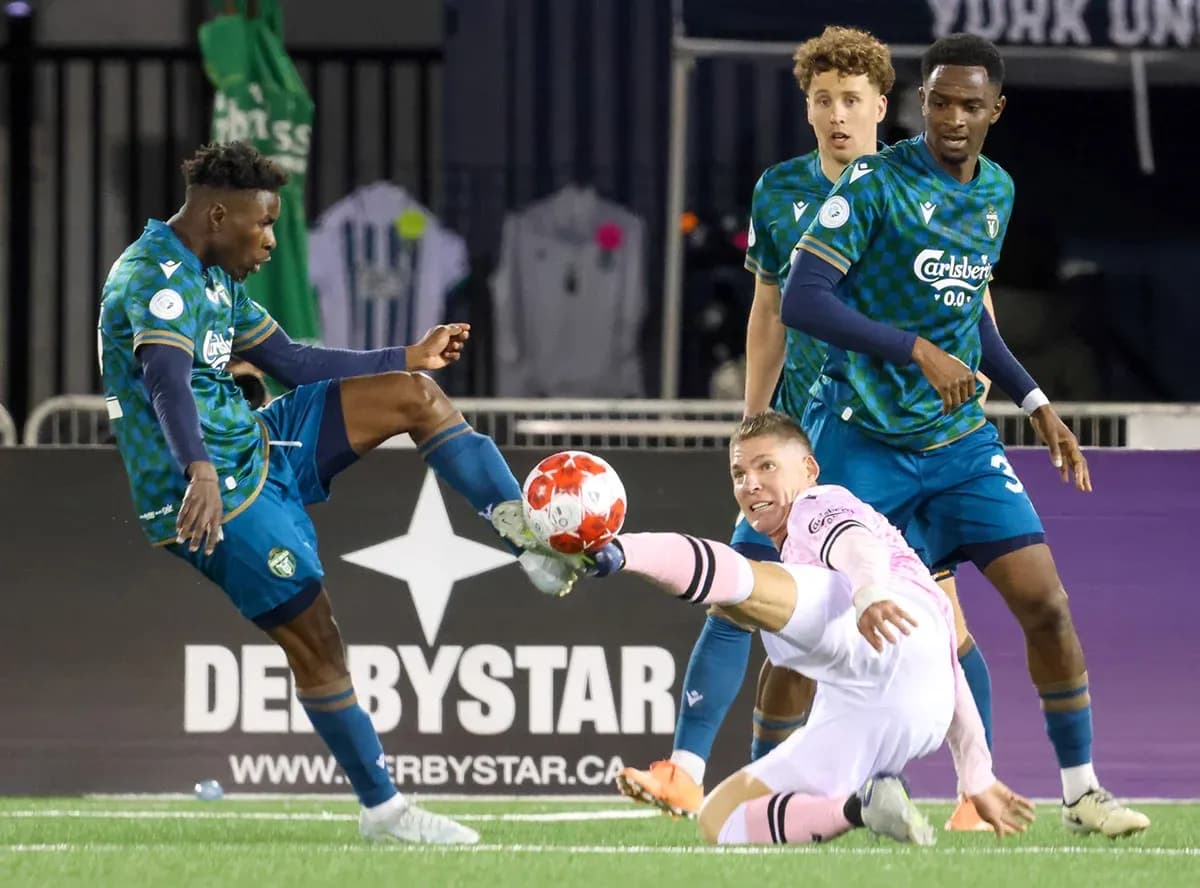
York Lions Stadium had already told its story by full time: York United 3, Vancouver FC 1, a Group Stage statement in the Canadian Premier League that bent the table back toward the pack. Vancouver arrived fourth with 30 points and a positive goal difference of 2 (30 scored, 28 conceded overall), York in sixth on 23 points with a goal difference of -13 (29 scored, 42 conceded overall). On paper, it was the visitors with the stronger season profile; on the pitch, it was York’s structural boldness and front-three aggression that carried the night.
I. The Big Picture – Systems and Seasonal DNA
York leaned into their season-long identity, rolling out the 3-4-3 that has been their most-used shape (6 league matches in this formation heading into this game). The back three of L. Singh, F. Sturing and O. León sat in front of Campos Ralston Kai Antonio, with a midfield square of C. Guzmán, S. Yeates, O. Bassett and K. Kibato tasked with both ball progression and counter-press. Ahead of them, the front trio of L. Accettola, T. Skublak and J. Almagro gave York a vertical, multi-angle threat.
The numbers underline why this choice made sense. At home this season, York had been a different animal: 4 wins, 3 draws and 3 defeats from 10, with 21 goals scored at York Lions Stadium. That is an attacking average of 2.1 goals at home, a sharp contrast to their away output of 0.8. The defensive fragility remained (23 conceded at home, an average of 2.3), but the bet was clear: embrace the chaos, outscore the opponent.
Vancouver, meanwhile, arrived with a more balanced season profile and a clear tactical template. M. Nash set his side in a 4-2-3-1, the shape they have used most often in the league (7 matches). C. Irving anchored a back four of M. Doner, M. Campagna, Thomas Geoffrey Field and K. Proctor. In front, the double pivot of D. Pecile and M. Polisi was meant to steady the game, with an attacking band of T. Bah, N. Mezquida and M. Amissi supporting lone forward L. Mousset.
Their season numbers told a story of a side that can control games but is vulnerable when stretched. Overall, Vancouver had scored 30 and conceded 28, averaging 1.4 goals for and 1.3 against. On their travels, they had 3 wins, 1 draw and 7 defeats from 11, scoring 13 and conceding 17 – an away attacking average of 1.2 and defensive average of 1.5. Solid, but not dominant, and certainly not bulletproof against a high-energy home side like York.
II. Tactical Voids and Discipline
There were no explicit absentees listed, so both coaches had near-full arsenals. But the disciplinary profiles of these squads shaped the emotional tone of the contest.
York came in as one of the league’s more combustible sides. Their season card distribution shows a clear pattern: yellow cards peak between 61-75 minutes, where 23.73% of their cautions occur, and they also carry a late-game edge with 13.56% between 76-90. They have even seen a red card in that 61-75 window, underlining how their intensity can spill over just as legs tire.
Individually, the edge is personified by T. Skublak. Across the campaign he has 8 yellow cards, yet remains central to York’s attack with 5 goals and 2 assists. He is both talisman and walking tightrope. Behind him, S. Gonzales on the bench brings his own volatility, with 1 red and 2 yellows in limited minutes.
Vancouver’s discipline is less explosive but still significant. Their yellow cards spike late: 25.00% of their cautions arrive between 76-90 minutes, with another 19.44% between 46-60. In other words, the second half is where their composure is most tested. In this fixture, that matters when facing York’s relentless front three and a crowd lifted by a home scoring average of 2.1.
III. Key Matchups – Hunter vs Shield, Engine Room
The headline duel was always going to be York’s “hunter” in Skublak against Vancouver’s defensive “shield” built around their structure and holding midfield.
Skublak came into the match as one of the league’s most productive forwards: 5 goals from 20 shots (12 on target), 2 assists, and a robust duel profile with 97 contests and 49 won. His work without the ball is just as notable – 7 tackles, 1 blocked shot, 3 interceptions – making him a pressing trigger as much as a finisher. Against a Vancouver back line that concedes an average of 1.5 goals per away game, his ability to pin centre-backs and attack the channels was always going to be decisive.
Behind him, York’s creative triangle of Yeates, Bassett and Almagro formed the “engine room” in possession. Yeates, with 420 completed passes at an 87% accuracy and 10 key passes, is the metronome. Almagro adds incision: 10 key passes and 2 assists, plus an eye for pressing from the front. Together, they looked to overload the half-spaces around Vancouver’s double pivot.
On the other side, Vancouver’s response lay in the blend of M. Polisi and D. Pecile. Polisi, with 415 passes at 85% accuracy, 7 key passes and 16 tackles, is the archetypal enforcer-playmaker hybrid. His duel with Yeates over central territory defined whether Vancouver could slow York’s transitions. Higher up, T. Bah offered verticality and chaos: 3 goals, 1 assist, 21 tackles, 1 blocked shot and 119 duels with 63 won. He is both outlet and first presser, and his battle with York’s wide centre-backs and wing midfielders shaped Vancouver’s capacity to break.
Up top, Mousset carried a quiet but efficient threat: 3 goals, 1 assist, and a penalty converted this season. With Vancouver having scored 2 penalties in total without a miss, any incursion into York’s box risked being punished from the spot.
IV. Statistical Prognosis – Why York’s Approach Was Justified
Heading into this game, York’s overall profile – 29 scored and 42 conceded, an attacking average of 1.5 and defensive average of 2.1 – painted them as entertainers more than contenders. Vancouver’s more balanced 30 scored and 28 conceded, with 1.4 for and 1.3 against, suggested a side better equipped to manage tight margins.
Yet context matters. York at home are a 2.1-goals-per-game machine; Vancouver away concede 1.5 and rely on efficiency at the other end. With no penalties missed in the season for Vancouver but no penalties at all for York, the open-play battle was always going to be decisive.
The 3-1 full-time scoreline validated Eustáquio’s aggressive 3-4-3. By committing numbers high and trusting Skublak, Almagro and Accettola to stretch Vancouver’s back four, York leaned into their strengths: volume of chances, territorial pressure, and a midfield that can pass and press in equal measure. Vancouver’s structure and away record suggested resilience, but their late-game card profile and slightly porous away defence left them vulnerable once York seized momentum.
Following this result, the tactical lesson is clear. York’s high-risk, high-reward identity, especially at York Lions Stadium, can overturn the table narrative on any given night. For Vancouver, the path forward lies in tightening their away defensive block and giving their attacking talents like Bah and Mousset more controlled platforms, rather than asking them to survive extended waves against a home side built to thrive in chaos.
Related News

Atlético Ottawa vs Supra du Quebec: Head-to-Head Stats and History

Pacific FC vs Vancouver FC: Head-to-Head Stats and Insights
Forge Dominates Atlético Ottawa in 3-0 Victory

Cavalry FC vs Forge: Head-to-Head Stats and Historical Context
Pacific FC vs Cavalry FC Predicted Lineups and Team News

York United vs Vancouver FC Predicted Lineups and Team News