
2026 World Cup Knockout Stage: Canada vs. Morocco and France vs. Paraguay
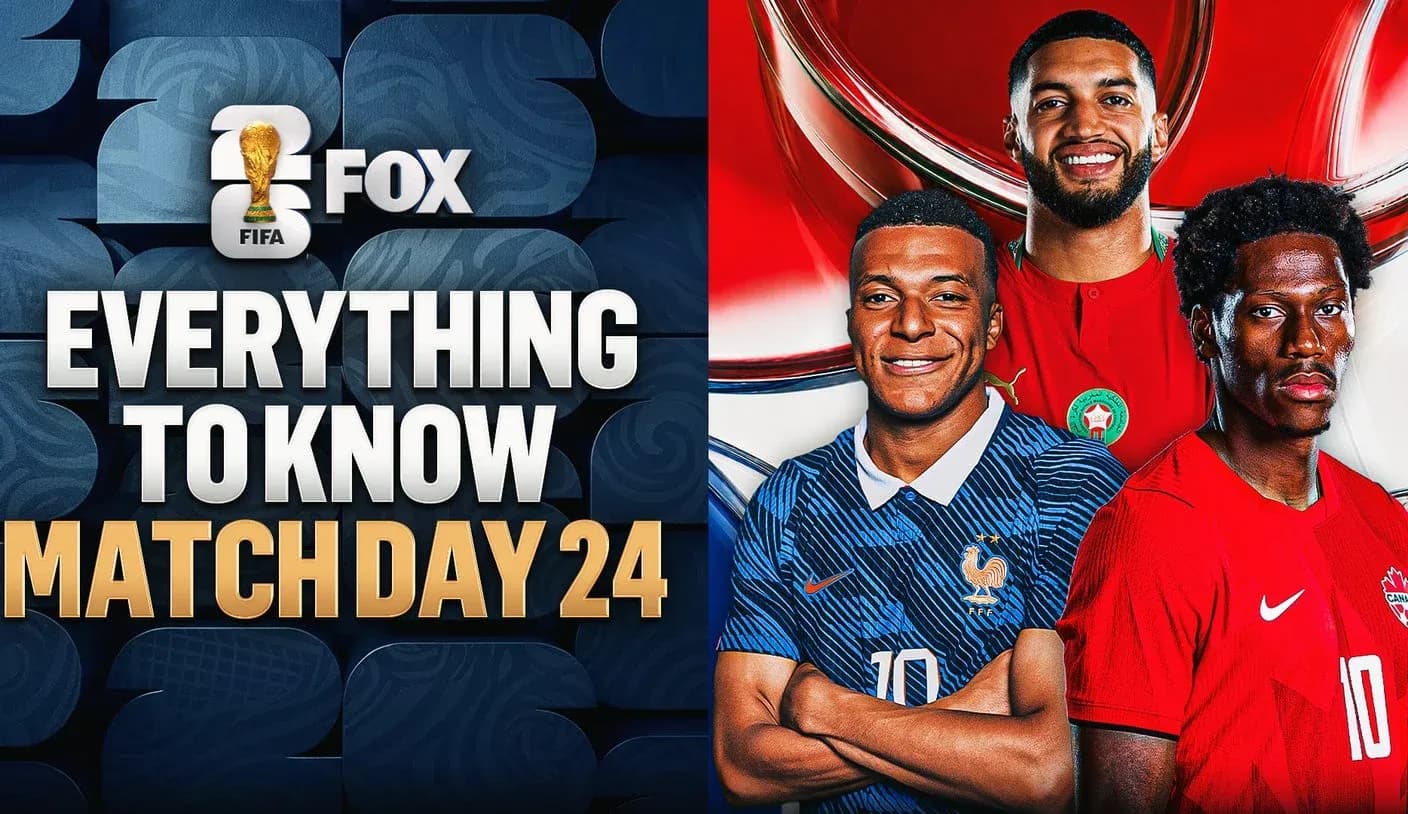
On the 250th anniversary of American independence, the 2026 World Cup steps into its own moment of truth. The fireworks will start long before nightfall. First in Houston, where an ambitious Canada stares down a ruthless Morocco. Then in Philadelphia, a few miles from where the Declaration of Independence was signed, France and Paraguay collide under brutal summer heat.
Two matches. Two heavy favorites. Two underdogs who have already torn up scripts.
Canada vs. Morocco – A Rematch With the Stakes Raised
Houston gets the curtain-raiser: Canada against Morocco, a round-of-16 tie loaded with history and contrast.
These nations last met on the World Cup stage in Qatar in 2022. Morocco won that day, 2–1, on its way to a stunning semifinal run. Four years on, the Moroccans look even sharper. Canada, though, is no longer here just to make up the numbers.
Under Jesse Marsch, Canada has finally stepped out of the shadows of its own World Cup past. Six games, six losses across 1986 and 2022. That was the baggage. Then came a breakthrough run to the 2024 Copa América semifinals and, now, a first-ever World Cup knockout win to reach this round of 16.
It has not been smooth. Far from it.
A flat, worrying draw against Bosnia and Herzegovina raised old doubts. Canada’s response was emphatic: a 6–0 demolition of Qatar to clinch a knockout place. Then came another stumble, a loss to Switzerland in the group finale that reopened every question about consistency and mentality.
Again, they answered. A tense, grinding 1–0 win over South Africa, settled late by Stephen Eustáquio, pushed Canada into this date with Morocco. It was not pretty. It was not expansive. It was, however, the kind of result that keeps a tournament alive.
Now comes the real climb.
Canada’s Margin for Error Shrinks
Canada carries attacking talent, but not yet the certainty that goes with it. Jonathan David, Cyle Larin and Tajon Buchanan give Marsch a front line with goals and pace, yet all three have flickered rather than burned at this World Cup. Against a Morocco side that rarely offers second chances, they cannot afford another off night.
Then there is Alphonso Davies. The Bayern Munich star finally returned from his hamstring injury in the win over South Africa, coming on in the 75th minute for his first action of the tournament. His status remains the great unknown. Can he start? Can he last? Or will Marsch again be forced to hold him back, hoping for a late-game burst?
Without a fully fit Davies, Canada loses its most explosive outlet in transition and its best weapon against Morocco’s biggest strength.
Morocco, Stronger and Bolder Than 2022
Morocco has arrived in North America with the swagger of a team that knows it belongs in the latter stages of this competition. The performances have backed that up.
A 1–1 draw with Brazil that could easily have been more. A controlled 1–0 win over Scotland. A 4–2 victory over Haiti that showcased their attacking depth. This is a side that can smother you or slice you open.
Then came the round-of-32 epic against the Netherlands, one of the tournament’s standout matches so far. The Dutch snatched the lead against the flow of play. Morocco refused to blink. Deep into stoppage time, central defender Issa Diop—who only switched allegiance from France to Morocco just before the final squad deadline—pushed forward and grabbed the equalizer.
Morocco had dominated most of the contest. In the shootout, that control finally translated into progress.
The core of that 2022 semifinal team has been upgraded, not broken apart. Ismael Saibari, with three group-stage goals and a freshly sealed move from PSV Eindhoven to Bayern Munich, has given them another cutting edge up front. Achraf Hakimi remains one of the world’s outstanding right backs, a relentless presence driving into the final third. Brahim Díaz brings Real Madrid flair on the wing. Teenage midfielder Ayyoub Bouaddi has emerged as one of the tournament’s brightest young engines in the middle of the park.
This is why Morocco enters as a heavy favorite. This is why Canada, to reach a first-ever World Cup quarterfinal, will need the kind of upset that rewrites a footballing nation’s story.
The Key Battle: Hakimi’s Corridor
All eyes will inevitably drift to one man when Morocco builds from the back: Achraf Hakimi.
The Paris Saint-Germain fullback has played every minute of Morocco’s four games. He surges forward with the timing of a winger and the stamina of a marathoner. If Davies cannot start or is forced to play within himself, Hakimi will see a runway of space down the right.
Canada’s wide players will have to decide: track him relentlessly, or risk being overrun. Either way, Hakimi’s influence—on and off the ball—could tilt this tie long before the final whistle.
France vs. Paraguay – Fireworks in the Furnace
Later in Philadelphia, the temperature rises in every sense.
A place in the quarterfinals is at stake when France, loaded with star power and pre-tournament expectations, runs into a Paraguay side that has already shredded reputations. The forecast is for a punishingly hot night at Philadelphia Stadium. The football might be even more intense.
On paper, this looks like a mismatch. On grass, Paraguay has made a habit of ignoring the odds.
Paraguay’s Road Through the Minefield
Gustavo Alfaro’s team opened its World Cup with a 4–1 defeat to the USA. That kind of loss can sink a campaign before it starts. Paraguay refused to fold.
They tightened, organized, and leaned into the identity that has carried them this far: defensive discipline, collective sacrifice, and just enough quality at the decisive moments.
Down to 10 men for the entire second half against Türkiye in the group stage, Paraguay dug in and escaped with a 1–0 win. It was stubborn. It was ugly. It was exactly what they needed.
Then came Germany in the round of 32. A giant of the World Cup. Heavy favorites. And, by the end, eliminated.
Paraguay absorbed wave after wave of German possession, closed spaces, and strangled the game into a 1–1 draw over 120 minutes. In the shootout, they did not blink. It was the biggest shock of the tournament so far and a testament to the structure Alfaro has drilled into his squad.
The backbone of this team is clear. Matias Galarza has been at the heart of everything. His loan spell at Atlanta United ended during this World Cup, but his influence for Paraguay has only grown. He assisted Julio Enciso’s goal against Germany, buried his penalty in the shootout, and scored the winner against Türkiye. Around him, the backline of José Canale, Gustavo Gómez, Juan Cáceres and Júnior Alonso, plus goalkeeper Orlando Gil, has turned into a wall.
That wall now faces its most brutal stress test.
France’s Attack in Full Flight
France has rolled into the knockouts with the authority of a team that knows it should be playing on the final weekend.
Kylian Mbappé is chasing history. Six goals already, delivered in three braces. In the one match where he did not score—against Norway—he simply switched roles and produced two assists. Every run he makes, every touch around the box, bends the game toward him.
Yet Mbappé is only one piece of the machine.
Ousmane Dembélé has transformed from World Cup nearly-man to decisive force. Before France’s second group game, against Iraq, he had never scored at this tournament. That changed in a hurry. A goal and an assist against Iraq. A hat trick against Norway. Another assist in the 3–0 dismantling of Sweden in the round of 32. Once Dembélé caught fire, France shifted from dangerous to devastating.
Behind them, Michael Olise has orchestrated. The Bayern Munich midfielder has been one of the competition’s standout playmakers, already up to five assists. His vision and passing angles have unlocked defenses, repeatedly setting Mbappé and Dembélé into the spaces they crave. On the opposite flank, Bradley Barcola has stretched backlines with direct dribbling and clever movement, widening the pitch and opening lanes for France’s stars to attack.
Paraguay’s compact block will try to suffocate all of that. It will not be easy.
The Heat, the Block, and the Conductor
Paraguay will sit deep. They will stay narrow. They will ask France to pick the lock again and again, trusting their structure and their nerve.
This is where Olise becomes central.
Against a low, disciplined block, sideways possession is worthless. France will need passes that break lines, that pierce the seams between center-back and fullback, that arrive at Mbappé or Dembélé in stride. Olise has been doing exactly that all tournament.
With five assists already, he has quietly become the connector between France’s dominance of the ball and the scoreboard. On a sweltering night, when legs tire and concentration wavers, his ability to see and execute the killer pass could decide how quickly this match tilts.
Paraguay, of course, will hope the heat and the chaos drag France into a dogfight. They will need their best defensive performance yet—and a slice of the luck that every great upset requires.
France, on the other hand, knows what is at stake. Win, and the path to another deep World Cup run stays on course. Slip, and this golden generation will be staring at one of the great shocks in tournament history.
On a landmark July 4, the United States celebrates its past. In Houston and Philadelphia, four nations will be fighting to shape the future of this World Cup.
Related News
Anthony Joshua Names Murat Gassiev as Next Opponent if He Defeats Tyson Fury

UFC 332: Start Time and Fight Highlights for Natalia Silva vs. Wang Cong

Court McGee Opens Up About Choosing UFC 332 as His Final MMA Fight
WBC Orders Lightweight Title Unification: William Zepeda vs Jadier Herrera
BCCI Pension List: Monthly Payments to Retired Indian Cricketers in 2025
Why Fury vs Joshua Is Set for Cardiff, and Dua Lipa’s Unexpected Role