
AC Milan Defeats Torino in Tactical Battle of 3-4-2-1 Formations
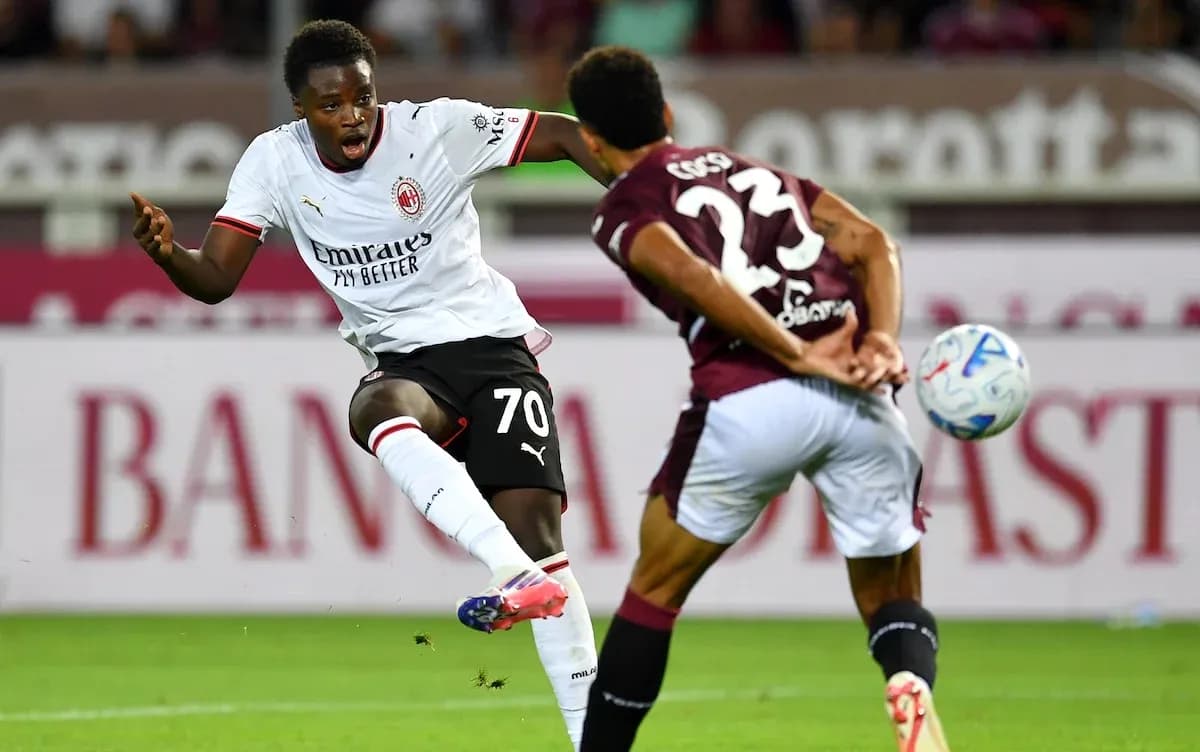
Under the late-summer lights of the Stadio Olimpico Grande Torino, Serie A’s new season opened with a tactical mirror match that revealed as much about the squads as the 2–1 scoreline in favour of AC Milan. Both sides lined up in a 3-4-2-1, but the same shape told two very different stories: one of a project in construction under Ignazio Abate at Torino, the other of a more mature, flexible unit under Ruben Amorim.
I. The Big Picture – Two 3-4-2-1s, One Early Statement
Following this result, Torino sit 13th with 0 points, their overall goal difference at -1, the product of 1 goal scored and 2 conceded. At home they have played 1, lost 1, scoring 1 and conceding 2. AC Milan, by contrast, leave Turin with an early marker laid down: 3 points, 5th in the table, and an overall goal difference of +1 (2 scored, 1 conceded). On their travels they have played 1, won 1, with 2 goals for and 1 against.
The symmetry of the formations disguised an asymmetry in execution. Torino’s 3-4-2-1 leaned heavily on structural discipline and vertical surges from the wing-backs and advanced midfielders. Milan’s version, with the same base, was all about fluid rotations, aggressive half-space occupation, and the ability to change the game from the bench.
II. Tactical Voids – Absences and What They Forced
Both squads were shaped by who was not there as much as who was. Torino entered without F. Anjorin (hip injury), E. Comert (suspended after a red card), F. Israel (shoulder injury), and P. Pellegri (knee injury). The absence of Comert in particular forced Abate into a back three of S. Coco, A. Ismajli, and P. Comuzzo. It is a trio with promise but not yet the hierarchy and communication of a seasoned unit. Without Pellegri, the central reference up front fell to G. Simeone, supported by N. Vlasic and C. Casadei between the lines.
Milan’s missing names were even more headline-grabbing: Y. Fofana (inactive), S. Gimenez (ankle injury), R. Leao (muscle injury), C. Nkunku (inactive), and F. Tomori (inactive). Deprived of Leao’s chaos on the left and Tomori’s authority at the back, Amorim trusted a new spine: M. Gila, K. De Winter, and S. Pavlovic as the back three, with P. Estupinan and S. Chukwueze as wide outlets and G. Ramos the central striker.
Disciplinary trends also framed the contest. Torino’s season card profile is still blank after one match, but Milan’s is already marked by controlled aggression: 1 yellow card in the 46–60 minute window, a 100.00% concentration of their cautions so far. That solitary booking belongs to R. Loftus-Cheek, who sits atop both the yellow and red card charts statistically, even though he has not seen a red; it underlines his role as a physical, line-breaking presence who walks a fine line in duels.
III. Key Matchups – Hunter vs Shield, Engine Room vs Enforcer
The “Hunter vs Shield” duel for Milan was personified by A. Cisse against Torino’s improvised back line. Cisse, already among the league’s top scorers, delivered 1 goal from 3 shots, with 1 on target, and won 6 of 10 duels. His movement between Coco and Ismajli repeatedly stretched Torino’s defensive shape, especially when he drifted off G. Ramos’ central runs. For a back three playing together in this configuration for the first time this season, that constant re-positioning was a stern test.
On the Torino side, the attacking “hunter” role is still being defined, but the impact of C. Adams off the bench is impossible to ignore. In just 20 minutes he scored 1 goal from 1 shot on target and completed 11 passes at 72% accuracy. He arrives into this campaign as both a scorer and a runner who can attack the space behind Milan’s higher line. His inclusion among the league’s top scorers and assist contributors after a single cameo hints at a weapon Abate will lean on heavily.
In the “Engine Room” battle, G. Gineitis quietly emerged as Torino’s metronome. Across the full 90 minutes he completed 30 passes at 86% accuracy, provided 1 key pass and 1 assist, and won all 3 of his duels. He also blocked 1 shot, underlining his two-way influence. In a match where Torino’s overall attacking averages at home sit at 1.0 goals scored and 2.0 conceded, Gineitis’ ability to control tempo and protect transitions will be central to any improvement.
For Milan, the midfield narrative belonged to a triangle: Y. Musah, A. Jashari, and the advanced Loftus-Cheek, later reshaped by the introduction of A. Rabiot. Rabiot’s cameo was devastatingly efficient: in 34 minutes he scored 1 goal, delivered 1 assist, hit the target with his only shot, and completed 12 passes with 1 key pass. Already ranked among the league’s top scorers and assist providers, he gives Amorim a left-sided conductor who can both break lines with runs and dictate with the ball.
Out wide, S. Chukwueze’s duel with Torino’s left side was a constant tactical hinge. Chukwueze played the full 90, registering 2 shots (1 on target), 45 passes at 77% accuracy, 4 key passes, and 1 assist. His dribbling – 2 attempts with 1 successful – forced Torino’s wing-back M. Pedersen and the left-sided centre-back to defend facing their own goal, which in turn opened channels for Cisse and Ramos.
IV. Statistical Prognosis – Where This Leaves Them
With only one match played each, the statistical sample is thin but instructive. Torino’s overall record is 1 played, 0 wins, 0 draws, 1 defeat, with 1 goal for and 2 against. At home their attacking average is 1.0 goals per game, while defensively they are conceding 2.0. They have yet to keep a clean sheet and have not failed to score, suggesting a side that will be involved in open, high-variance contests.
Milan’s early profile is that of a clinical away side: 1 away match played, 1 win, 2 goals scored and 1 conceded, for an away attacking average of 2.0 and an away defensive average of 1.0. They have not yet kept a clean sheet either, but the combination of Cisse’s vertical threat, Ramos’ central presence, and the creative axis of Chukwueze and Rabiot already looks potent.
Penalties offer no extra layer of variance so far: both teams have taken 0 penalties this season, with 0 scored and 0 missed, so there is no psychological baggage from the spot yet.
In tactical terms, the critical intersection lies in late-game momentum. Torino’s only goal came from a substitute in Adams, fed by the steady influence of Gineitis, hinting that Abate’s bench can tilt matches if the structure keeps them close. Milan, meanwhile, have shown that their game-changers – notably Rabiot and the yet-unused creative options like L. Modric, C. Pulisic, and F. Camarda – can escalate the tempo and quality when legs tire.
Following this result, the story of the squads is clear: Torino have the outlines of a coherent 3-4-2-1 with emerging leaders in Gineitis and Adams, but must harden a back three shorn of Comert. Milan, despite high-profile absences, already operate like a layered, flexible machine, with Cisse, Chukwueze, and Rabiot setting the early standard. Over the coming rounds, expect Torino’s home matches to be defined by whether their structure can catch up to their spirit, and Milan’s away days to hinge on how often their bench can turn tight games into controlled victories.
Related News

Atalanta's Season Opener: Tactical Insights from 2–1 Victory
AC Milan Defeats Torino in Tactical Battle of 3-4-2-1 Formations
AC Milan vs Venezia Prediction: Key Stats and Betting Tips
Napoli vs Como Stats: Head-to-head Record Before August 2026 Match
Frosinone vs Juventus: Tactical Analysis of Serie A Clash
Lazio Secures 2-1 Victory Over Pisa in Final Serie A Match