
Fiorentina and Napoli Share Points in Serie A Clash
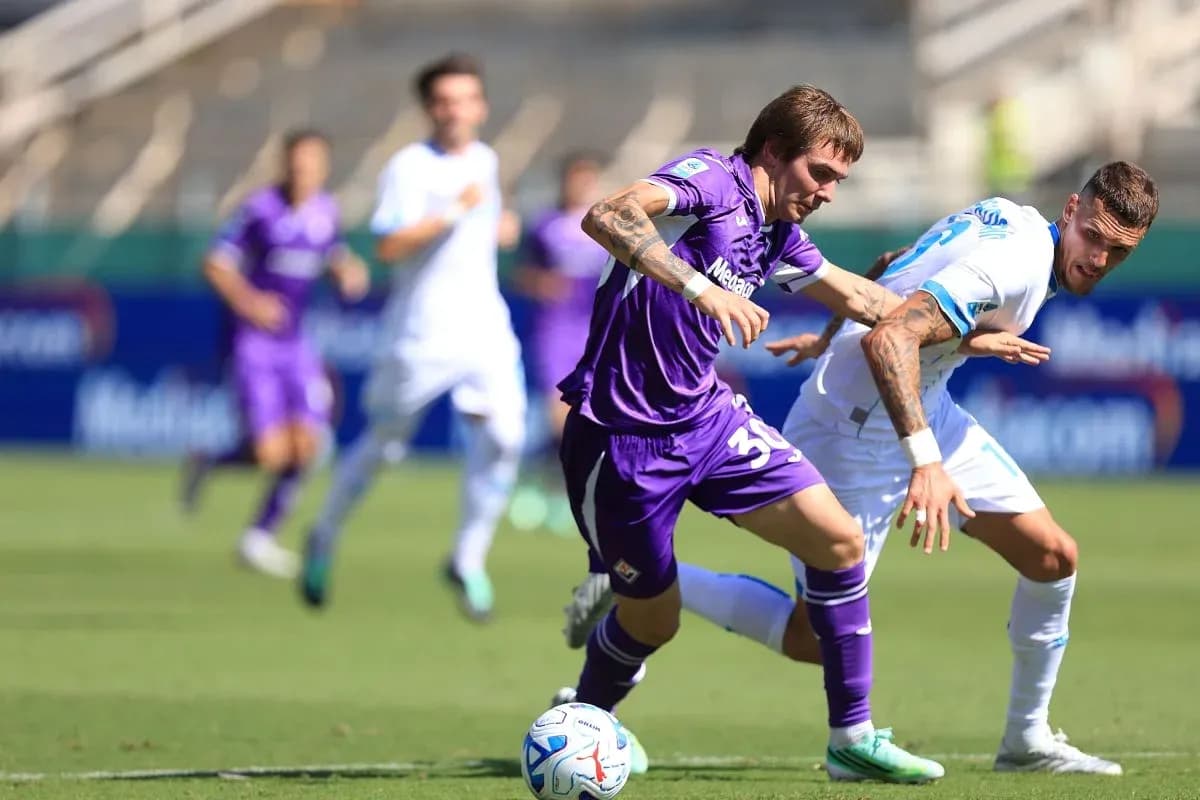
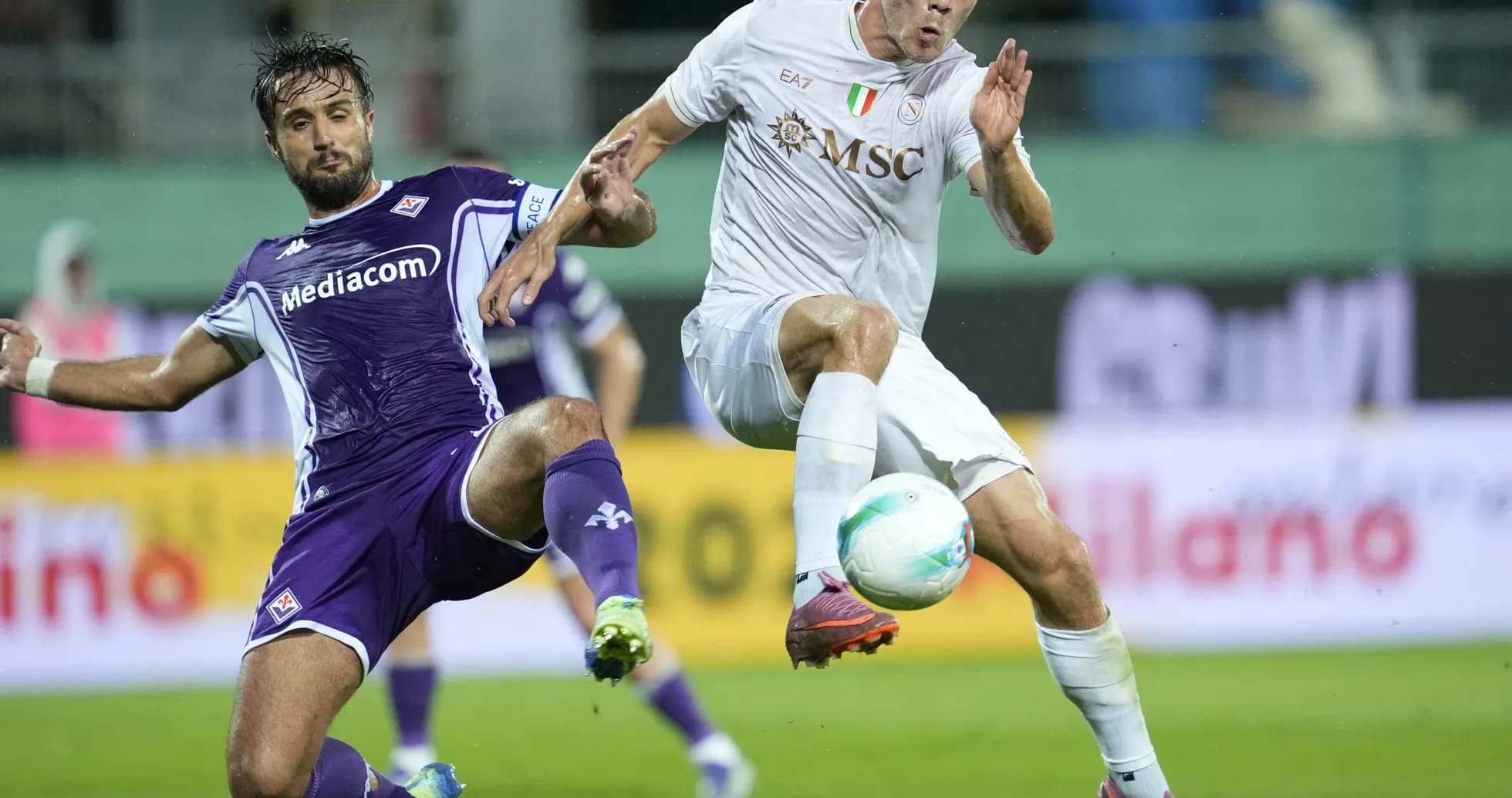
The afternoon at Stadio Artemio Franchi closed on a knife-edge, the scoreboard locked at 1-1, but beneath the surface this was a meeting of two very different footballing identities at an early crossroads in their Serie A season.
For Fiorentina, 17th in the table with 4 points and a goal difference of -6 overall (6 scored, 12 conceded), this fixture felt like a chance to steady a listing ship. On their own turf they had been fragile: at home this campaign they had played 3, failed to win, drawn 1 and lost 2, with just 2 goals for and 6 against. Napoli arrived from a different vantage point: 9th with 7 points and a goal difference of 1 overall (7 for, 6 against), carrying the quiet assurance of a side that knows it can grind out results. On their travels they had been balanced if unspectacular: 3 away games, 1 win, 1 draw, 1 defeat, 5 goals scored and 4 conceded.
The lineups told their own story of intent. Paolo Vanoli doubled down on Fiorentina’s seasonal blueprint, rolling out a 4-3-3 that mirrored their most-used shape in the league. D. de Gea anchored the side from goal, shielded by a back four of Viery, L. Ranieri, R. Dragusin and A. Jimenez. In front of them, C. Ndour, N. Fagioli and A. Atta formed a midfield triangle built for energy and progression rather than conservative control. Up front, a youthful, restless trident: F. Mastantuono, M. Pellegrino and A. Njie.
Massimiliano Allegri, by contrast, shifted Napoli into a 4-2-3-1, a structure designed to give his playmakers clear lanes and his pivot a firm grip on tempo. V. Milinkovic-Savic started in goal, behind a defensive line of M. Olivera, R. Marin, A. Rrahmani and captain G. Di Lorenzo. The double pivot of B. Gilmour and S. Lobotka sat as the metronomes, freeing a high-class band of three – N. Lang, K. De Bruyne, M. Politano – to orbit around lone striker R. Hojlund.
The absentees shaped the tactical voids. Fiorentina were without F. Parisi and R. Sottil, both sidelined with injuries, trimming Vanoli’s options for width and rotation in the full-back and wing roles. Napoli’s list was far longer and more structural: Alisson Santos, A. Buongiorno, Giovane, L. Marianucci, S. McTominay, A. Meret and L. Spinazzola all missed out. It meant Allegri had to trust R. Marin at the back and lean heavily on M. Olivera and G. Di Lorenzo for both defensive stability and width, with V. Milinkovic-Savic locked in as the undisputed number one.
From a disciplinary perspective, both sides carried clear risk zones into this fixture. Heading into this game, Fiorentina’s yellow cards were concentrated in the heart of the contest: 33.33% of their cautions arrived between 61-75 minutes, with another 22.22% in each of the 16-30 and 76-90 minute windows. Napoli, by contrast, tended to flare up before the interval: 50.00% of their yellows had come between 31-45 minutes, 25.00% between 46-60 and 25.00% late on in the 76-90 period. It set the stage for a midfield battle that would likely become more ragged as legs tired and lines stretched.
The “Hunter vs Shield” duel was embodied by Franco Mastantuono against a Napoli defence that had been quietly efficient. Mastantuono, just 18, came into the match as Fiorentina’s standout attacking reference: in total this campaign he had 3 league goals from 5 appearances and 382 minutes, with 17 shots (8 on target), 10 key passes and a 7.18 average rating. He is not merely a finisher but a creator, threading 122 passes with 10 of them opening doors. For a Fiorentina side averaging only 1.2 goals in total per game – and just 0.7 at home – his presence in the right half-space was their sharpest weapon.
Up against him, Napoli’s shield had been statistically sound. Overall they conceded 1.2 goals per match, with 1.3 on their travels, and had already collected 2 clean sheets in total, including 1 away. A. Rrahmani’s aerial dominance, R. Marin’s positioning and G. Di Lorenzo’s timing in duels allowed Allegri to hold a relatively high line, trusting B. Gilmour and S. Lobotka to suffocate passing lanes into Mastantuono’s feet. The duel was less about raw physicality and more about whether Mastantuono could find pockets between the lines before the double pivot closed on him.
In the “Engine Room” matchup, the contrast was even sharper. For Fiorentina, N. Fagioli and C. Ndour carried the responsibility of linking build-up to the front three. Their task was to progress the ball quickly enough to bypass Napoli’s first press, yet carefully enough to avoid transitions that would expose a defence conceding 2.4 goals per game overall and 2.0 at home. On the other side, K. De Bruyne operated as the advanced conductor, dropping into the half-spaces to combine with M. Politano and N. Lang, while Hojlund pinned Dragusin and Ranieri.
Without S. McTominay’s physicality or L. Spinazzola’s vertical thrust, Allegri leaned more on the technical security of Gilmour and Lobotka to control rhythm. Their job was twofold: prevent Fiorentina’s midfield three from stepping out aggressively to press De Bruyne, and ensure Napoli could recycle possession rather than be dragged into a chaotic, end-to-end contest that would favour Mastantuono’s improvisation.
From a statistical prognosis, the draw felt like the meeting point of two trends. Fiorentina’s defensive numbers at home – 2.0 goals conceded on average, no clean sheets in total, and no clean sheets at home – suggested vulnerability, yet Napoli’s away attack, averaging 1.7 goals on their travels, had not been ruthless enough to blow games open. Neither side had taken a penalty in total this season, and with both having zero penalties missed, there was no spot-kick edge to tilt the balance.
In narrative terms, Fiorentina leave this 1-1 with a sense of partial redemption: a point against a top-half side, a reminder that their young core, led by Mastantuono, can hurt anyone. Napoli, meanwhile, will see it as two points dropped but also as a confirmation of their defensive platform. If Allegri can gradually reintegrate his injured players and layer more cutting edge onto an already solid structure, their away record – already balanced at 1 win, 1 draw, 1 loss – hints at a side ready to climb from mid-table into the European conversation.
Related News
AS Roma vs Inter: Tactical Insights from Serie A Clash
AC Milan vs Lecce: Predicted Lineups and Team News
Juventus vs Atalanta Predicted Lineups and Team News – Serie A
Frosinone vs Como Predicted Lineups: Team News for Serie A Clash
Fiorentina vs Napoli Predicted Lineups: Team News for Serie A Clash
AC Milan vs Lecce: Serie A Showdown on September 20, 2026