
Arsenal's Left Wing Dilemma: Options After Vinicius Jr. Signing
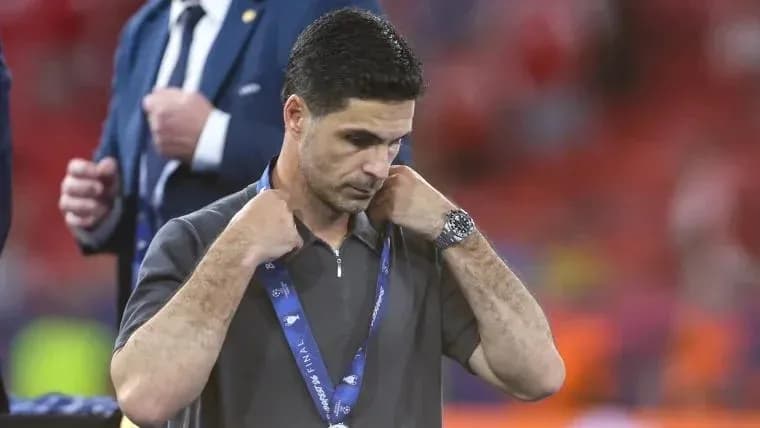
Arsenal’s Vinicius Jr. dream is over. Now the real work begins.
For a brief spell, the idea felt just wild enough to be believable: Vinicius Jr. stalling on a new Real Madrid contract, a deal ticking down, Arsenal hovering with intent and money to burn. A superstar winger leaving the Bernabeu for the Emirates? It lit up message boards and fan chats in a hurry.
Reality, as it tends to do, snapped back. Vinicius signed on again with Madrid, the door slammed shut, and with Julian Alvarez also expected to remain in Spain, Arsenal are back where they started: a glaring hole on the left and a squad built to challenge for titles that still feels one piece short.
This isn’t a luxury buy anymore. It’s a necessity.
A thin flank at a critical moment
The depth chart on the left wing is brutally simple.
Leandro Trossard, fresh from an impressive 2026 World Cup, has gone to Besiktas. Gabriel Martinelli remains, but he’s coming off a flat, uneven season. Christos Tzolis has arrived, yet his profile screams central creator more than touchline winger, even if he can operate wide. Eberechi Eze can fill in there, but that’s a solution born of flexibility, not design.
For a side that wants to press, dominate territory, and stretch opponents, that’s a problem. Mikel Arteta needs a starter, not a stopgap. Arsenal’s recruitment team now has to pivot from fantasy to strategy.
Three names stand out. Three very different bets.
Bradley Barcola: the statement signing
If Arsenal were genuinely prepared to pay what it would take to tempt Vinicius from Madrid, then Bradley Barcola should be front and centre on their radar.
At 23, the PSG winger is three years younger than the Brazilian and carries a statistical profile that jumps off the page. His numbers in Ligue 1 come with the usual caveat about the league’s overall level, but he has also delivered in the Champions League, where the margin for error shrinks and the spotlight burns hotter.
Right now, Barcola is exploring his options. At PSG, he sits behind Desire Doue in the pecking order, an awkward spot for a player of his ambition and talent. The situation gives Arsenal a window. A narrow one, but a window all the same.
It would not be cheap. Liverpool have reportedly put forward an offer of around €115 million. To land him, Arsenal would have to match or surpass that figure. This is not a bargain hunt; it’s a power move.
But Barcola fits the profile: young, explosive, technically sharp, with the upside to grow into one of the best wide forwards in Europe. If Arsenal want a player who can walk straight into the XI and stay there for a decade, this is the kind of fee and the kind of gamble that comes with it.
Rafael Leao: a rescue mission with upside
Rafael Leao is a different story altogether.
Now 27, the AC Milan forward should be in his prime. Instead, his last few seasons have drifted. His productivity has sagged, his connection with teammates has frayed, and his game has grown more individual just as Milan needed him to become their reliable attacking heartbeat.
The numbers tell the tale. In Serie A last season, his successful dribbles dropped to under one per game, comfortably the lowest rate of his career. For a player once defined by his ability to glide past defenders, that’s a red flag.
Yet the talent hasn’t vanished. It’s been dulled, not erased.
Leao’s contract runs for another two years, which opens the door to a possible cut-price deal. Milan know that wait too long and his value drops; Arsenal know that a reduced fee changes the risk-reward equation entirely.
For Arteta, this would be a project. A reclamation job. The challenge would be to rebuild Leao’s confidence, sharpen his decision-making, and plug him into a system that demands cohesion as much as individual brilliance. If it works, Arsenal get a devastating left winger at a discount. If it doesn’t, they’ve spent heavily on a fading star.
It’s a bet on coaching as much as on the player.
Ibrahim Mbaye: the future play
Then there’s Ibrahim Mbaye, the wild card.
At 18, the PSG youngster represents the kind of signing that can define a club’s next era rather than its next season. He has already been linked with Liverpool in a deal worth around €50 million, but that move is far from done and could be hijacked.
Mbaye impressed last season in limited minutes, mostly from the bench. Used primarily on the right but comfortable on both wings, he showed enough to mark himself out as more than just another academy prospect. There’s end product there, and a fearlessness that tends to survive only in the very best.
For Arsenal, he would not arrive as the finished article or the guaranteed starter on the left. He would be a contributor now and a potential star later, a player to grow with the squad rather than carry it immediately.
If the club’s hierarchy decide they don’t need to force a “win-now” solution on that flank this summer, Mbaye becomes a compelling option: expensive, yes, but with a ceiling to match.
Options that don’t quite fit
Several other names swirl around Arsenal’s orbit, but the fit is either awkward or the deal unrealistic.
Julian Alvarez looks like a non-starter. Atletico Madrid reportedly do not want to sell him to Barcelona, and the forward is thought to prefer staying in Spain. That combination points towards him remaining at Atleti. Even if a move were somehow engineered, he would not solve Arsenal’s left-wing issue. Spending a huge fee on a player who doesn’t address the clear positional need would be a misstep.
Iliman Ndiaye falls into a similar category of “good player, wrong deal.” The Everton attacker shone for Senegal at the World Cup with three goal contributions and backed that up with a strong Premier League campaign. He’s entering his prime and has already proved he can handle English football.
The problem is the package. His contract at Everton runs until 2029, giving the club all the leverage. A price tag of at least £70 million has been floated. For that kind of money, Arsenal would be wiser to chase someone younger with a higher long-term ceiling, such as Barcola or Mbaye. On top of that, Ndiaye is not a natural left winger, even if he can operate there. It’s a compromise, and compromises at this level tend to get exposed.
Nico Williams is an elite talent with a World Cup medal to underline it. Spain managed to lift the trophy even without him fully fit, with Alex Baena stepping in on the left while Williams often came from the bench. The Athletic Club star still found his moment, assisting the winning goal in the final to add another highlight to an already glittering rise.
The issue is simple: cost and control. At 24, he is tied to Athletic on a long-term deal signed just last summer, with nine years left on it and a release clause reported to be close to €100 million. That figure, combined with the difficulty of prising players away from the Basque club, makes any move a brutally expensive operation.
A decisive window
So Arsenal stand at a crossroads on the left flank.
Do they go all-in on a ready-made starter like Barcola, pay the premium, and send a message across Europe? Do they try to revive Leao and trust Arteta’s coaching to turn a stalled career into a title-winning weapon? Or do they look ahead, invest in Mbaye, and accept that the left wing might be a shared responsibility for a season or two?
What they cannot do is drift. The rest of the squad is too close to the finished product, the margins at the top too fine. The Vinicius Jr. fantasy has gone. The next move has to be real, and it has to be right.
Related News
Carlos Alcaraz Urges an End to Matches Ending in the Early Hours
Carlos Alcaraz Criticizes Late US Open Finish After 3:30 a.m. Match
Jannik Sinner Set for ATP 500 Return in Beijing with Novak Djokovic Also Competing
Meet Iva Jovic: The American Tennis Prospect Making Waves
Flavio Cobolli Shares Insights on Practice Session with Jannik Sinner Ahead of Comeback

Till vs Romero: Fight Details, Undercard, and Viewing Info for This Weekend