
AS Roma vs Inter: Tactical Insights from Serie A Clash
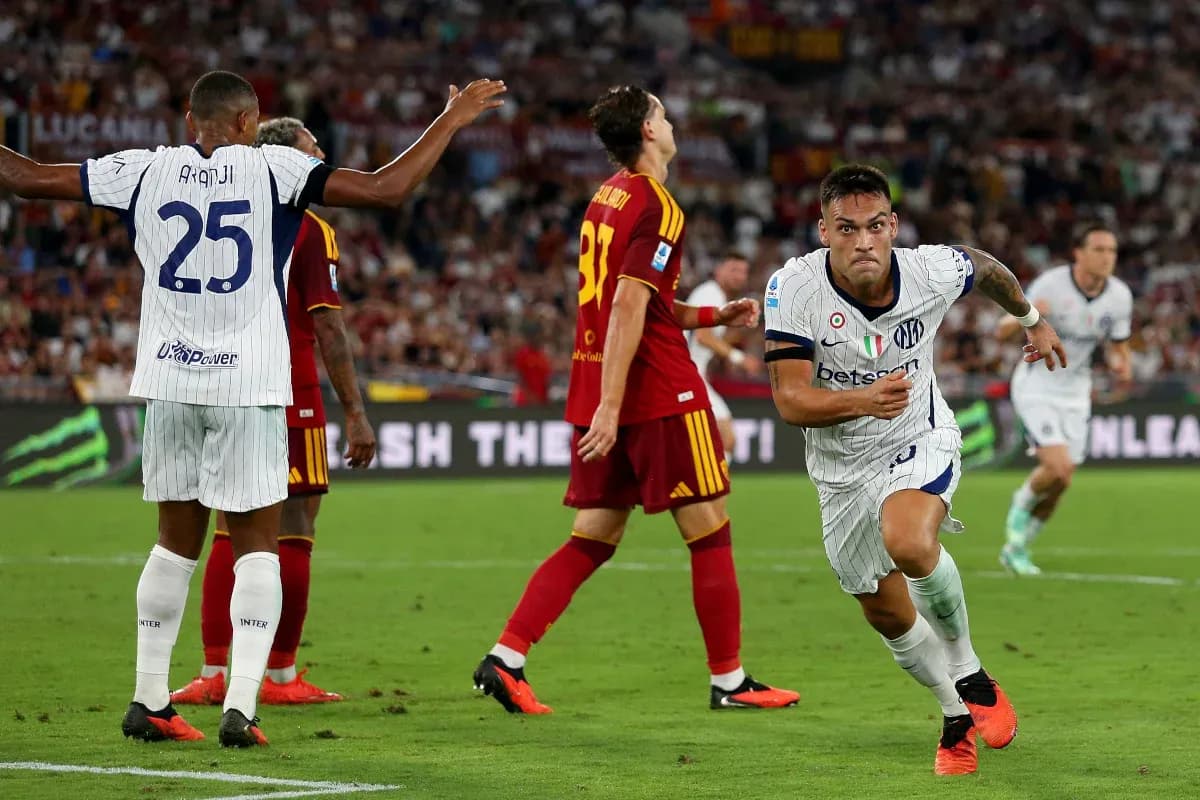
Under the early evening light of the Stadio Olimpico, this was billed as a meeting of mirror images at the top of Serie A: AS Roma and Inter arriving with identical points, unbeaten records, and the air of sides built for the long haul. By full time, a 2–2 draw had preserved both teams’ invincibility, but the way they got there revealed a great deal about their evolving identities and the tactical questions that will shape the rest of their season.
I. The Big Picture – Two leaders, two blueprints
Heading into this game, Roma sat top of Serie A with 13 points from 5 matches, a goal difference of +11 (14 scored, 3 conceded) and a record that read four wins and one draw. Inter matched them point for point, also on 13 from 5, but with a goal difference of +7 (15 scored, 8 conceded). If Roma’s numbers spoke of control and balance, Inter’s hinted at volatility: more goals for, more risk taken, more space left behind.
Roma’s season-long scoring pattern under Piero Gasperini Gian had been clear. Overall, they were averaging 2.8 goals per game, with 2.7 at home and 3.0 on their travels. Just as telling was the defensive side: only 0.6 goals conceded per match overall, and a perfect away record without conceding. Inter, by contrast, were more explosive but less guarded: 3.0 goals for per game overall, with a remarkable 4.0 at home, but conceding 1.6 overall and 2.0 at home. Simone Inzaghi may be gone, but the DNA of a front-foot Inter remains; Cristian Chivu has not come to park the bus.
The formations on the night underlined the philosophical divide. Roma lined up in a 3‑4‑2‑1, a structure they had already used four times this season, with M. Svilar behind a back three of G. Mancini, L. Balerdi and M. Hermoso. The double pivot of B. Cristante and M. Kone was flanked by Wesley Franca and N. Molina, while P. Dybala and M. Soule floated behind lone striker D. Malen. Inter responded with a 3‑1‑4‑2: J. Martinez in goal, a back three of Y. Bisseck, M. Akanji and A. Bastoni, P. Zielinski sitting deepest, and a high, aggressive line of four midfielders behind the pairing of L. Martinez and M. Thuram.
II. Tactical Voids – The absences that shaped the contest
Both sides were forced to adjust without important pieces. Roma were missing M. Bah through a knee injury, a blow to their depth and energy in wide and midfield zones. Inter’s list was heavier: H. Calhanoglu out with a muscle injury, plus D. Spence and J. Stones sidelined. The absence of Calhanoglu, in particular, stripped Inter of their most natural tempo-setter and long-range threat in central areas, placing greater creative burden on P. Zielinski and N. Barella.
Disciplinary trends this season hinted at where the game might fray. Roma’s yellow cards have been back‑loaded, with 37.50% arriving between 61–75 minutes and 25.00% in the 76–90 window, a clear sign that their aggression rises as they protect leads or chase control late on. Inter, conversely, have been at their most combustible just after half-time: 50.00% of their yellows have come in the 46–60 minute band, with another 25.00% in the opening quarter of an hour. This is a team that often comes out of the blocks – and the dressing room – on the edge.
III. Key Matchups – Hunter vs Shield, Engine Room battles
The headline duel was always going to be D. Malen against Inter’s back three. Malen arrived as the league’s top scorer with 6 goals in 5 appearances, built on 16 shots (10 on target) and a dribbling profile that suits chaos: 15 attempts, 10 successful, plus 7 key passes. His movement off the last line is the spearhead of Roma’s attack.
Waiting for him were M. Akanji and A. Bastoni, with Y. Bisseck completing a physically imposing trio. Akanji has been one of Inter’s most complete defenders this season: 309 passes at 94% accuracy, 9 tackles, 2 blocks, 8 interceptions and 34 duels contested, winning 25. He also sits high on the disciplinary charts with 2 yellow cards and a red card to his name, the statistical embodiment of a defender living on the front foot. Hermoso mirrors that profile for Roma: 13 tackles, 2 blocks, 16 interceptions, 36 duels with 23 won, and 2 yellows of his own. Both backlines are built around proactive stoppers who step in front rather than drop off.
Behind Malen, Roma’s creative axis is as refined as any in the league. P. Dybala leads Serie A in assists with 4, carving out 23 key passes from 237 total and operating with 84% accuracy. He is not merely a final-ball specialist; his 4 tackles, 1 blocked shot and 2 interceptions show a willingness to engage in the counter‑press. Alongside him, M. Soule offers a blend of incision and industry: 2 goals, 1 assist, 12 shots (8 on target), 13 dribbles attempted with 8 successful, and 31 duels with 17 won. The pair drift between the lines, constantly asking questions of opposition midfield anchors.
Inter’s answer lies in their own engine room. A. Diouf has quietly become one of Serie A’s most efficient all‑round midfielders: 3 assists from 13 key passes, 159 total passes at 91% accuracy, 6 tackles and 2 interceptions. He is both metronome and enforcer, the player tasked with screening Roma’s half-spaces while still driving Inter forward. N. Barella and C. Jones add vertical running and second-line arrivals, while F. Dimarco’s presence as a left-sided midfielder provides width and crossing threat.
Up front, L. Martinez brings ruthlessness and volume. With 4 goals from 16 shots and 6 on target, plus 6 tackles and 2 interceptions, he is as much the first defender as the primary finisher. M. Thuram complements him with 2 goals, 2 assists, 12 shots, 5 on target, and 6 key passes; his 32 duels with 19 won underline how often Inter use him as a reference point to secure long balls and then play off his lay-offs.
IV. Statistical Prognosis – Two unbeaten machines, different edges
Across the season so far, Roma’s profile is that of a controlled juggernaut: unbeaten in 5, with 4 wins, 3 clean sheets and no failures to score. At home they have scored 8 and conceded 3 in 3 matches, an average of 2.7 for and 1.0 against. Inter’s numbers are slightly more wild: 12 goals scored and 6 conceded at home in 3 games, plus 3 scored and 2 conceded away in 2, leaving them unbeaten but more exposed.
Neither side has been awarded – or missed – a penalty in the league so far, removing the volatility of spot-kicks from their statistical record. Instead, their seasons have been built on open-play structure and set-piece execution.
From a tactical and statistical standpoint, the draw at the Olimpico feels less like a missed opportunity and more like a statement of parity. Roma’s 3‑4‑2‑1, with its double creators behind a red‑hot finisher and a back three led by Hermoso and Mancini, looks built for sustainability. Inter’s 3‑1‑4‑2, powered by the Lautaro–Thuram partnership and Diouf’s control, is more high‑wire but no less dangerous.
Over a long campaign, Roma’s superior defensive metrics – 3 goals conceded in 5 matches overall versus Inter’s 8 – suggest a slightly sturdier foundation. Yet Inter’s attacking ceiling, particularly at home where they average 4.0 goals per game, keeps them firmly in the title conversation.
If this match was a preview of the title race, it told us this: Roma may have the better shield, Inter the sharper swarm. The scudetto will likely go to the side that best preserves its identity while solving the other’s.
Related News
Fiorentina and Napoli Share Points in Serie A Clash
AC Milan vs Lecce: Predicted Lineups and Team News

Juventus vs Atalanta Predicted Lineups and Team News – Serie A
Frosinone vs Como Predicted Lineups: Team News for Serie A Clash

Fiorentina vs Napoli Predicted Lineups: Team News for Serie A Clash
AC Milan vs Lecce: Serie A Showdown on September 20, 2026