
Atalanta's Tactical Dominance Over Bologna in Serie A
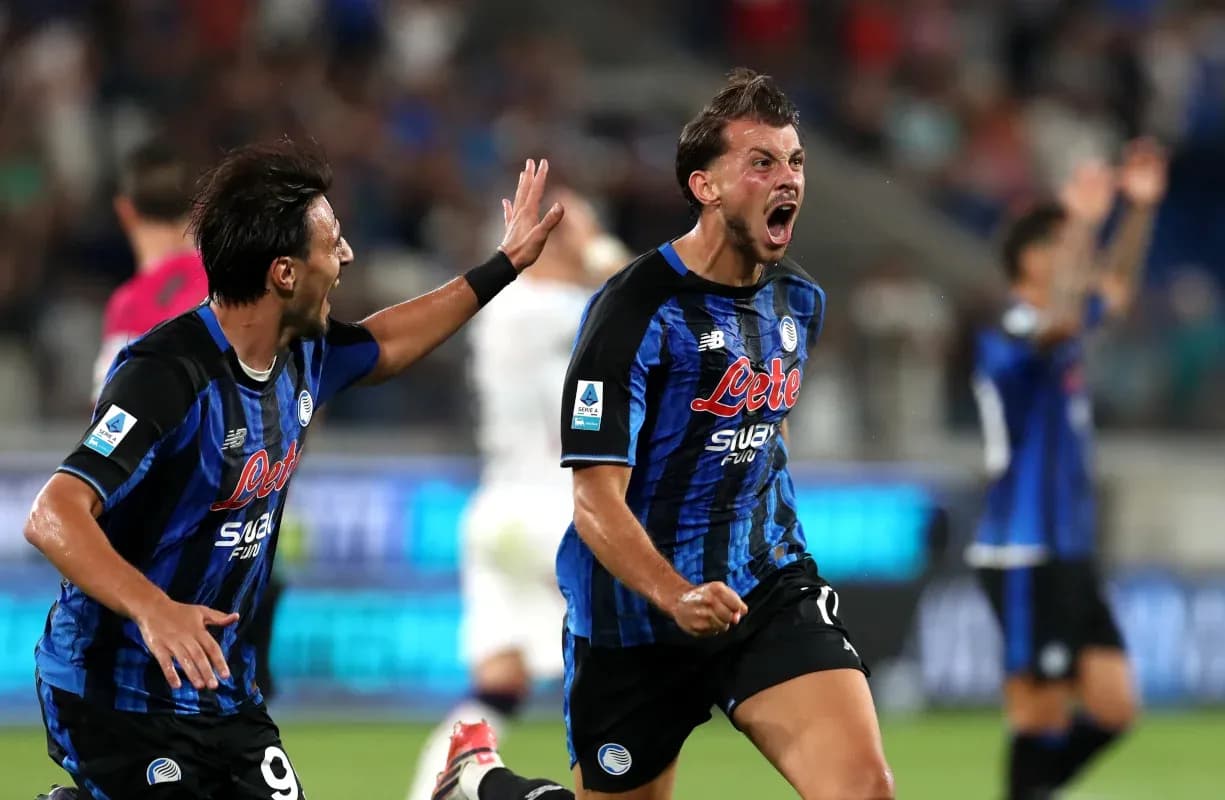
Under the Bergamo lights at New Balance Arena, Atalanta’s 1–0 win over Bologna felt less like an early-season skirmish and more like a statement of intent. In Round 2 of the Serie A regular season, Maurizio Sarri’s side leaned into their new identity: a 4-3-3 that compresses the pitch, suffocates opponents without the ball and, crucially, already delivers results. Two matches, two wins, a total goal difference of +2 from 3 goals scored and 1 conceded – and all of it built exclusively at home, where they have played both of their fixtures so far.
Bologna, by contrast, left Bergamo with a familiar taste. Domenico Tedesco’s team has now lost both of its opening games, with a total record of 0 goals scored and 2 conceded, matching a total goal difference of -2. One defeat at home, one on their travels, both by the same 1–0 margin. The pattern is stark: defensively competitive, offensively blunt.
The tactical shapes told the story even before kick-off. Atalanta’s 4-3-3 is now the club’s default – they have used it in both league matches – and Sarri doubled down on structural clarity. M. Carnesecchi anchored the back, shielded by a back four of D. Zappacosta, O. Kossounou, G. Scalvini and S. Kolasinac. Ahead of them, a midfield trio of M. Pasalic, G. Gaetano and Ederson was tasked with knitting possession and pressing triggers, while a fluid front line of C. De Ketelaere, G. Scamacca and G. Raspadori offered depth, width and constant rotation.
Bologna mirrored the modern trend with a 4-2-3-1, the same system they have used in both league outings. L. Skorupski stood behind a back four of E. Holm, E. Fauske Helland, T. Heggem and R. Alhassane. The double pivot of T. Pobega and L. Ferguson was meant to provide both screen and springboard, while the band of three – F. Bernardeschi, J. Odgaard and N. Cambiaghi – supported lone striker R. Piccoli.
Yet both coaches had to navigate absences that subtly reshaped their squads. Atalanta were without H. Ahanor and I. Hien, both sidelined by muscle injuries, T. Kristensen with an ankle injury and K. Sulemana with a knee problem. None are central stars of this particular XI, but together they trimmed Sarri’s defensive and rotational options, particularly across the back line and in the engine room. Bologna, for their part, missed O. El Azzouzi through a thigh injury and J. Rowe, listed as inactive – two absences that reduced Tedesco’s flexibility in midfield, an area already under pressure against Atalanta’s three-man core.
Discipline, too, framed the match narrative. Heading into this game, Atalanta’s season card profile was remarkably clean: just 1 yellow card in total, shown between minutes 61 and 75, and no reds. Bologna’s picture was more fractured – 4 total yellow cards across their first two fixtures, split evenly with 50.00% shown between minutes 31 and 45 and 50.00% between 76 and 90. That tendency to pick up bookings in the closing quarter of each half hints at a team that tires, chases, and arrives late into duels – a dangerous pattern against a side that prefers to accelerate as the game wears on.
Key Players
Within this frame, the “Hunter vs Shield” matchups were clear. For Atalanta, the emerging goal threats are not yet the headline centre-forward but the depth pieces. L. Samardzic, who came into the round with 1 goal from 2 appearances and a 7.3 average rating, and N. Krstovic, also on 1 goal with 3 total shots and 2 on target, embody a bench capable of changing games. Both started this fixture among the substitutes, yet their presence alone underlined how much firepower Sarri can introduce late. Crucially, neither has been wasteful from the spot – both have 0 penalties scored and 0 missed, in line with Atalanta’s season record of 0 penalties taken.
On the other side, Bologna’s “Shield” has held reasonably firm in structure: a total average of 1.0 goal conceded per match, split evenly as 1.0 at home and 1.0 away. But the lack of offensive punch – a total average of 0.0 goals scored – turns every defensive lapse into a potential death sentence. R. Piccoli, working alone up front, was often isolated against Kossounou and Scalvini, who could step out aggressively knowing Atalanta’s midfield three would collapse behind them.
Midfield Battle
The “Engine Room” duel was just as decisive. G. Gaetano and Ederson offered vertical passing and second-ball aggression, allowing Atalanta to sustain pressure and pin Bologna’s double pivot. L. Ferguson, usually Bologna’s rhythm-setter, was forced deeper and wider than ideal, often more firefighter than playmaker. T. Pobega, meanwhile, had to choose between tracking late runs from Pasalic and sliding across to help his full-backs against De Ketelaere and Raspadori drifting into half-spaces.
From a statistical prognosis standpoint, the direction of travel for both clubs is already visible. Atalanta’s total attacking output – 3 goals in 2 matches, with a total average of 1.5 goals scored and just 0.5 conceded – is the profile of a side built on control and incremental dominance rather than chaos. They have kept 1 clean sheet in total and have yet to fail to score in any league match. The absence of penalties, combined with structured chance creation from players like Samardzic and N. Zalewski – who already has 1 assist, 45 total passes and 3 key passes in the league – suggests a team that manufactures its goals from open play and rehearsed patterns.
Bologna’s numbers paint a more fragile picture. Two total matches, 2 losses, 0 goals scored, 2 conceded, no clean sheets, and a total of 2 matches where they have failed to score. Their defensive averages are stable but offer little margin for error; their attack, so far, offers none at all.
League Position
Following this result, the table reflects the tactical truth. Atalanta sit 5th with 6 points, their Europa League ambitions already visible in the rear-view mirror. Bologna, 15th with 0 points, are not yet in crisis but are firmly in the realm of concern. If Tedesco cannot unlock goals from his 4-2-3-1, the structural solidity will not be enough.
In narrative terms, this was a match where Sarri’s system, even with injuries, looked repeatable and scalable. Atalanta’s squad depth – from the starting craft of Scamacca and De Ketelaere to the impact potential of Samardzic, Krstovic and Zalewski – gives them multiple ways to win tight games like this one. Bologna, by contrast, must quickly turn their neat shape into real threat. Until they do, every trip on their travels will feel like this: organised, honest, and ultimately empty-handed.
Related News
Napoli vs Frosinone Stats: Head-to-head Record Before October Match

Inter vs Parma Stats: Head-to-head Record and Recent Meetings

David Alaba Poised for Surprising Move to Udinese in Serie A
Milan Dominates Lecce: Tactical Analysis of a 3-0 Victory
Juventus Defeats Atalanta 2-0: Tactical Insights and Key Matchups
Frosinone's Tactical Mastery Shines in 2–0 Victory Over Como