
Bellingham's Impact on England's Midfield Strategy
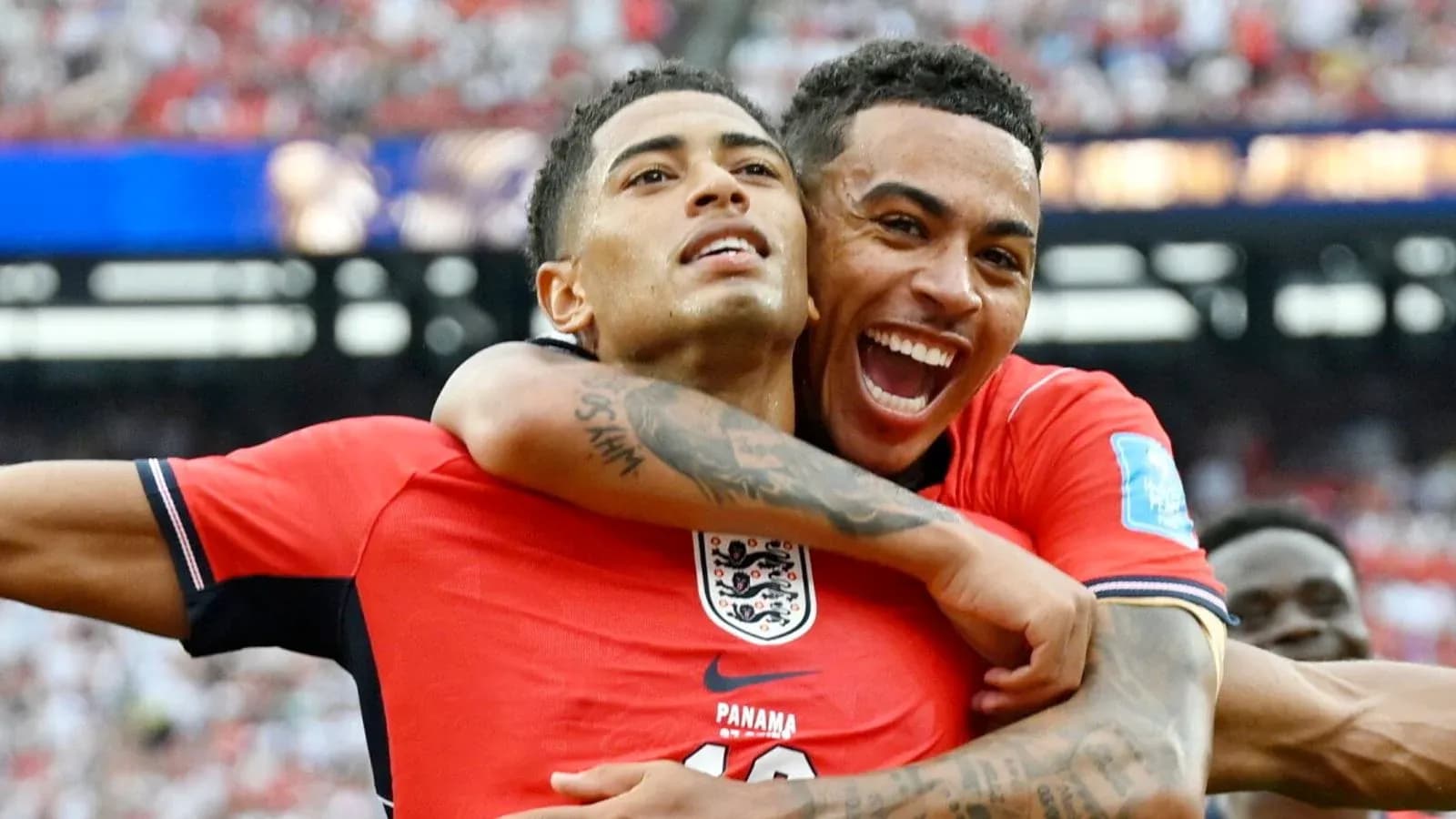
Thomas Tuchel walked out of the Panama win with a clean sheet, a 2-0 scoreline and safe passage into the last 32. He also walked out with a problem he probably didn’t expect.
Jude Bellingham has just blown up his midfield plan.
Bellingham rips up the script
Against Panama, Bellingham didn’t float around as a No 10. He dropped in. He grafted. He ran the game from deeper alongside Elliot Anderson, scoring one and making one in a performance that crackled with energy.
It was the kind of display that forces a manager back to the tactics board.
Paul Merson saw it the same way. For him, Bellingham in that role changes the entire feel of England’s midfield – and not just because of the numbers on the teamsheet. From deeper, Bellingham is harder to track, tougher to pin down, more dangerous when he bursts past the first line.
Panama couldn’t live with those late surges. They didn’t know whether to step up on him or drop off. By the time they decided, he was already gone.
The problem? That’s Declan Rice’s territory.
Rice plays. So where does Jude go?
Merson is clear on one thing: if Rice is fit, Rice starts. No debate. Against the heavyweight nations, you want his screen in front of the back four, his discipline, his reading of danger.
So Tuchel’s dilemma is brutal in its simplicity: if Rice sits, what happens to Bellingham?
Push him back up to No 10 and you run straight into an issue England have already seen. Morgan Rogers, who started there against Panama, barely got a kick. Bellingham, in that same advanced role against Ghana, also struggled to influence the game. Both ran into the same problem – congestion.
That pocket behind the striker is packed. Ghana sat deep, Panama sat deep, and DR Congo will likely do the same on Wednesday. Ten behind the ball, bodies in the central lane, space evaporating in an instant.
From deeper, Bellingham can choose his moments, time his runs, arrive rather than stand and wait. Higher up, he’s easier to crowd out.
So Tuchel has a choice that could define England’s knockout run: pair Rice and Bellingham as dual No 8/6s and accept it’s harsh on Anderson, or restore Bellingham to No 10 and hope England solve the supply line into that zone.
Because right now, as Merson points out, England simply aren’t getting the ball into their creator often enough.
Getting the ball to the star man
Bellingham wants the ball. All the time. He plays with that restless, relentless hunger that used to radiate off Wayne Rooney – forever showing, forever demanding, forever trying to drag the game towards him.
Against Ghana, he kept offering. England didn’t keep finding him.
Merson draws the obvious comparison: look at how Argentina treat Lionel Messi. Different players, different levels, but the principle is the same. They give him the ball in tight spaces, even when it looks risky, because they trust him to deal with it.
England, Merson says, need to build that same conviction with Bellingham. If he’s the heartbeat, feed him. If he’s the one who can break a block with a touch or a turn, don’t hesitate. Give it to him, even when the pitch looks crowded and the pass isn’t safe.
That’s easier to do when he’s deeper, facing the play, able to dictate tempo. In the No 10 slot, he’s often receiving with his back to goal, swamped by defenders, forced to bounce it back.
DR Congo will test this again. They will sit in. They will defend the edge of their box. If Bellingham is high, England must find a way to punch passes through the lines into him. If he’s deeper, they must trust his runs and follow them with bodies.
Either way, the question is the same: how do you get the ball to your best all-round midfielder often enough to change the game?
Wide men stuck in neutral
While the Bellingham debate rages, England’s wingers are still idling.
Against Panama, Marcus Rashford saw plenty of the ball in the first half. He didn’t do enough with it. The pre-match clamour for him to start ahead of Anthony Gordon quickly faded into a familiar frustration: plenty of promise, not enough end product.
On the other flank, Bukayo Saka looks short of his usual sharpness. Maybe there’s a knock, maybe it’s rhythm, maybe it’s just tournament drag. Whatever the reason, he hasn’t quite hit his stride.
Merson, though, doesn’t see a scenario where Saka sits out the big games. Even off-colour, his intelligence, work-rate and threat make him hard to ignore.
The bigger picture is stark. England have four wingers in this squad. None has really caught fire yet. Merson rates them at about a six out of ten so far. That’s a concern – but also a lurking opportunity.
If even one of them suddenly clicks as the stakes rise, England’s entire attacking profile changes. If two catch form at once, Tuchel suddenly has match-winners coming from the flanks rather than relying on Harry Kane to solve everything.
And that, for once, is a positive: this England are not living and dying on one man’s goals.
Kane has already scored. The defence held firm against Ghana. Bellingham took centre stage against Panama. Different players are taking turns to drag England through. In tournament football, that matters.
Not peaking yet – and that cuts both ways
Merson doesn’t think England have hit their ceiling. He doesn’t think they need to yet.
This, in his eyes, is where the World Cup really starts. The group stage – Croatia, Ghana, Panama – was about doing enough. Box ticked. Seven out of ten, job done.
The danger is assuming you can just flick the switch now.
“You can’t turn it on and off like a tap,” is the warning. Improvement has to be built, not summoned. Performance has to grow, game by game. DR Congo becomes the first step in that climb. Stumble there, and the whole thing looks fragile.
Look around the field and the threat is obvious. France are loaded with attacking talent. Spain will always keep you chasing shadows, even if they don’t always kill you off. Colombia impressed Merson with their pace, their energy, their comfort in the conditions when they faced Portugal.
This World Cup feels open. Many teams have players who can hurt you on any given day. That cuts away the safety net. You can’t coast. You can’t assume.
But it also means what Merson loves about this tournament still holds: if you have a good day, you’ve got a real chance.
England’s tightrope
England have already had their reality checks. Ghana exposed flaws. Panama, despite the scoreline, did the same in patches. Those games should sting a little. They should sharpen focus, not dull it.
Because the truth is simple. While England are still in the draw, they have a shot at winning the whole thing. Not as favourites, not as certainties, but as genuine contenders in a World Cup where nobody looks untouchable.
To make that real, Tuchel has decisions to make now, not later. Rice or Bellingham deeper? Or both together? Who carries the No 10 shirt – and will they see enough of the ball to justify it? Which winger finally rips off the handbrake?
England know what they looked like at their best in this tournament – that controlled, confident win over Croatia. The task now is to reproduce that level, then raise it, under knockout pressure.
If they manage it, if Bellingham’s role is nailed down and the wide men finally spark, this midfield “headache” might yet turn into England’s greatest strength.
Related News

Anthony Joshua Names Murat Gassiev as Next Opponent if He Defeats Tyson Fury

UFC 332: Start Time and Fight Highlights for Natalia Silva vs. Wang Cong

Court McGee Opens Up About Choosing UFC 332 as His Final MMA Fight
WBC Orders Lightweight Title Unification: William Zepeda vs Jadier Herrera

BCCI Pension List: Monthly Payments to Retired Indian Cricketers in 2025

Why Fury vs Joshua Is Set for Cardiff, and Dua Lipa’s Unexpected Role