
Boston Legacy W's Defiance: A 2-1 Turnaround Against Orlando Pride W
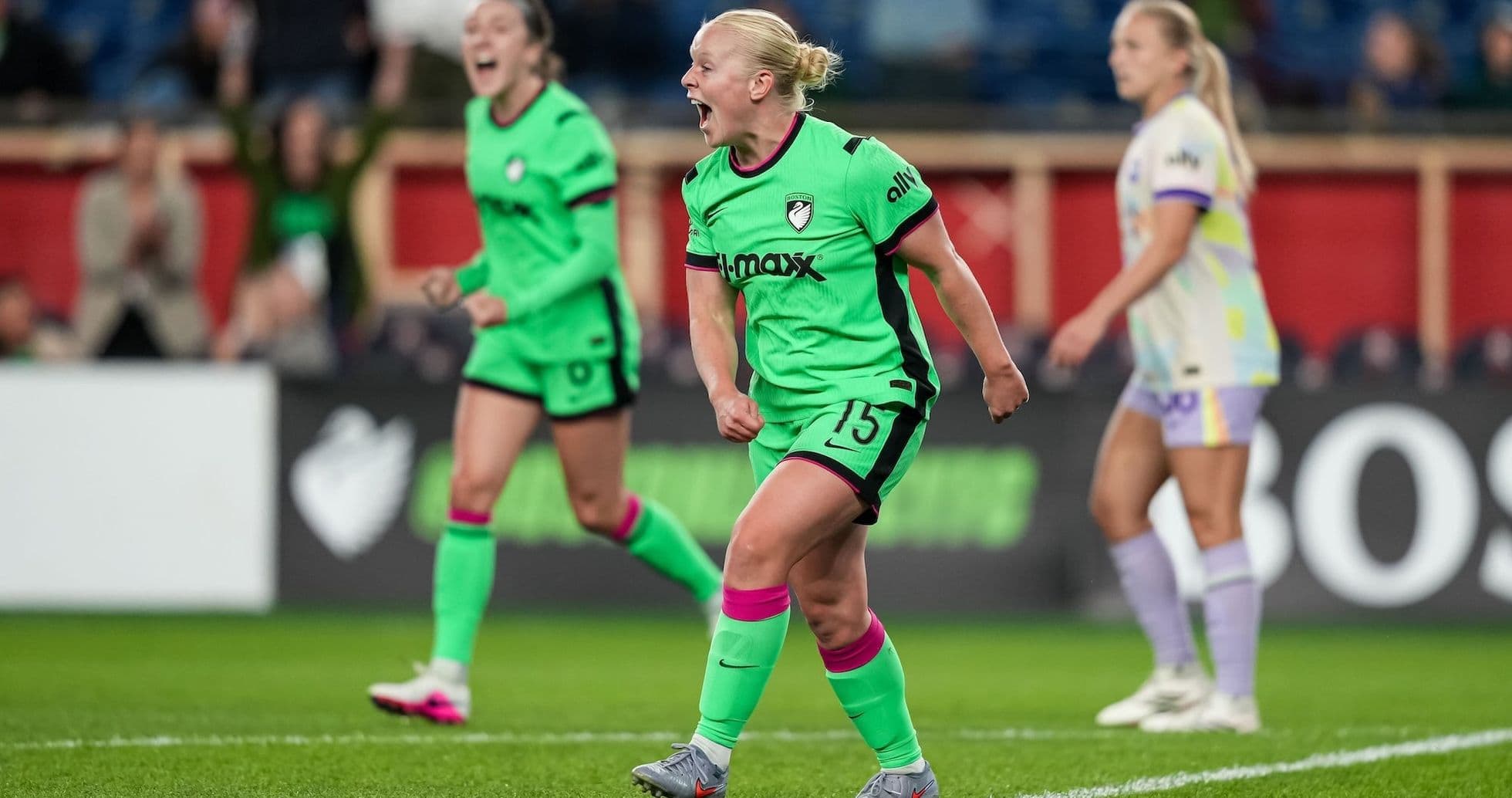
Under the lights at Gillette Stadium, a night that began with Orlando Pride W’s structure and status seemed destined to reinforce the table ended instead as a statement of defiance from Boston Legacy W. The 2–1 turnaround, sealed in regular time under the watch of referee Ekaterina Koroleva, did more than flip a scoreline; it subtly re‑wrote the early-season identities of both sides in the NWSL Women group stage.
Heading into this game, the standings painted a clear hierarchy. Orlando sat 7th on 11 points, with a goal difference of 0 after scoring 13 and conceding 13 overall. Boston were 14th on 8 points, with a goal difference of -6 from 9 goals for and 15 against overall. Orlando’s season to date had been defined by a balanced threat: on their travels they averaged 1.5 goals for and 1.3 against, a profile of a side comfortable in open games. Boston, by contrast, were fragile but dangerous at home: at Gillette they averaged 1.3 goals for and 1.5 against, with no clean sheets overall and 4 games in total where they failed to score. This was a team used to suffering, but rarely silent.
I. The Big Picture: Structures and Seasonal DNA
Seb Hines stayed loyal to Orlando’s season-long blueprint, rolling out their now-familiar 4‑2‑3‑1. A. Moorhouse anchored the back, shielded by a back four of H. Mace, C. Dyke, Rafaelle Souza and O. Hernandez. Ahead of them, the double pivot of J. Doyle and H. McCutcheon sat beneath a creative band of three: Angelina, Marta and S. Yates, all tasked with feeding lone forward S. Jackson.
The shape mirrored Orlando’s statistical identity: a side that has lined up in 4‑2‑3‑1 in all 9 league outings, averaging 1.4 goals for and 1.4 against overall, leaning on controlled possession and a layered press rather than chaos.
Boston Legacy W, by contrast, arrived with a more opaque tactical canvas. Their season data shows only one recorded formation, a bold 3‑3‑1‑3, but here the lineup read more like a flexible, coach-less collective still searching for its definitive structure. C. Murphy started in goal, with a defensive line built around J. Carabali, Lais and E. Elgin. In midfield, A. Cano, A. Karich, J. Hasbo and B. Olivieri formed a hard‑working core, while the front three of N. Prince, A. Traore and B. St.Georges promised direct running and vertical threat.
If Orlando’s identity was system-first, Boston’s was player‑driven: a group of strong individual profiles trying to knit together into something coherent.
II. Tactical Voids and the Discipline Edge
There were no officially listed absentees, but both sides carried invisible voids shaped by their disciplinary histories. Boston came into this game with one of the league’s most combustible edges. Their season card profile shows a heavy clustering of yellows between 16–90 minutes, with 22.73% of their yellows arriving between 16–30 minutes and a consistent 18.18% in each 31–45, 46–60, 61–75 and 76–90. More tellingly, their only red card this season has come in the 76–90 window, a late-game flashpoint that has previously cost them control.
Orlando’s temperament has been calmer but not entirely clean. Their yellows skew late as well, with 25.00% between 61–75 and another 25.00% from 76–90, plus 16.67% in the 91–105 range. They are a side that becomes increasingly combative as matches tighten, even if they have yet to see red.
For Boston, the internal risk lay particularly with A. Traore and J. Carabali. Traore, one of the league’s top yellow-carded forwards, has 3 yellows this season, drawing 19–20 fouls and committing 12–13 depending on the data snapshot, an attacker who lives on the disciplinary edge. Carabali, with 3 yellows and 10–11 fouls committed overall, embodies Boston’s last-ditch defending: she has blocked 3 shots and made up to 11 interceptions, but at the cost of repeated bookings.
On the other side, Orlando’s relative disciplinary cleanliness – B. Banda with just 1 yellow despite heavy involvement, and L. Ovalle with no cards – suggests a team that can foul tactically without tipping into chaos. That balance, on paper, was meant to be a quiet advantage.
III. Key Matchups: Hunter vs Shield, Engine vs Enforcer
The headline duel of this fixture was always going to be conceptual rather than strictly positional: Orlando’s Hunter, B. Banda, against Boston’s Shield, a defensive unit led by J. Carabali and the work of Karich and Alba Caño in front.
Banda did not start, but her season numbers hung over the contest like a tactical threat. With 7 goals in total from 33 shots (20 on target) and a league rating of 7.71, she is the purest expression of Orlando’s attacking edge. She averages high involvement in duels (87 in total, 37 won) and has drawn 21 fouls, constantly asking defenders to make decisions in the box and half-spaces. Any introduction of Banda from the bench would have pitted her direct running and dribbling (22 attempts, 7 successful) against a Boston back line that, heading into this game, conceded 1.5 goals at home on average and had yet to keep a single clean sheet overall.
Boston’s answer lay in the Shield triangle: Carabali’s aggression, Karich’s control, and Alba Caño’s two‑way engine. Carabali’s defensive metrics – 14 tackles, 3 blocked shots and 11 interceptions across the latest snapshot – underline her role as the last line of active resistance. Karich, with 453 passes at 85% accuracy and 22 tackles, is the metronome and screen, while Alba Caño adds bite and progression: 27 tackles, 1 blocked shot, 5 interceptions, plus 2 goals and 12 shots (7 on target). Together, they form a spine capable of absorbing pressure and then springing forward.
In the Engine Room, the clash between Boston’s Karich/Alba Caño axis and Orlando’s midfield technicians was decisive. Orlando’s creative fulcrum in this competition has been L. Ovalle – 2 assists, 1 goal, 12 key passes and 10 dribble attempts (5 successful) – even though she did not appear in this particular lineup. In her stead, responsibility fell more heavily on Marta and Angelina to occupy the half-spaces and find S. Jackson. Marta’s role as a roaming 10, dropping between lines, asked constant questions of Hasbo and Olivieri: step out and risk leaving lanes for Yates and Jackson, or sit and allow Orlando to dictate?
Boston’s response, particularly after going 0–1 down by half-time, was to compress the middle and trust their front three in transition. Prince, listed as a defender in the season data but deployed higher here, brought 2 assists and 10 key passes into the contest, a wide runner who can both carry and slip final balls. Traore’s 2 goals and 1 assist, plus 12–14 shots and 5 on target, made her the natural outlet on the break. Once Boston began to win second balls through Karich and Alba Caño, the game tilted.
IV. Statistical Prognosis and Tactical Verdict
Following this result, the raw league table shifts only slightly, but the underlying narratives move more dramatically. Boston, previously a side whose overall goal difference of -6 reflected a team conceding 1.7 goals per game overall while scoring just 1.0, showed that their attacking ceiling at home – already hinted at by a “biggest home win” of 3–2 – is no anomaly. The 2–1 comeback fits their season pattern: they can score in bunches at Gillette, even if they remain vulnerable.
Orlando, meanwhile, saw the balance that defined their season – 13 goals for and 13 against overall heading into the night – crack under pressure. Their away profile of 1.5 goals scored and 1.3 conceded suggested resilience on their travels, yet here they were outmaneuvered by a side that embraced chaos more willingly.
From an xG-style perspective, the ingredients pointed toward a tight but high‑quality contest: Orlando’s consistent 1.4 goals for per game overall and Boston’s 1.3 at home implied both would carve chances. The decisive edge came not from structure, but from mentality and the Engine Room. Boston’s midfield trio outlasted Orlando’s double pivot, and their high‑risk, high‑reward attacking line, led by Traore and Prince, finally cashed in.
The tactical verdict is clear: Orlando remain the more systematized side, with a defined 4‑2‑3‑1 and a lethal spearhead in Banda. But Boston have discovered something more volatile and potentially just as dangerous – a spine that can bend without breaking, and a front line that, when given space, can turn a scripted away win into a home uprising.
Related News
Portland Thorns W vs Houston Dash W: NWSL Women Clash
Kansas City W vs Denver Summit W: NWSL Women Showdown
Portland Thorns W vs Houston Dash W Prediction: Key Stats and Tips
Washington Spirit W vs Angel City W Prediction: Key Stats and Betting Tips

Racing Louisville W vs San Diego Wave W Predicted Lineups and Team News
Kansas City W vs Denver Summit W Prediction: Key Stats and Betting Tips