
Bradley Barcola: The Rising Star with a Heavyweight Price Tag
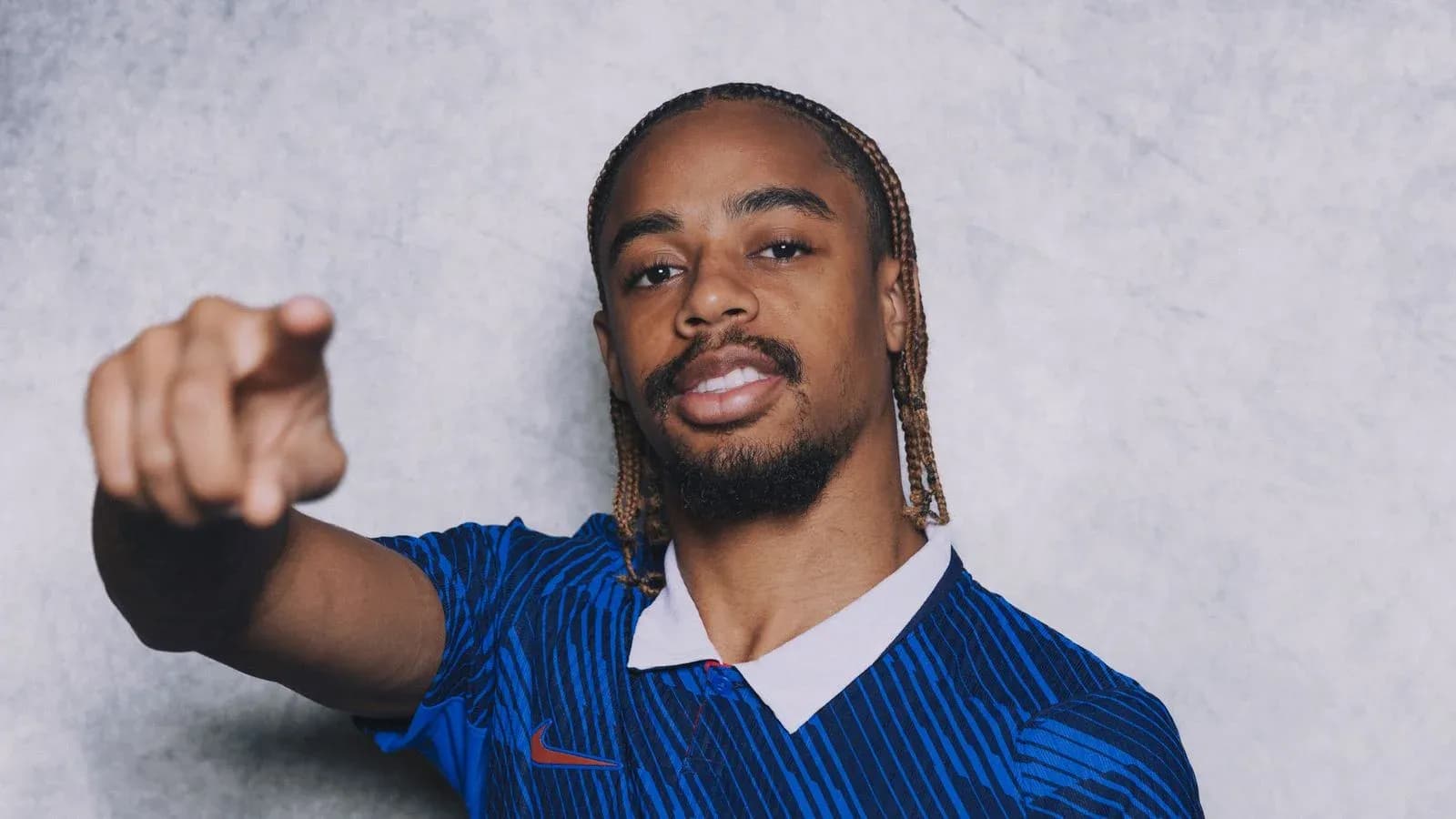
Bradley Barcola walks into this transfer window with a heavyweight price tag on his back and two English giants at his heels. Liverpool want him. Arsenal want him. Paris Saint-Germain might yet decide they cannot live without him.
You can see why the market is circling. At 23, he already has back-to-back Champions League titles with PSG. He has a France cap. He has a highlight reel full of pace and power. And yet, in both of those European finals, he started on the bench.
In Paris, that does not automatically make you expendable. It simply means you share a dressing room with stars. Khvicha Kvaratskhelia’s arrival from Napoli in January 2025 shifted the hierarchy on the left flank. The Georgian became first choice. Barcola became the luxury option.
A luxury with a terrifying ceiling.
A career that almost went sideways
His story was never preordained. At Lyon, he was not the academy’s golden child, not the prodigy fast-tracked through age groups or the teenager everybody in France was talking about. He was on the fringes of the first team under Laurent Blanc, waiting, watching, almost drifting.
Jean-Francois Vulliez, then at Lyon and now a development coach at PSG, remembers the moment that changed everything. Karl Toko Ekambi wanted out. A Swiss club had shown interest in Barcola because he was not getting minutes. Instead, Lyon pulled him back from the brink.
"That was a turning point," Vulliez recalled. Toko Ekambi pushed for his move. Blanc, suddenly aware he might need Barcola, stopped the loan. Toko Ekambi left. One game later, an injury opened the door. Blanc turned to the kid who had been hovering in the shadows.
Barcola stepped through it.
He hit five goals in nine games early in 2023, a burst of end product that transformed perception. The summer’s European Under-21 Championship with France pushed his profile higher. By then, the tug of Paris was too strong. Vulliez admits it bluntly: “His body was in Lyon but his head was in Paris.”
The transfer dragged, but it happened. PSG had seen enough to gamble big.
The late bloomer who learned to think first
Vulliez has watched Barcola longer than most, from his days in Lyon’s academy to his evolution in Paris. He is clear about one thing: there was no guarantee this would be the outcome.
"He was a normal kid," he says. No age-group skipping, no early France youth caps, no physical dominance. He did not bulldoze his way through youth football. He could not. His body was late to the party.
So he used his head.
Unable to overpower defenders, he learned to out-think them. He scanned the pitch, read spaces, chose better positions. The speed was always there, but he paired it with timing and awareness. Only later did the muscles come, turning him from wiry runner into a powerful wide forward.
The result is a modern attacker built on three aligned pillars: tactical intelligence, technical quality and physical explosiveness. The first came out of necessity. The other two caught up.
At Lyon, he played as a striker until 17. That matters now. At PSG he operates mostly from the left, but he does not behave like a traditional winger. He thinks like a No 9. From that flank, he cuts inside, attacks the far corner with his stronger foot, hunts goals rather than just crossing zones.
These instincts cannot be manufactured at 23. Clubs at the top level know it. You can teach patterns. You cannot easily teach a forward when to dart between centre-back and full-back or when to disappear at the back post. Barcola already owns that map in his head.
Numbers, runs and a manager’s trust
Luis Enrique has sharpened those tools. Under him, Barcola has become more careful with the ball, more selective with his dribbles, more purposeful with his movement. He no longer runs at defenders just because he can. He picks his moments.
The numbers back it up. His shot volume last season ranked among the top 10 players in Ligue 1 per 90 minutes. Playing wide has not dulled his appetite for goal. It has simply changed the angles.
“He is very clever with his runs inside,” Vulliez notes. That is where the old striker comes out. He knows when to come short between the lines, when to spin in behind, when to ghost into the box. Give him space to attack from deep and he punishes you.
Coaches love that kind of versatility. With Barcola, you can ask him to hug the touchline, stretch the pitch, and hit the byline. He has the pace to make it work. He was among the top 10 fastest players in the Champions League last season. If the game demands a simple knock-and-run, he can burn you that way too.
You can also bring him inside. Vulliez is convinced of his adaptability. He insists that the intelligence was there early and that by 17, you either have that understanding or you do not. With Barcola, it is there in abundance. That is why PSG have been comfortable moving him around the frontline. That is why suitors see more than just a left winger.
The rough edges and the promise
For all the fireworks, there is still polish to add. His finishing can be loose. Luis Enrique has pushed him to become more ruthless, more clinical. The staff at PSG see the same thing: a player who gets into high-quality positions often enough that, with sharper finishing, his numbers could explode.
History is full of forwards who refined their finishing in their mid-twenties. Barcola has time. More importantly, he has the mindset, according to Vulliez. He listens. He adapts. He works. That is not always a given with players whose careers suddenly accelerate.
Right now, the left wing looks like his best position. But Vulliez is openly curious about where this ends. He can see a future No 9 in him. The movement, the speed, the ability to arrive in the right spaces – it is all there. Add a more ruthless streak in front of goal and the conversation shifts again.
Thirteen trophies and 39 goals in over 150 games for PSG tell their own story. This is not a prospect living off potential alone. He has contributed in a side stuffed with elite talent, survived the pressure of Paris, and grown under a demanding coach.
He is also, by his former academy coach’s own admission, already far beyond what anyone in Lyon originally imagined. That is the part that will intrigue Liverpool, Arsenal and any other club tempted to enter the bidding.
Because if nobody saw this level coming, how sure can anyone be that he is close to his ceiling yet?
Related News

Wilfred Ndidi’s Marriage Reportedly Ends as He Enters New Relationship

Cristiano Ronaldo's Top 5 Most Valuable Cars in His Extraordinary Collection
Ben Whittaker’s Challenge to Prove Eddie Hearn’s Bold British Boxing Bet
Peter Handscomb on the Challenge of Facing Indian Bowlers
How to Watch UFC 332: Silva vs. Wang Live on CBS and Paramount+ This Saturday
Raul Rosas Jr. Shares His Thoughts on the Shocking UFC Vegas 121 Finish Against Raoni Barcelos