
Brazil’s World Cup Collapse: Ancelotti’s Choices and Neymar’s Impact
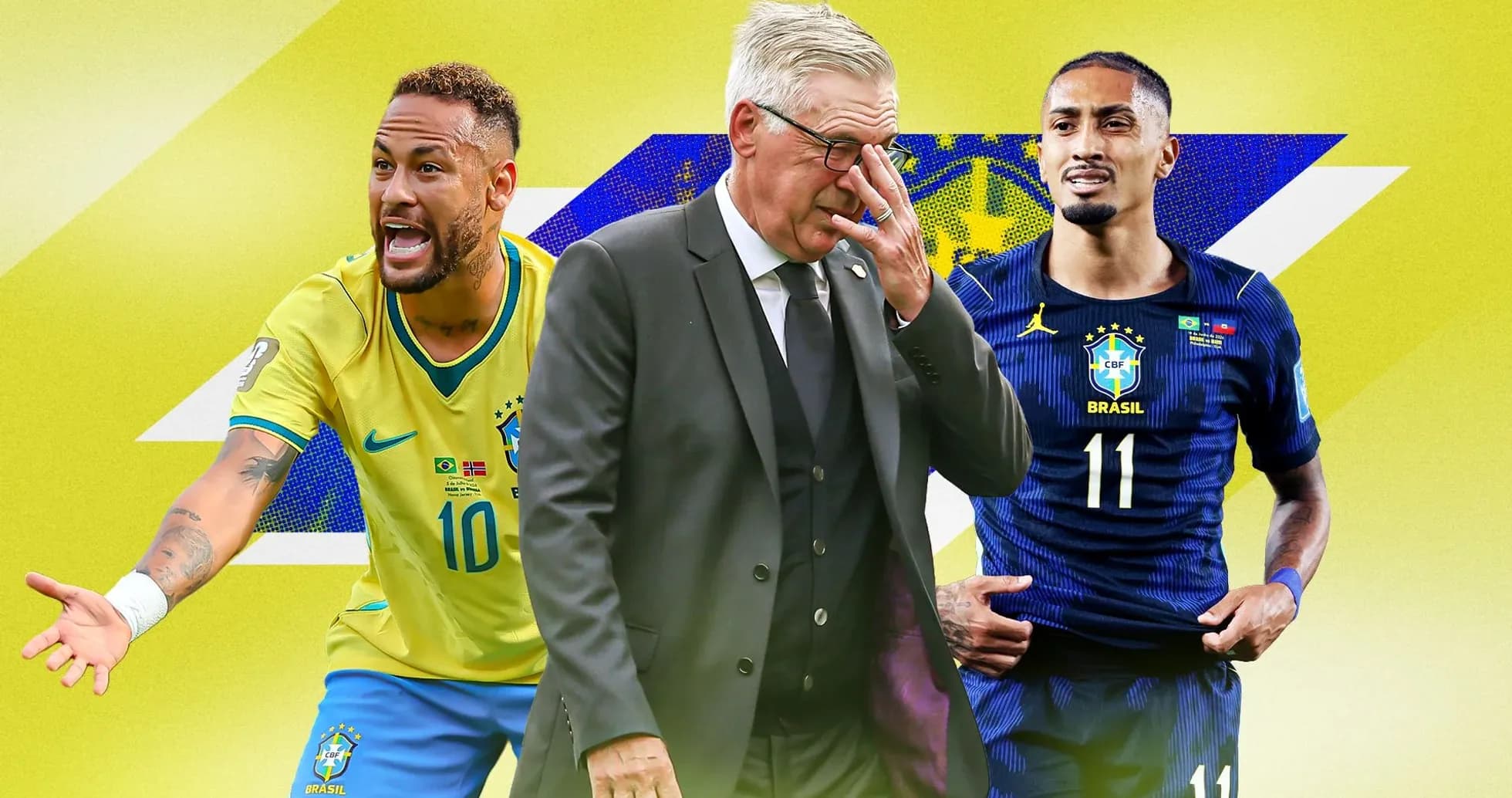
Carlo Ancelotti arrived in charge of Brazil with the aura of a serial winner and the promise of renewal. He leaves this World Cup facing accusations that he clung too tightly to the past and ignored the future staring him in the face.
The post-mortem has already begun, and it keeps circling back to the same place: his squad list.
An ageing spine creaks
Brazil went to the tournament old. Not experienced. Old.
All three goalkeepers were in their thirties – 33, 32 and 38. The defenders, on average, were 31. Danilo and Alex Sandro, once dynamic full-backs at Juventus, now looked like echoes of a different era rather than foundations of a new one.
In midfield, the theme hardened. Casemiro, 34, again carried a load he can no longer shoulder alone. Fabinho, 32, was asked for heavy minutes as well. Both have seen and done it all at the top level, but this was a World Cup that demanded legs as much as legacy.
There were flickers of something new. Bournemouth’s 19-year-old Rayan and Botafogo’s 25-year-old Danilo hinted at a different Brazil, quicker and braver. They were exceptions, not the rule. Ancelotti admitted as much when the dust settled, stressing the need for “young talent” and “high-level players” to come through. His words sounded less like a plan and more like an admission that the well had run dry when he needed it most.
Neymar: the recalled idol who never truly arrived
One name towered over the selection debate from the start: Neymar.
At 34, with his last cap in October 2023 and a body battered by a series of injuries, his recall was always going to be contentious. Ancelotti bowed to a mix of pressure and nostalgia, gambling that Brazil’s record scorer still had one more tournament in him.
The gamble never really got onto the pitch.
On the eve of the World Cup, Neymar suffered a calf injury that ruled him out for “two to three weeks”. He missed Brazil’s first two group matches, then scraped together just 14 minutes off the bench against Scotland. Those few moments in Miami felt like a testimonial cameo, not the triumphant re-emergence of a national icon.
When the knockout rounds arrived, Ancelotti’s faith evaporated. Neymar stayed rooted to the bench during the dramatic last-32 win over Japan. Against Norway in the round of 16, he finally got more time as Brazil chased the game, but beyond a late consolation penalty, he was again a ghost of his former self. If this was his international farewell, it came not with a roar but a murmur.
The decision to build part of the squad around a fragile, ageing superstar only sharpened the glare on one glaring omission.
The Joao Pedro question
Neymar’s limited impact made Joao Pedro’s absence impossible to ignore.
The Chelsea forward, 24, had just produced a debut season in England worth 29 combined goals and assists. He was versatile, in form, and widely expected to be on the plane – perhaps even starting as Brazil’s No.9. Instead, he was brutally cut adrift, sacrificed to make room for a romantic recall.
Ancelotti himself admitted when naming the squad that Joao Pedro “probably deserved to be on this list”. That line has aged badly.
As Brazil crashed out, the snub became a central exhibit in the case against the coach. Ronaldo Nazario, never shy of calling things as he sees them, went straight to the point, saying he “still [didn’t] understand” why Joao Pedro had been left at home and stressing that Brazil needed a striker “who could offer something different”.
The implication was clear: the coach chose sentiment over form. Brazil paid the price.
A midfield built on one man
If the forward line was shaped by what – and who – Ancelotti left out, the midfield was defined by who he leaned on.
Brazil took just five central midfielders to the tournament initially, one of them Lucas Paqueta, more of a No.10 than a true central presence. When right-back Wesley dropped out injured, Manchester United-bound Ederson came in to bolster the middle. On paper, the numbers looked adequate. On the pitch, they looked anything but.
The burden fell squarely on Bruno Guimaraes. The Newcastle captain was asked to create, to cover ground, to dictate. He responded with four assists and a tireless work rate, but he could not do it all. Ancelotti clearly did not trust the depth behind him; both Ederson and Danilo were given only scraps of minutes.
After the defeat to Norway, the coach did not hide from the issue. He pointed directly at the centre of the pitch as an area that needed major surgery. It was an honest assessment – and a belated one.
Data, pressure and a pivotal penalty
One moment crystallised Brazil’s muddled thinking in the middle of the park.
With the game against Norway finely poised, Bruno Guimaraes stepped up to take a first-half penalty. He missed. Brazil later fell behind and never found a way back. That sequence will haunt this group for a long time.
Many expected Vinicius, the team’s leading scorer at the tournament and in sparkling form, to take responsibility from the spot. Instead, he stood aside as the midfielder placed the ball. Ancelotti later explained that the decision came from statistical analysis. Raphinha was rated the best penalty-taker, Neymar second, Bruno Guimaraes third. With the first two not on the pitch, the numbers pointed to Bruno. Only after him came Gabriel Martinelli.
On paper, the logic was sound. In the moment, it looked like a team hiding behind a spreadsheet rather than riding the confidence of its most dangerous attacker. Brazil needed conviction. It got calculation.
Injuries and excuses
Ancelotti is not wrong when he points to the injuries that ripped through his plans.
Even before the squad announcement, Brazil lost Eder Militao, Rodrygo and Estevao Willian. That meant no first-choice right-back and two wide players who could have started or changed games from the bench. The margin for error shrank before a ball was kicked.
Once the tournament began, the situation worsened. Neymar’s calf problem was predictable but still damaging. Then came Raphinha’s hamstring injury in the first half against Haiti; he never played again. Paqueta followed, forced off at half-time in the knockout tie with Japan. Each setback stripped away another layer of quality and left Ancelotti reaching for options he did not fully trust.
These are not minor details. They help explain why Brazil looked so thin in key moments. They do not, however, fully absolve the decisions made when the squad was picked, or the reluctance to lean harder into the younger, hungrier players who were available.
The start of something, or the end of an era?
In the aftermath, Ancelotti tried to frame the World Cup exit as a beginning rather than a conclusion. “A defeat is the beginning of a new adventure,” he said, insisting this was “the start of a new cycle” and talking about fresh impetus, new ideas and better assessment of players.
He is right about one thing: this feels like a crossroads.
Brazil cannot keep arriving at major tournaments with a squad built around fading names and patched-together midfields, hoping that the shirt’s history will fill the gaps. The World Cup has exposed the limits of nostalgia and the danger of ignoring form in favour of reputation.
The questions now are unforgiving. Will Brazil finally commit to a generational reset, or drift into another cycle built on the same old names and the same old regrets?
Related News
Anthony Joshua Names Murat Gassiev as Next Opponent if He Defeats Tyson Fury

UFC 332: Start Time and Fight Highlights for Natalia Silva vs. Wang Cong
Court McGee Opens Up About Choosing UFC 332 as His Final MMA Fight
WBC Orders Lightweight Title Unification: William Zepeda vs Jadier Herrera
BCCI Pension List: Monthly Payments to Retired Indian Cricketers in 2025
Why Fury vs Joshua Is Set for Cardiff, and Dua Lipa’s Unexpected Role