
Cagliari vs Inter: Tactical Insights from Serie A Clash
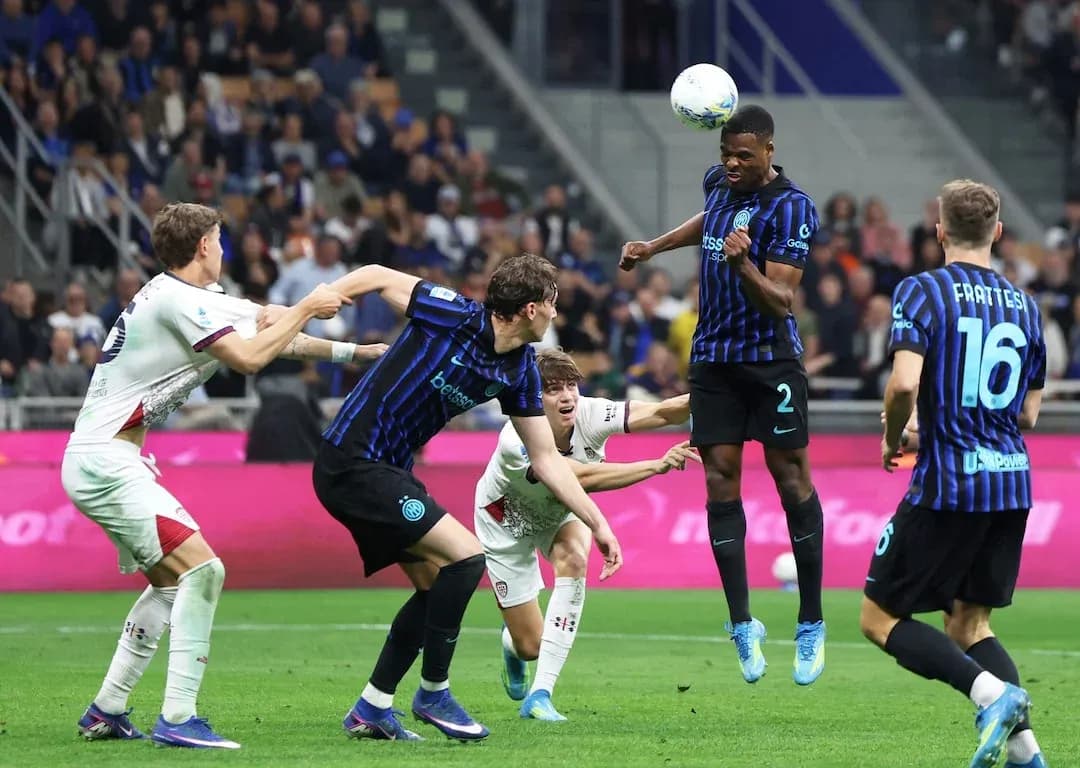
Under the Sardinian floodlights of Unipol Domus, this was billed as an early‑season stress test of identities. Cagliari, back in Serie A with ambition and a clear structural idea, hosting an Inter side already humming like a machine under Cristian Chivu. The table coming into the night framed the contrast neatly: Cagliari sat 12th with 3 points from 2 matches, their overall goal difference perfectly balanced at 0 after scoring and conceding 1. Inter arrived in Cagliari as early pacesetters, 2nd in the league with 6 points from 2, their overall goal difference a commanding +4 from 5 goals scored and only 1 conceded.
The 1–0 scoreline to Inter at full time felt almost pre‑written in the seasonal data. Heading into this game, Cagliari’s campaign had been split in two: resilient and efficient on their travels, blunt and vulnerable at home. Away, they had played 1, won 1, scoring 1 and conceding none, with an away scoring average of 1.0 and away goals against average of 0.0. At home, by contrast, they had played 1 and lost it 0–1, failing to score and conceding once, with a home scoring average of 0.0 and home goals against average of 1.0. Inter mirrored that split from the opposite end of the food chain: at home they had already produced a 4–1 win, and on their travels they had played 1, won 1, scoring once and conceding nothing, for an away scoring average of 1.0 and away goals against average of 0.0.
Fabio Pisacane doubled down on continuity, naming Cagliari in the 4‑2‑3‑1 that has been his only shape so far this season. E. Caprile was the last line, shielded by a back four of J. Pedro, A. Deiola, J. Rodriguez and A. Obert. In front of them, A. Romano and H. Winks formed the double pivot, tasked with both screening and initiating play. The line of three – M. Adopo, D. Maldini and J. Fazzini – was supposed to be the creative hinge behind lone forward P. Mendy.
Chivu’s Inter, by contrast, are already defined by the 3‑5‑2 that has underpinned both of their league wins. J. Martinez anchored a back three of B. Pavard, M. Akanji and A. Bastoni. Across midfield, the blend of technique and intensity was striking: Luis Henrique wide on the right, F. Dimarco on the left, with N. Barella, H. Calhanoglu and P. Sucic forming a central triangle that can both suffocate and slice open opponents. Up front, L. Martinez and F. Esposito led the line, a partnership that marries Lautaro’s movement and dueling with Esposito’s emerging all‑round presence.
The tactical voids for both sides were subtle but significant. Cagliari were again without R. Idrissi and Y. Trepy, both listed as missing through injury. For a side that has already failed to score at home in both their league fixtures so far – home goals for standing at 0 from 2 matches in all competitions this season, and a home “failed to score” tally of 1 in the league – that absence of extra wide creativity and depth narrowed Pisacane’s options. Inter, for their part, travelled without D. Spence and M. Spinacce, but their squad depth meant those absences barely dented the structure of Chivu’s plan.
Discipline shaped the tone as much as tactics. Cagliari’s yellow‑card profile in the league is already front‑loaded around the restart: 50.00% of their cautions come between 46–60 minutes, with another 25.00% arriving late between 76–90. That pattern betrays a team that has to stretch and chase games in the second half, often reacting rather than dictating. Inter’s bookings are more evenly spread, with 33.33% of their yellows in each of the 0–15, 31–45 and 46–60 windows, underscoring an aggressive but controlled pressing identity from the first whistle.
Within that disciplinary frame, two individuals stand out. For Cagliari, J. Fazzini carries both creative hope and a disciplinary edge. Across his 2 league appearances and 123 minutes, he has drawn 1 foul but committed 3, picking up 1 yellow card. His 4 successful dribbles from 4 attempts and 82% passing accuracy hint at a player who wants to break lines, but his tendency to foul when out of possession risks feeding Inter’s set‑piece threat. On the other side, M. Akanji has already taken 1 yellow in 2 league appearances, yet his numbers – 126 passes at 95% accuracy, 4 interceptions, 7 duels won from 8 – underline just how clean and efficient Inter’s back line is in the aggregate.
The “Hunter vs Shield” duel in this fixture was less about a single Cagliari scorer and more about Inter’s collective finishing power. Inter’s overall scoring average of 2.5 goals per match, with 4.0 at home and 1.0 on their travels, collided with a Cagliari defence that, overall, had conceded only 0.5 goals per match heading into this game. At home, however, Cagliari were conceding 1.0 per match, and that fragile home baseline ultimately held: Inter once again found a way to score on their travels, maintaining their away record of 1 goal scored and 0 conceded.
In the engine room, the confrontation between H. Calhanoglu and Cagliari’s double pivot was decisive. Calhanoglu’s league form is elite: 2 goals from 2 shots on target, 125 passes with 91% accuracy, 3 key passes and 3 interceptions in just 119 minutes. He is both regista and raider, and his presence in the top‑scorers list is no accident. Up against him, Winks and Romano had to compress space and deny him the time to dictate tempo. When they failed, Inter’s structure snapped into life: Barella’s vertical bursts, Sucic’s support runs and the width from Luis Henrique and Dimarco stretched Cagliari’s 4‑2‑3‑1 into uncomfortable shapes.
Ahead of them, F. Esposito embodied Inter’s “Hunter” role. With 1 goal and 1 assist from 6 shots and 4 key passes in the league, plus 9 duels won from 15, he is rapidly becoming more than just a foil for L. Martinez. His ability to drop, combine and then spin in behind asks constant questions of centre‑backs like A. Deiola and J. Rodriguez, who must decide whether to follow or hold the line. Lautaro himself, even without a league goal so far despite 7 shots and 4 dribble attempts, remains a magnet for defenders and a perpetual yellow‑card risk; his 1 booking in 2 appearances reflects the edge with which he plays.
From a statistical prognosis standpoint, the result at Unipol Domus fell squarely in line with the underlying trends. Cagliari’s overall scoring average of 0.5 goals per match, combined with an overall “failed to score” count of 1 and a home record of 0 goals for, pointed toward another night of offensive frustration, especially against an Inter defence conceding just 0.5 goals per match overall and boasting an away clean‑sheet record already at 1. Inter’s attack, meanwhile, did not need to hit its home‑match heights; their away template is pragmatic: control the game through Calhanoglu’s passing, let Barella and Sucic break lines, and trust the Martinez–Esposito tandem to convert one of the few clear chances.
No penalties have yet coloured either team’s season – both sides sit at 0 taken, 0 scored, 0 missed – so the margins remain rooted in open play and set pieces. In that landscape, Inter’s superiority in structure, squad depth and midfield control was always likely to tilt a tight game. The 1–0 scoreline may look narrow, but in narrative terms it extends a clear storyline: Inter as a relentless, statistically coherent contender, and Cagliari as a side still searching for a way to turn honest structure and industry into genuine home‑ground threat.
Related News
Cagliari vs Inter: Tactical Insights from Serie A Clash
Genoa vs Como Prediction: Key Stats and Betting Tips

Napoli's Homecoming Disappointment Against Como

AS Roma vs Atalanta: Head-to-head Stats and Historical Context
Juventus Dominates Parma in Serie A Showdown

Inter vs Napoli Stats: Head-to-head Record Before September 2026 Match