
Canada and Bosnia & Herzegovina Draw in World Cup Opener
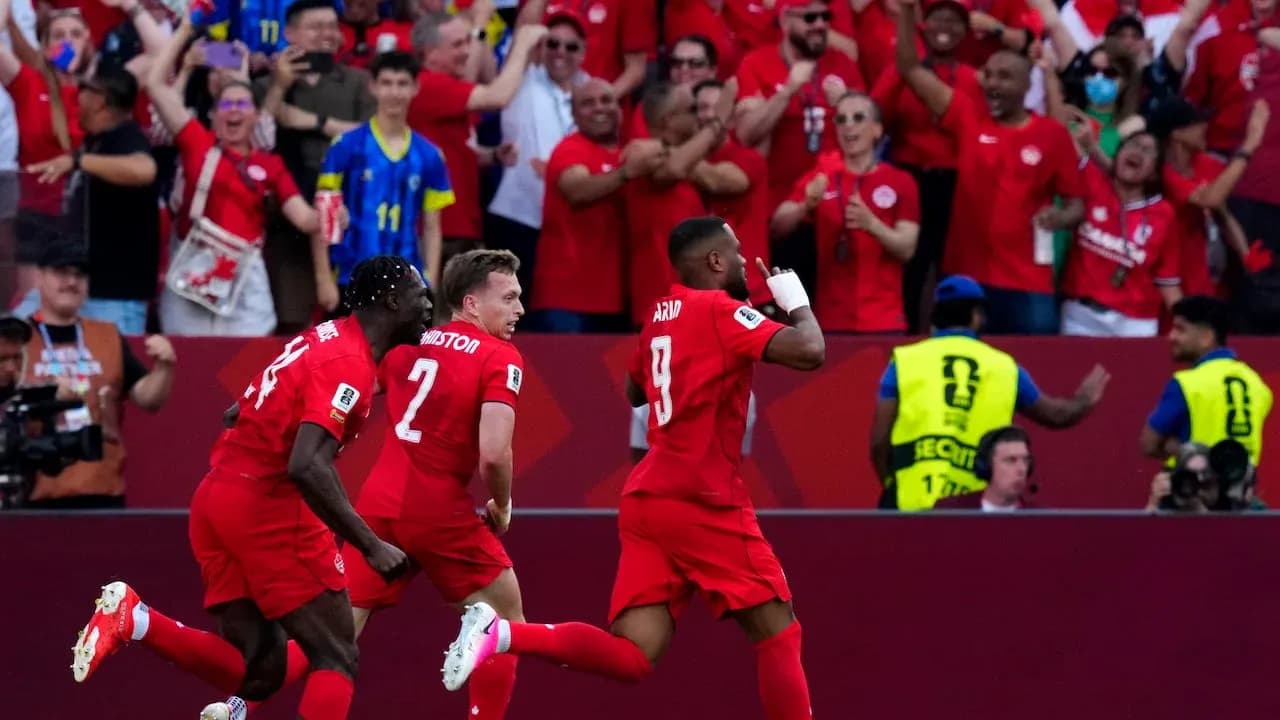
Canada and Bosnia & Herzegovina opened their World Cup Group Stage campaigns at BMO Field with a 1-1 draw that neatly reflected a clash of contrasting game plans. Jesse Marsch’s Canada imposed themselves with 61% possession, a 4-4-2 geared towards width and volume of attacks, and a clear territorial dominance. Sergej Barbarez’s Bosnia & Herzegovina, also in a 4-4-2 on paper, played a much more conservative, compact game, leaning into physical duels, vertical outlets and efficiency in the final third. The shot profile (13-8 to Canada) and foul count (20 by Bosnia & Herzegovina, 10 by Canada) framed a match where Canada chased control and Bosnia & Herzegovina chased moments.
Canada’s structure without the ball was fairly orthodox: Maxime Crépeau in goal behind a back four of Richie Laryea, Derek Cornelius, Luc De Fougerolles and Alistair Johnston, with a flat but flexible midfield line of Liam Millar, Stephen Eustaquio, Ismael Koné and Tajon Buchanan. Jonathan David and Tani Oluwaseyi led the line. The wide midfielders started high and aggressive, effectively turning the shape into a 4-2-4 in settled possession, with Eustaquio and Koné tasked with anchoring transitions and recycling second balls.
Bosnia & Herzegovina mirrored the base 4-4-2 but with a different intent. Nikola Vasilj in goal was shielded by a back four of Sead Kolašinac, Tarik Muharemović, Nikola Katić and Amar Dedić. The midfield four of Amar Memić, Ivan Bašić, Benjamin Tahirović and Esmir Bajraktarević sat tighter and deeper than Canada’s, with Ermedin Demirović and Jovo Lukić working as first pressers and, crucially, as the primary outlets once possession was regained. Their lines compressed quickly, and the 20 fouls and three yellow cards underlined a readiness to disrupt Canada’s rhythm rather than contest every phase on the ball.
First Half
The first half belonged territorially to Canada but was tactically defined by Bosnia & Herzegovina’s ability to punish a single lapse. At 21', Jovo Lukić finished a move assisted by Sead Kolašinac, a classic example of Bosnia & Herzegovina using their left side as a launchpad: Kolašinac stepped forward from full-back, and Canada’s advanced wide men left their own full-backs exposed to quick switches and overlaps. That sequence crystallised a recurring theme: Canada’s aggressive wide positioning created superiority in the attacking half but left transition gaps that Bosnia & Herzegovina were prepared to exploit with direct passes into their front two.
Canada’s defensive line, with Cornelius and De Fougerolles centrally, was generally stable in set possession but vulnerable when dragged laterally. Johnston’s yellow card at 11' for a Foul came as he stepped in to stop an early Bosnia & Herzegovina break, indicative of how Canada’s full-backs were frequently left to defend large spaces. De Fougerolles’ booking at 53' for a Foul followed a similar pattern, arriving as Canada were pushing higher in search of an equaliser and Bosnia & Herzegovina continued to look for quick outlets into Demirović and Lukić.
Bosnia & Herzegovina’s discipline profile was more aggressive. Demirović’s yellow at 44' for a Foul and Lukić’s at 45+1' for a Foul reflected a front line that defended by colliding with Canada’s build-up rather than dropping into passive blocks. Katić’s late yellow at 90+3' for a Foul was the culmination of a strategy that accepted fouls as the cost of breaking Canada’s tempo and protecting a narrow advantage and then a draw.
Second Half
The game’s tactical hinge came with the triple Canadian substitution at 61'. Promise David (IN) came on for Jonathan David (OUT), Ali Ahmed (IN) came on for Tajon Buchanan (OUT), and Jacob Shaffelburg (IN) came on for Liam Millar (OUT). Marsch effectively re-energised both flanks and the central forward channel. Promise David offered more vertical running and willingness to attack depth, Shaffelburg provided a more direct, dribble-first profile on the left, and Ahmed injected fresh legs and mobility in midfield.
Bosnia & Herzegovina responded with their own reshuffle at 62', Samed Baždar (IN) coming on for Jovo Lukić (OUT) and Armin Gigović (IN) for Ivan Bašić (OUT). This subtly altered their attacking reference points: with Lukić off, they lost a more traditional target presence and leaned further into counter-attacks from deeper positions, with Demirović and Baždar asked to run channels rather than pin centre-backs. Later, at 74', Kerim Alajbegović (IN) replaced Amar Memić (OUT) and Ivan Šunjić (IN) replaced Esmir Bajraktarević (OUT), further thickening the central block and reinforcing a low-to-mid block designed to protect the box.
Canada’s equaliser at 78' was a direct product of these changes. Cyle Larin had entered at 76', with Larin (IN) coming on for Tani Oluwaseyi (OUT), giving Canada a more classic penalty-box striker. Promise David, already on the pitch, provided the assist for Larin’s goal, a pattern that matched the tactical idea: fresh, aggressive wide and half-space runners supplying a specialist finisher. The goal validated Marsch’s decision to tilt the structure even more towards the final third, with Eustaquio and Koné continuing to hold the centre while the front four rotated and overloaded Bosnia & Herzegovina’s back line.
Bosnia & Herzegovina’s final substitution at 84', with Dženis Burnić (IN) replacing Sead Kolašinac (OUT), signalled a shift from proactive overlapping full-back play to pure protection. Removing Kolašinac, who had earlier assisted the opening goal, reduced their left-side thrust but added another body capable of screening central zones as Canada pushed for a winner. Canada’s last change at 90', Jonathan Osorio (IN) for Stephen Eustaquio (OUT), was a late attempt to add an extra line-breaking runner from midfield, but with limited time to reshape the patterns of play.
Match Statistics
In goal, Maxime Crépeau (Canada) made 2 saves, while Nikola Vasilj (Bosnia & Herzegovina) recorded 1 save. The low save counts relative to total shots underline that much of Canada’s 13-shot volume (10 inside the box) was either off target or blocked (4 blocked shots), and Bosnia & Herzegovina’s 8 attempts (5 inside the box, 1 blocked) were more selective. Canada’s 9 corners to Bosnia & Herzegovina’s 4 reinforced the sense of sustained Canadian pressure, especially after the hour mark, with repeated deliveries testing a defence increasingly focused on clearing rather than countering.
On the ball, Canada’s superiority was clear: 415 passes, 310 accurate at 75%, against Bosnia & Herzegovina’s 270 passes, 172 accurate at 64%. The higher pass volume and accuracy aligned with a game plan built on structured possession, wide circulation and repeated entries into the final third. Bosnia & Herzegovina’s lower pass count and accuracy reflected a more vertical, risk-accepting approach that prioritised progression over retention.
From an xG perspective, Canada’s 1.25 against Bosnia & Herzegovina’s 0.98 suggests that the 1-1 scoreline broadly matched the underlying chance quality, with Canada generating slightly better opportunities over the 90 minutes. Both goalkeepers showed negative goals prevented values of -0.26, indicating that each conceded slightly more than the model would have expected from the shots faced, though the margins were small. This symmetry in goals prevented, combined with the close xG totals, paints a picture of a match where Canada’s territorial dominance and Bosnia & Herzegovina’s efficiency almost perfectly cancelled each other out.
Discipline also shaped the tactical story. Canada’s 2 yellow cards to Bosnia & Herzegovina’s 3, and the 10-20 foul split, highlight how Bosnia & Herzegovina accepted repeated defensive interventions to protect their shape. Canada’s bookings, both for Foul, were more about emergency defending in transition, symptomatic of the risks inherent in their aggressive attacking posture. Ultimately, the draw leaves Canada encouraged by their control and chance creation but reminded of their vulnerability in transition, while Bosnia & Herzegovina can be satisfied that a compact, physical plan held up under sustained pressure and yielded a valuable point.
Related News
Dean Huijsen Reflects on World Cup Snub After Spain’s 4-1 Win Over Croatia

Ivan Rakitic Reveals He Still Avoids Watching Croatia’s 2018 World Cup Final Loss to France
Francesco Totti Claims Italy's 2006 World Cup Win Owed to Him
Brazil's First Post-World Cup Friendly: What Should the Lineup Be?
Harry Kane Calls England’s World Cup Exit to Argentina His Deepest International Pain
Estevao Opens Up on World Cup Heartbreak and His Unexpected Return to Brazil Under Ancelotti