
Canada’s Unforgettable World Cup Journey
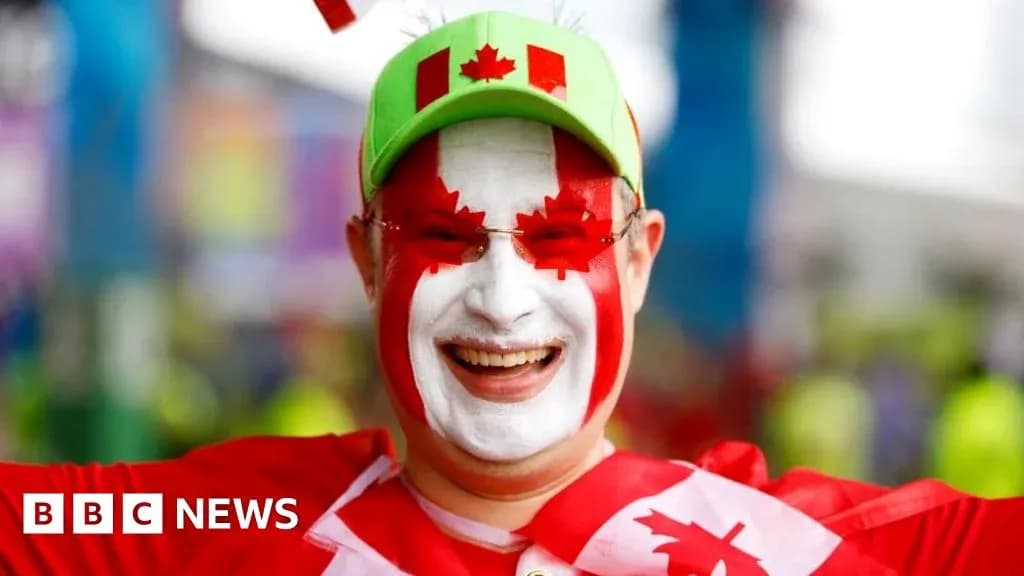
For weeks, Canada lived in the glare of a tournament that was never really supposed to be about them. The “forgotten host” of this World Cup became anything but forgettable the moment Jesse Marsch’s side tore up the script and muscled their way into the round of 16.
For the men’s national team and its supporters, this was a watershed. Their deepest run at a World Cup. Their first point. Their first win. Their first knockout victory. A country that has long treated men’s football as background noise suddenly found itself hanging on every pass.
“They shocked everyone,” fan Matt Lorincz said in Calgary. He wasn’t exaggerating.
A team that refused to play its assigned role
Marsch arrived with a reputation: brash, intense, unapologetically front-foot. His players mirrored him. Canada did not creep into the knockouts; it fought its way there, stride by stride, result by result, before finally bowing out to Morocco in the last 16.
For a nation used to shining on ice, not grass, this felt new. Football is Canada’s most-played sport, yet its professional footprint has always been dwarfed by the power of the NHL, the draw of Major League Baseball and the pull of the NBA. The game has lived in the shadows of packed hockey barns and October baseball.
This World Cup cracked that hierarchy, at least for a month.
“Most people you talk to watch, like, hockey or other sports, right?” Lorincz said. “There’s not a lot of – or as many – soccer fans in Canada. So hopefully there may be a few more of those.”
The hope is that this run doesn’t just live as a memory, but as a starting point.
A country steps into the spotlight
Canada’s role as co-host with the US and Mexico always felt understated. Fewer matches, smaller stadiums, less political theatre. Yet for a few weeks in June and July, the country leaned into the moment.
Toronto pulsed with it. Matches spilled out of bar doors and onto the streets, chants echoing down downtown corridors as fans marched in colour to Toronto Stadium. On the west coast, Vancouver had its own statement night: a 6-0 demolition of Qatar that electrified the city, only dimmed by the sight of Ismaël Koné leaving on a stretcher with a broken leg after a heavy tackle.
The final World Cup act on Canadian soil came on a Tuesday in Vancouver, where Switzerland knocked out Colombia in the round of 16. The football moved on. The impression lingered.
Prime Minister Mark Carney understood the scale. A self-confessed sports obsessive with a jersey for every mood, he has been the only head of government among the three host nations to actually plant himself in the stands. After that 6-0 win over Qatar, he walked into the locker room in Vancouver and delivered his own verdict.
“You showed a level of character that some people never achieve in their life,” he told the players. “And you showed it when a good part of the country and the world is watching.”
Sports minister Adam van Koeverden framed it as a coming-of-age moment for a so-called middle power. Hosting, he said, had been “a sincere privilege that we have not taken lightly.”
The original vision, as John Kristick remembers it, was grand: “one continent, three countries.” Kristick, now with Playfly Sports Consulting and once executive director of the United Bid Committee, believes the tournament has largely worked – but that the united ideal has frayed.
He sees it plainly. Canada and Mexico have struggled to cut through as hosts while the US has dominated the limelight, buoyed by its political profile during the Trump era and by the sheer volume of games on American soil.
Yet inside Canada’s borders, there’s no confusion about whose party this also was. “Every Canadian knows Canada is hosting it,” Kristick said, “and I think there’s been a great deal of national pride.”
Toronto and Vancouver staged 13 of the tournament’s 104 matches. Thirteen nights – and afternoons – that reintroduced the country to its own footballing ambition.
The business of a World Cup buzz
For local businesses, the World Cup felt like a four-week adrenaline shot. Ian Tostenson, head of the British Columbia Restaurant and Foodservices Association, called it a crash course in “the enormity of the World Cup.”
People didn’t just watch; they gathered. They spent. Alcohol sales, Tostenson said, climbed roughly 5% compared with last year. “It raised the spirits of the entire province. I think the whole conversation [for the] last four weeks had been about soccer,” he said.
That matters in a country wrestling with economic headwinds. Tostenson’s takeaway was blunt: “You learn that if you give people a real reason to spend their money and give them value, they’ll spend it.”
But the party came with a bill. Taxpayers put up an estimated C$1.1bn to get Canada World Cup-ready, with Toronto alone accounting for around C$380m. In a city where budgets already feel stretched, not everyone saw the value.
“I don’t think that hosting the games made the city’s situation any better,” said Toronto City Councillor Josh Matlow, questioning whether the spectacle justified the strain on municipal finances.
Van Koeverden pushed back, calling the spending “prudent” and insisting the money flowed back into the economy. His snapshot of 2026? “Full stadiums, full parks, full restaurants, and full hotels is a nice problem to have.”
A ‘forgotten’ host that left a mark
If the world sometimes overlooked Canada’s role, visitors who actually came didn’t. Portugal manager Roberto Martinez praised Toronto’s compact, bolted-together stadium – the smallest in the World Cup – for its throwback feel, saying it reminded him of “old-fashioned Premier League grounds.”
After Portugal’s win over Croatia, he described the spectacle as “an incredible spectacle for football,” a nod to the noise and colour that wrapped the city.
Fans felt it too. Norwegian supporter Gudmund Agotnes, in Toronto for three games, knew he’d lucked out with the draw. From his seat, he had a “bird’s eye view” of both the pitch and the skyline. The verdict on the experience was simple: “pretty cool.”
Canada might not have had the biggest venues or the most fixtures. It had something harder to quantify: an atmosphere that surprised even those who thought they knew the country.
Record audiences, shifting habits
The story wasn’t just in the stands. It was on Canadian screens.
Fifa reported more than a million fans at the opening 16 games across all three host nations, with the tournament on track to surpass the cumulative attendance record of 3.5 million set in 1994 – helped, of course, by an expanded format.
Inside Canada, the men’s last-16 clash with Morocco on 4 July became appointment viewing. Bell Media, the host broadcaster, said the match peaked at 11.7 million unique viewers, the biggest non-final World Cup audience on record in the country.
To put that into Canadian terms: the opening night of last October’s NHL season drew 9.8 million viewers in total. The round-of-32 World Cup matches averaged 1.9 million Canadian viewers each, comfortably ahead of the 1.2 million average audience for a typical Hockey Night in Canada broadcast.
For once, the football numbers sat alongside hockey’s and didn’t look out of place. They looked competitive.
A soccer nation, finally acting like one
Canada has never lacked people who play the game. It has lacked a clear, sustained pathway from weekend pitches to world stages, especially on the men’s side.
There is history. The Vancouver Whitecaps, founded in 1973, and Toronto FC, launched 32 years later, give the country two long-standing representatives in Major League Soccer. There is pedigree too: the women’s national team currently sits ninth in Fifa’s global rankings.
But the men’s national team has struggled for decades to turn grassroots enthusiasm into elite consistency. That’s why this World Cup run felt so significant – and why Canada Soccer moved quickly to harness the momentum.
Before the tournament, the governing body launched a fundraiser with a C$25m target. It hit that mark months ahead of schedule, a clear sign that sponsors and supporters suddenly see opportunity where there used to be only hope.
On the terraces and in the bars, the shift was emotional as much as financial. Fans of Les Rouges – the men’s national team – soaked in the novelty of meaningful knockout football with their country on the pitch.
“It brought a lot of people together in a very kind of segregated world that we’re living in,” said Zeileen Reardon, watching the Morocco match in a Calgary bar. “So, I think it actually showed the world that we can come together, even for a game.”
That is the quiet power of a World Cup run: it changes how a nation sees itself, one shared moment at a time.
Canada may leave this tournament without a trophy, without a semi-final, without the global headlines that follow giants. But it departs with something harder to steal and impossible to fake: a sense that men’s football finally belongs at the centre of its sporting conversation.
The “forgotten host” will not be so easy to overlook next time.
Related News

Anthony Joshua Names Murat Gassiev as Next Opponent if He Defeats Tyson Fury

UFC 332: Start Time and Fight Highlights for Natalia Silva vs. Wang Cong

Court McGee Opens Up About Choosing UFC 332 as His Final MMA Fight

WBC Orders Lightweight Title Unification: William Zepeda vs Jadier Herrera

BCCI Pension List: Monthly Payments to Retired Indian Cricketers in 2025

Why Fury vs Joshua Is Set for Cardiff, and Dua Lipa’s Unexpected Role