
Michael Carrick's Vision for Manchester United: A Return to Possession
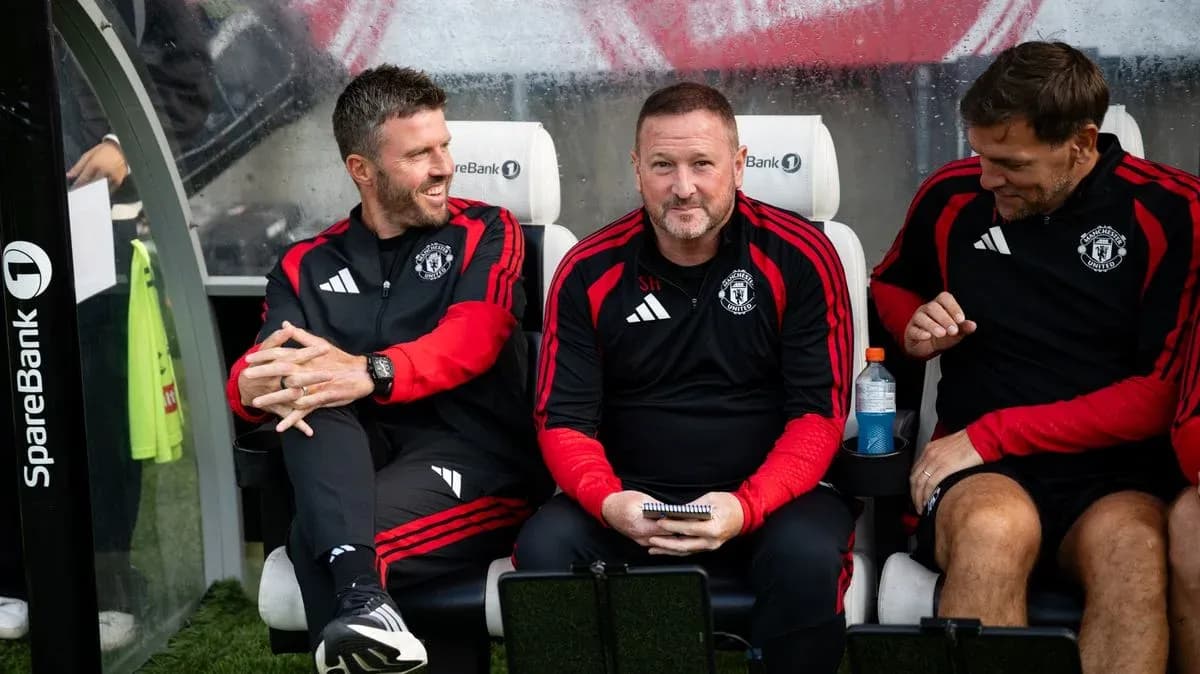
Michael Carrick is swimming against the tide. In a league obsessed with duels, second balls and set-piece scrums, the Manchester United manager is trying to build something that looks almost old-fashioned: a team that wants the ball, keeps the ball and controls games with it.
A League of Fights, Not Passes
Look at where the Premier League has gone. Last season was a blur of collisions and contests. Matches broke down into 11 individual battles all over the pitch. Win your duel, win your territory, win your set-pieces. That was the logic.
Control? Rhythm? They were often the first casualties. Even Pep Guardiola’s Manchester City, the standard-bearers of possession and positional play, found it harder to dictate from midfield. The pace of games spiked, the intensity rose, and space – especially in central areas – all but disappeared.
The numbers back it up. Two seasons ago, four teams averaged over 60% possession and six topped 58%. Last season, only City crept above 60% – and just barely, at 60.5%. Only one other side, Chelsea, even crossed the 58% line. The trend is clear: fewer teams care about having the ball, more care about winning the fights around it.
The Premier League has become a league of pressing traps, wrestling matches at set-pieces and explosive transitions. The ball is something to win back and attack with, not something to cherish.
Carrick’s Counter-Cultural Plan
In that environment, what Carrick is trying to do at Old Trafford stands out sharply.
United have just lost Casemiro, a midfielder who could handle the physical chaos, on a free transfer. The obvious move would have been to replace power with power, to double down on the league’s direction. Carrick has gone the other way.
The rebuild of United’s midfield this summer has been about touch, not tackles.
Andrey Santos has arrived. Youri Tielemans has arrived. Both know the Premier League, both can cope with the tempo, but that isn’t why they’re here. They are in because they are high-level technical midfielders, with passing ranges that can stretch a pitch and slow it down when needed.
That is the thread running through United’s recruitment. Carrick wants a side that can dictate the pace and tempo, not just survive it. He has even reimagined Mason Mount, pushing him deeper into midfield, asking him to help knit play rather than only break lines in the final third.
This is Carrick’s first full chance to shape United in his image: his first transfer window with genuine influence, his first pre-season to drill a clear tactical idea. The choices he’s making are not subtle. He wants the ball.
A Midfield in His Own Image
Anyone who watched Carrick as a player will recognise the blueprint. He was never the loudest on the pitch, never the most aggressive in the tackle, but he controlled games from deep. His weapon was the pass: the ability to take the sting out of a contest, to move opponents around, to let United dominate simply by owning the ball.
He played in a United side that expected to have possession. Now he wants to coach one.
His work at Middlesbrough hinted strongly at this philosophy. In the Championship, he built a team that wanted to play, not scrap. He brought in Aidan Morris to add more passing quality, more calm on the ball. Boro often controlled matches from midfield, circulating possession, setting the tempo.
The criticism at the Riverside was familiar for any possession-heavy side: plenty of control, not always enough incision. They could dominate the ball without landing the decisive punches in the final third.
Carrick will know that control alone is not enough at the top of the Premier League. But he is clearly not prepared to abandon that core idea.
Fighting the Trend
That is what makes this United project so intriguing. While the rest of the league leans into chaos, Carrick is trying to build a structure that can withstand it by refusing to play the same game.
Possession is harder than ever to keep in this division. Pressing schemes are sharper, athletes are stronger, and teams are happy to let you have the ball in certain zones before swarming you. Many managers have responded by avoiding prolonged spells of possession altogether.
Carrick is going the other way. He is recruiting players who want the ball under pressure, who see value in the extra pass, who can turn a frantic game into something more measured.
United, under him, look like a team planning their future with the ball at their feet, not in the air or in a 50-50. In a league of duels and set-pieces, that is a bold bet. The coming season will show whether it is also a winning one.
Related News

Wilfred Ndidi’s Marriage Reportedly Ends as He Enters New Relationship

Cristiano Ronaldo's Top 5 Most Valuable Cars in His Extraordinary Collection
Ben Whittaker’s Challenge to Prove Eddie Hearn’s Bold British Boxing Bet
Peter Handscomb on the Challenge of Facing Indian Bowlers

How to Watch UFC 332: Silva vs. Wang Live on CBS and Paramount+ This Saturday
Raul Rosas Jr. Shares His Thoughts on the Shocking UFC Vegas 121 Finish Against Raoni Barcelos