
Chattanooga Edges Carolina Core 1–0 in MLS Next Pro Clash
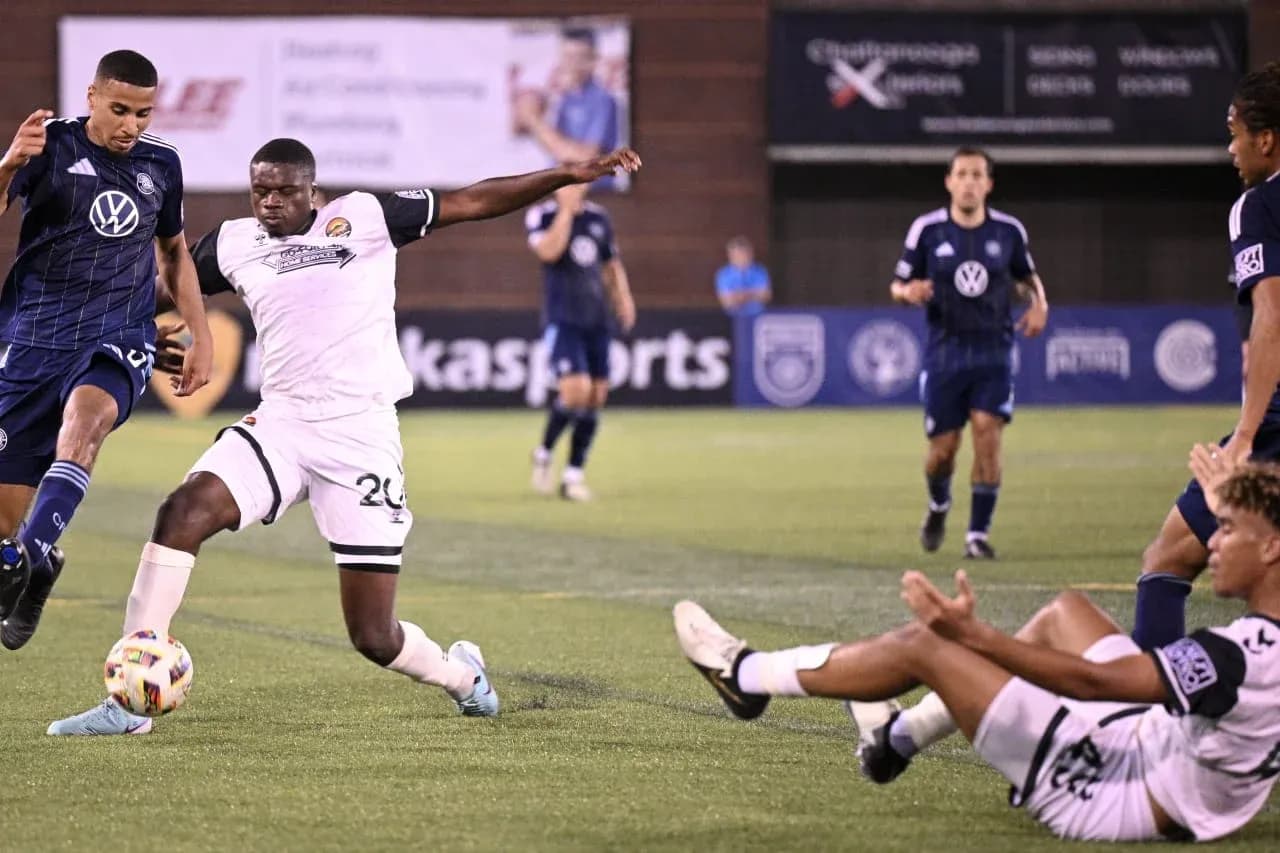
Under the lights at Finley Stadium, Chattanooga edged Carolina Core 1–0, a narrow scoreline that felt like a distilled version of their seasons so far. Following this result, Chattanooga’s campaign in MLS Next Pro continues to be defined by volatility and edge: 11 matches played overall, 6 wins, 0 draws and 5 defeats, with 19 goals for and 16 against, a goal difference of 3. In the Eastern Conference table, they sit 6th with 19 points, very much in the promotion conversation.
Carolina Core arrive at the same 11‑game mark with a very different story. They have 2 wins, 0 draws and 9 losses overall, 12 goals for and 21 against, a goal difference of -9, and stand 15th in the Eastern Conference. Their form line, LWLLW, hints at flashes of resistance, but the structural issues remain clear: on their travels they have played 6, lost all 6, scoring 4 and conceding 12.
At home, Chattanooga have built a genuine identity. Across 6 matches at Finley Stadium they have 4 wins and 2 defeats, scoring 11 and conceding 9. The attacking average at home is 1.8 goals per game, with 1.5 conceded, underlining a side that leans into risk rather than control. Carolina, by contrast, are brittle away: 0.7 goals scored per away match, 2.3 conceded. This fixture, and its 1–0 outcome, fits neatly into those statistical grooves.
Tactical Voids and Discipline
With no official list of absentees provided, the tactical voids are inferred more from season patterns than from missing names. Chattanooga’s coach is not listed, but the selection tells a story: a spine built around experience and balance. E. Jakupovic in goal anchors a back line of T. Robertson, F. Sar-Sar, M. Hanchard and A. Sorenson. Ahead of them, the blend of A. Garcia, L. Husakiwsky and S. Louis offers legs and aggression, with D. Mangarov, A. Krehl and Y. Cohen tasked with providing the attacking edge.
Carolina’s coach Donovan Ricketts set up with N. Holliday in goal and a defensive core featuring N. Martinez, S. Yepes Valle, M. Diakite and D. Colon. In front of them, R. Montenegro and T. Zeegers provide structure, while D. Diaz, T. Raimbault, D. John and A. Sumo form the attacking band. It is a group that, on paper, can transition quickly, but the season numbers suggest a unit that struggles to protect its back line for 90 minutes.
Disciplinary trends add another layer. Chattanooga’s yellow cards are heavily clustered in the middle and late phases: 25.00% of their yellows come between 31–45 minutes, another 25.00% between 61–75 minutes, and 20.83% between 76–90 minutes. There is also a notable red‑card profile: 50.00% of their reds arrive in the 61–75 minute window and 50.00% between 76–90. This is a side that pushes the edge as games stretch, living on the fine line between aggression and self‑harm.
Carolina’s yellow distribution is similarly front‑loaded into the game’s central phases: 18.18% between 16–30 minutes, 18.18% between 31–45, 21.21% between 46–60 and 18.18% between 76–90. Their red‑card story is stark: 100.00% of their reds fall between 46–60 minutes. That mid‑second‑half period is where emotional and tactical control too often deserts them.
Key Matchups – Hunter vs Shield, Engine Room
Without official top‑scorer data, the “Hunter vs Shield” narrative is framed collectively rather than individually. Chattanooga’s attack at home, averaging 1.8 goals, met a Carolina defence that on their travels concedes 2.3 goals per match. The 1–0 scoreline actually flatters Carolina’s away defensive record; structurally, they remain too porous. The clean sheet here does not erase the broader pattern of 14 away goals conceded in 6 matches.
On the other side, Carolina’s away attack at 0.7 goals per game faced a Chattanooga home defence that concedes 1.5 per match. That imbalance tilted the pitch: Chattanooga could afford to be aggressive with their line and midfield press, knowing Carolina’s threat in front of goal is sporadic at best, and that the visitors have failed to score in 3 away fixtures overall.
In the “Engine Room” matchup, Chattanooga’s central trio of S. Louis, L. Husakiwsky and A. Garcia look built to win territory and second balls. Their team profile – 0 draws in 11, a form line of LWLLWWLLWWW and only 2 clean sheets overall – speaks to a side that wants the game to be open, even chaotic. Against them, Carolina’s core of R. Montenegro and T. Zeegers had to act as both shield and launchpad. But Carolina’s season‑long inability to record a single clean sheet, home or away, shows that their midfield screen too often gets bypassed, leaving the back line exposed.
Statistical Prognosis and Tactical Verdict
Following this result, the statistical arcs of both clubs harden rather than bend. Chattanooga, with 6 wins and 5 losses in total, remain a high‑variance, high‑ceiling outfit whose home numbers – 4 wins from 6, 11 scored, 9 conceded – make Finley Stadium a venue where they are willing to trade chances. Their penalty record, 4 taken and 4 scored overall, at 100.00%, adds another layer of ruthlessness in tight matches.
Carolina, with 9 losses overall and 6 defeats from 6 on their travels, are still a side searching for a defensive platform. Overall they concede 2.2 goals per match, and away from home they have yet to find a clean sheet or a point. Their failure to score in 3 away games overall underlines how thin their margin for error is: once they concede first, the numbers say they rarely come back.
From a tactical lens, this match felt like a logical extension of the data. Chattanooga’s aggressive, risk‑accepting style, backed by a home attack of 1.8 goals per game, was always likely to find a breakthrough against a Carolina away defence averaging 2.3 goals conceded. Carolina’s own attacking limitations, particularly on the road, meant that once behind they were more likely to be chasing shadows than the scoreboard.
The 1–0 scoreline may read as a narrow escape, but in the broader statistical and tactical context, it looks like a controlled expression of Chattanooga’s identity and a harsh, familiar chapter in Carolina Core’s away‑day struggles.
Related News

MLS Winners and Losers: Cavan Sullivan’s USMNT Rise, St. Louis City SC’s Smart Moves, and Chicago Fire’s Hugo Cuypers Gap

MLS Winners and Losers: Portland Timbers' Historic Hat-Trick, Josh Sargent Shines, and Cavan Sullivan's Rising Star
Tacoma Defiance Injury List: Players Out and Return Dates vs Colorado Rapids II
Carolina Core injury list: Players out, potential return dates
Tacoma Defiance vs Colorado Rapids II Predicted Lineups and Team News
Orlando City II vs Huntsville City Predicted Lineups and Team News