
Chelsea's Striker Hunt: Missed Opportunities and Rising Pressure

For weeks, it felt inevitable. Khadija Shaw, the most devastating No.9 in the Women’s Super League, was supposed to be the statement signing of Sonia Bompastor’s new era at Chelsea. Contract running down, title in the bag, a fresh project in London waiting.
Then she scored the goals that dragged Manchester City to their first WSL crown in a decade, completed a league and cup double – and chose to stay put. One emphatic announcement. One transfer plan ripped up.
Chelsea moved on. Or tried to.
Three swings, three misses
The next name was Felicia Schroder, the 19-year-old phenomenon who has been tearing through Sweden and Europe with a ruthlessness that makes scouts sit up. Thirty league goals, nine assists as Hacken won the Damallsvenskan, then top scorer again as they lifted the inaugural Europa Cup in May.
Chelsea didn’t just admire her. They launched a world-record bid for a teenager. This was the future they wanted to buy.
Real Madrid got there first. Schroder posed in white, not blue. Another door slammed.
Then came Salma Paralluelo. The Barcelona forward, fresh from scoring twice in the Champions League final, is the most coveted attacking talent on the continent. Her contract running down, her future open, her suitors a who’s who of European heavyweights.
Chelsea pushed. They made an offer earlier this month. According to The Athletic, it didn’t meet her wage demands, which sit north of £1 million a year. She said no. Arsenal, Lyon, Paris Saint-Germain and cash-rich London City remain in the race. The Blues are out.
Three elite targets. Three rejections. For a club used to getting what it wants, this is unfamiliar territory.
A blunt attack and a clear problem
The urgency is obvious because the numbers are brutal. Chelsea’s 44 league goals last season were their lowest tally since 2018-19 – the last time they also failed to win the WSL. Only three teams – relegated Leicester City, struggling West Ham and newly-promoted London City Lionesses – underperformed more against expected goals.
Shot conversion? Third-worst in the division, again only above Leicester and West Ham. That is not the profile of a title-winning attack.
There were reasons. Some of them harsh.
Sam Kerr needed time after a 20-month injury lay-off and only returned at the start of the campaign. Mayra Ramirez missed the entire season with a hamstring problem. Aggie Beever-Jones and Catarina Macario both picked up knocks. Bompastor was forced to improvise, using Lauren James and Alyssa Thompson out of position through the middle just to keep the structure intact.
Even so, the pattern was clear long before the season ended. Chelsea needed a centre-forward. A real one. A focal point. And they needed her yesterday.
January came and went without a major move. The summer was supposed to fix that. Instead, Shaw stayed in Manchester, Schroder chose Madrid and Paralluelo walked away from the table.
The elite list: short, expensive, complicated
Paralluelo was the last obvious superstar still on the market. With her off the board, the pool shrinks dramatically.
One name lingers in the background: Marie-Antoinette Katoto. On paper, she ticks every box. At PSG, she became the club’s all-time leading scorer, with 180 goals in 223 games. A pure No.9, a ruthless finisher, a player who has lived at the top level for years.
Her move to Lyon last summer was supposed to be the next step in a glittering career. It has not quite exploded. Six league goals, one in the Champions League, and a battle with Ada Hegerberg for the central role left her starts limited, especially in Europe.
There is nothing concrete to suggest Lyon are ready to sell. She signed a four-year deal only last year, and one underwhelming season as she adjusts to Jonatan Giraldez’s demands won’t panic anyone at OL. But if Chelsea want an elite striker whose situation is not entirely comfortable, Katoto is one of the very few who fits that description.
Beyond her, the list of truly world-class, available No.9s is painfully short.
Barbra Banda has just one year left on her deal at Orlando Pride and will attract attention across the globe, but prising her out of Florida would require a monumental offer and a club willing to reshape its attack around her. Temwa Chawinga, meanwhile, has locked in her future with a new three-year contract at Kansas City Current after winning back-to-back NWSL MVP and Golden Boot awards. She is, for all practical purposes, off the table.
The next tier: value, risk and timing
Drop down a rung and the picture changes. The players are less proven, the prices slightly lower, the risk higher.
Romee Leuchter sits in that space. PSG brought her in during the summer of 2024, initially as an understudy to Katoto. When the France international departed, Leuchter stepped into the spotlight – and delivered. She finished as top scorer in the French league, with 18 goals in just 17 starts.
At 25, she is entering her prime. She has one year left on her contract. She has already shown she can carry the scoring burden for a major club. That profile will not go unnoticed.
For a Chelsea side that missed out on Shaw and Schroder and baulked at Paralluelo’s wage demands, Leuchter represents something different: a forward who isn’t yet in the absolute top bracket, but has the numbers and trajectory to get there. She is not cheap, but she is attainable.
Chelsea must decide whether that’s the kind of bet they are willing to make.
The Schroder route: betting on the next superstar
The alternative is to double down on the strategy that led them to Schroder in the first place: identify the next generational talent before she explodes, pay big, and build around her.
The problem is obvious. Players like Schroder barely exist.
One of the few in that bracket is Michelle Agyemang, the 20-year-old England international at Arsenal. Even as she recovers from an ACL injury, her reputation continues to rise. At Euro 2025, she showed she could handle the biggest stage, playing a crucial role as the Lionesses defended their title.
Her path at club level is far more congested. Arsenal already have Alessia Russo and Stina Blackstenius through the middle and are expected to add Selina Cerci as well. That is a crowded depth chart.
From Chelsea’s perspective, that combination of elite potential and a blocked route to regular minutes makes Agyemang exactly the kind of situation they should be monitoring. From Arsenal’s perspective, selling a prized young striker to a direct rival would be unthinkable. Any move would be close to impossible – this summer, at least.
Beyond her, the market tilts towards players who are either unproven at the very top or still too raw to guarantee immediate impact. For a club that wants to win the WSL back now, that is a dangerous gamble.
What Chelsea already have – and why it’s not enough
This is not a crisis in which Chelsea are starting from zero. Ramirez is still on the books, despite links to Real Madrid earlier this year. With Schroder now in the Spanish capital, Madrid’s need for a striker has eased, which could cool their interest in the Colombia international.
Ramirez’s last full season at Chelsea, in 2024-25, showed exactly why the club invested in her. She bullied defences, linked play, and gave the attack a focal point it has badly missed since. Her hamstring problems last term were a major blow, but she returned to play twice for Colombia at the start of June. That is a promising sign for 2026-27.
Beever-Jones is also expected to stay, despite her contract expiring and no formal announcement yet on a renewal. James and Thompson can both operate centrally if needed. On paper, that looks like depth.
Last season showed how quickly that illusion disappears. One or two injuries, and Bompastor was shuffling square pegs into round holes, with the team’s cutting edge blunted in the process. For a club chasing multiple trophies, relying on “if everyone stays fit” is not a strategy. It is wishful thinking.
A decisive summer, and a shrinking window
Strip away the noise and the situation is stark. Chelsea want their WSL crown back. They want to compete for the Champions League. To do that, they need a striker who changes games, not just fills a squad slot.
The market is thin. Their first three choices are gone. The remaining options are either deeply expensive, locked down by their clubs, or come with significant risk attached.
They cannot afford to get this wrong. And yet, as the weeks tick by and other clubs move, the question lingers over Cobham:
Who will lead the line for Chelsea when the new season starts – and will that decision define their title challenge before a ball is even kicked?
Related News

Anthony Joshua Names Murat Gassiev as Next Opponent if He Defeats Tyson Fury

UFC 332: Start Time and Fight Highlights for Natalia Silva vs. Wang Cong

Court McGee Opens Up About Choosing UFC 332 as His Final MMA Fight
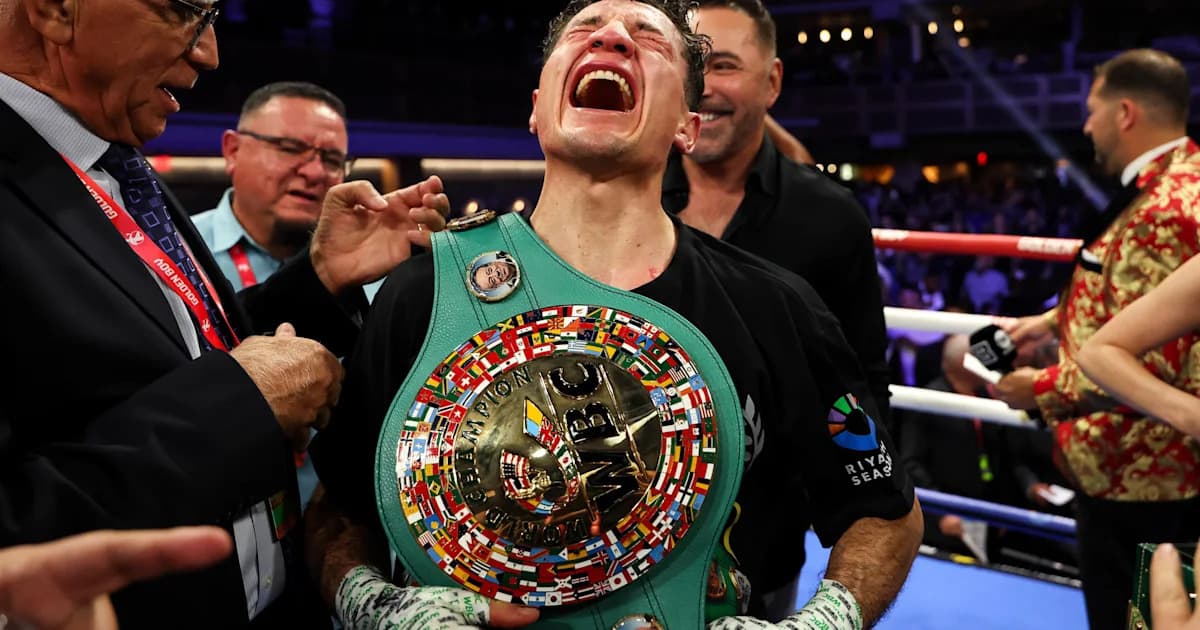
WBC Orders Lightweight Title Unification: William Zepeda vs Jadier Herrera

BCCI Pension List: Monthly Payments to Retired Indian Cricketers in 2025

Why Fury vs Joshua Is Set for Cardiff, and Dua Lipa’s Unexpected Role