
Colombia vs Ghana: World Cup Round of 32 Analysis
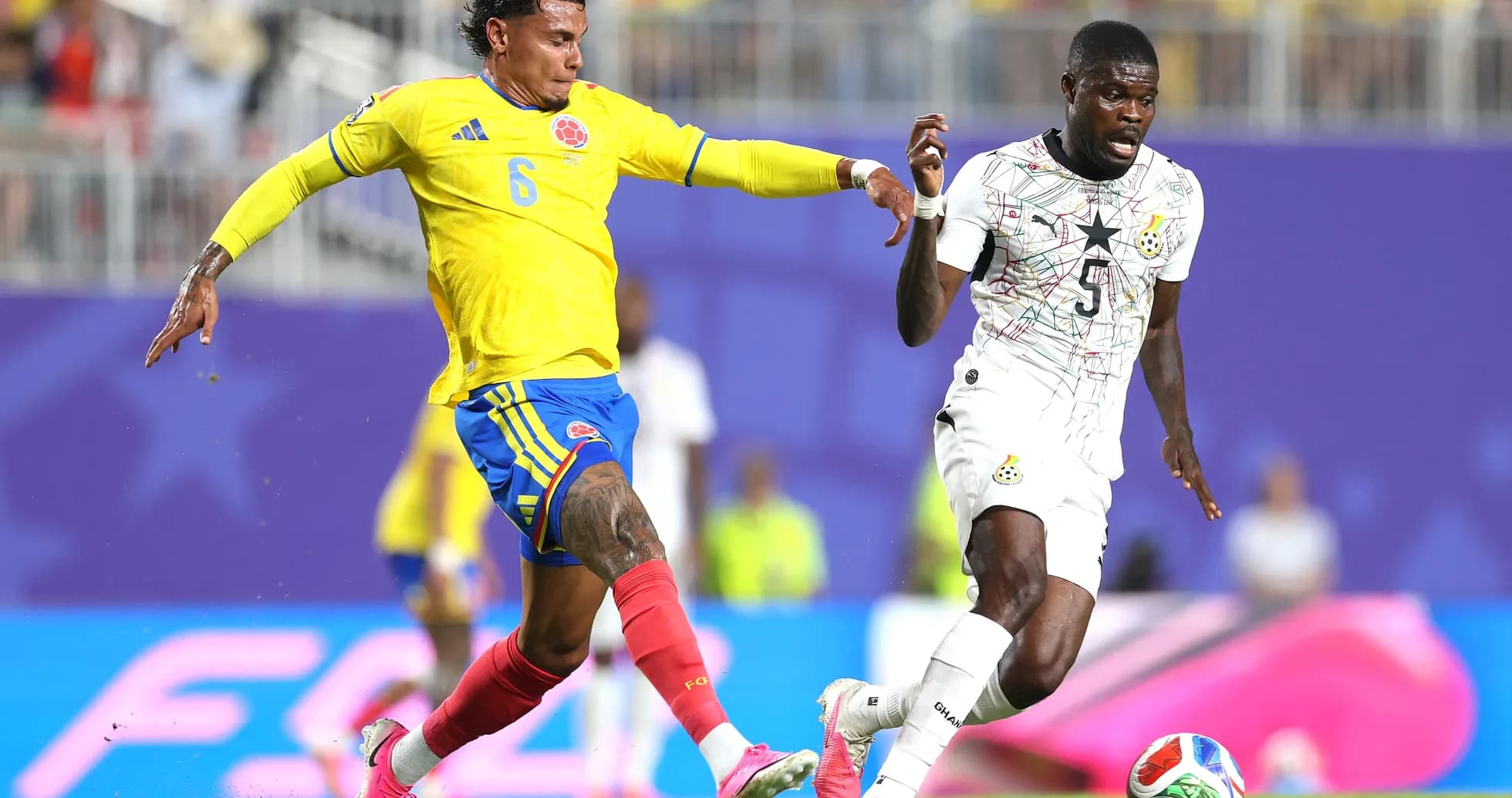
Arrowhead Stadium in Kansas City staged a World Cup Round of 32 tie that felt like a clash of identities as much as a knockout contest: Colombia, group winners from Group K, against a Ghana side that had fought its way out of Group L. By the final whistle, the scoreboard read 1–0 to Colombia, a narrow margin that mirrored the pre-match numbers and the tactical story both coaches tried to write.
Colombia's Profile
Heading into this game, Colombia’s seasonal profile was that of a controlled aggressor. Overall this campaign they had played 4 matches, winning 3 and drawing 1, with no defeats. They had scored 5 goals in total and conceded just 1, giving them a goal difference of +4. At home they had played 3 times, scoring 2 and conceding 0; on their travels they had 1 away match, scoring 3 and conceding 1. The averages told the same tale: at home Colombia averaged 0.7 goals for and 0.0 against, while away they averaged 3.0 for and 1.0 against. This was a team built on defensive certainty and selective, often ruthless attacking bursts.
Ghana's Footprint
Ghana arrived with a more fragile statistical footprint. Overall they had played 4 matches, with 1 win, 1 draw and 2 defeats. They had scored 2 goals in total and conceded 3, for a goal difference of −1. At home they had 1 match, scoring 1 and conceding 0; on their travels they had 3 away games, scoring 1 and conceding 3. The averages were stark: at home 1.0 goal for and 0.0 against, away just 0.3 goals for and 1.0 against. Clean sheets in total (2) hinted at periods of defensive organisation, but the lack of goals – failing to score in 2 matches overall, both on their travels – underlined a chronic attacking issue.
Team Lineups
From the first glance at the lineups, the patterns were clear. Nestor Lorenzo doubled down on Colombia’s identity with a 4-3-3 that had become their default, used in all 4 matches this campaign. C. Vargas in goal was shielded by a back four of D. Munoz, D. Sanchez, J. Lucumi and J. Mojica. In front of them, the midfield trio of G. Puerta, J. Lerma and J. Arias formed a compact, industrious block designed to control central zones and protect transitions. The front line of J. Rodriguez, J. Cordoba and L. Diaz offered a blend of creativity, physical presence and direct dribbling threat.
Carlos Queiroz responded with Ghana’s familiar 4-1-4-1, the shape they had used in 3 of their 4 matches. L. Ati Zigi anchored the side from goal, with a back four of M. Senaya, D. Luckassen, J. Opoku and G. Mensah. T. Partey sat as the single pivot, charged with screening space and launching counters. Ahead of him, the line of four – I. Williams, C. Yirenkyi, K. Sibo and A. Semenyo – supported lone forward J. Ayew.
Tactical Analysis
The tactical void for Ghana was always going to be in the space between Partey and Ayew. With Colombia’s midfield three capable of rotating possession and pressing aggressively, Ghana risked being stretched horizontally and forced into long balls. Given Ghana’s overall average of just 0.5 goals for per game and 0.8 against, the numbers suggested they would spend long stretches without the ball, trying to survive Colombia’s pressure and then springing sporadic counters.
Discipline and tempo management were another quiet battleground. Colombia’s yellow-card distribution this campaign showed an interesting curve: 33.33% of their yellows came in the opening 15 minutes and another 33.33% in the 76–90 minute window, with 16.67% between 46–60 and 16.67% in the 91–105 period. They are a side that starts with an edge and then raises the emotional temperature again late on. Ghana’s yellows were more spread, but with 33.33% of their cards arriving between 46–60 minutes and 16.67% in each of the 16–30, 61–75, 76–90 and 91–105 ranges, they tended to pick up bookings as matches wore on and fatigue set in. With no red cards for either side this campaign, both teams walk the line of aggression without tipping into self-destruction.
Individual Matchups
Within this framework, individual matchups defined the narrative. The “Hunter vs Shield” duel lived in Colombia’s front three against Ghana’s central defensive spine. L. Diaz, operating from the left, constantly probed the channel between M. Senaya and D. Luckassen, while J. Cordoba’s movement dragged J. Opoku into uncomfortable spaces. Behind them, J. Rodriguez drifted into half-spaces, forcing T. Partey to choose between stepping out to engage him or holding his ground to protect the back four. For a Ghana side that had conceded 3 goals overall, all on their travels, each Colombian incursion felt weighted with danger.
In the “Engine Room”, J. Lerma and G. Puerta were tasked with disrupting Ghana’s limited build-up. Their job was to suffocate K. Sibo and C. Yirenkyi between the lines, preventing them from connecting with Ayew. Caleb Marfo Yirenkyi, who had already accumulated 2 yellow cards overall this campaign and was Ghana’s leading figure in both yellow and red-card rankings (despite not having been sent off), walked a tightrope. His 7 fouls committed and 2 successful blocks in total underlined his dual role: disruptor and auxiliary defender. Against Colombia’s fluid midfield and the drifting of Rodriguez, any mistimed challenge risked tilting the balance.
The wide zones were another critical theatre. J. Mojica’s willingness to advance from left-back allowed L. Diaz to come inside, overloading Ghana’s right side and dragging M. Senaya into repeated one-v-one duels. On the opposite flank, D. Munoz’s more measured surges provided balance, ensuring Colombia were rarely exposed to counters from A. Semenyo and I. Williams.
Statistical Prognosis
Statistically, the prognosis before a ball was kicked leaned Colombia’s way. Overall they averaged 1.3 goals for and 0.3 against, while Ghana sat at 0.5 for and 0.8 against. Colombia’s 3 clean sheets in total, all at home, suggested a team comfortable in knockout-game rhythms: score once, then close the door. Ghana, by contrast, had failed to score in 2 of their 4 matches overall, both away, and their away average of 0.3 goals for hinted at exactly the kind of offensive impotence that a disciplined Colombian block could exploit.
Conclusion
Following this result, the numbers and the narrative aligned. Colombia’s defensive record held firm again, and their ability to edge tight contests was reaffirmed. Ghana’s campaign ended in a familiar frustration: organised enough to stay in the game, but without the cutting edge to change it. In a Round of 32 defined by fine margins, Colombia’s structural clarity and statistical solidity proved just enough to send them through.
Related News
Brazil's First Post-World Cup Friendly: What Should the Lineup Be?
Harry Kane Calls England’s World Cup Exit to Argentina His Deepest International Pain
Estevao Opens Up on World Cup Heartbreak and His Unexpected Return to Brazil Under Ancelotti
Thomas Tuchel Shares Unusual Regret After England's 10-Man World Cup Victory Over Mexico
South Korea Names Robert Moreno as Interim Coach After World Cup Exit

Jude Bellingham Returns to Form at Real Madrid Following World Cup Success