
Como Edges Parma 2–1: A Statement of Intent in Serie A
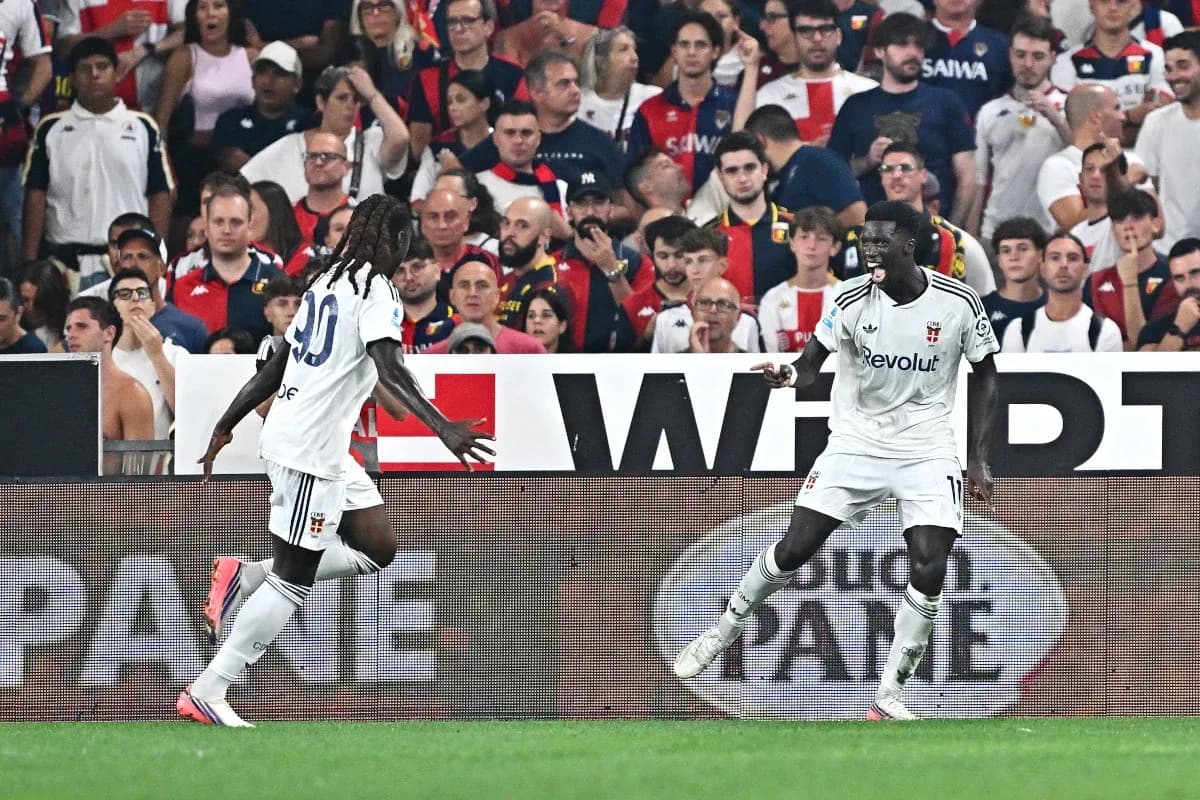
Under the Como dusk at Stadio Giuseppe Sinigaglia, this felt less like a routine early‑season league game and more like a statement of intent. By the time Giuseppe Mucera blew for full time, Como had edged Parma 2–1, preserving their unbeaten start and underlining why they sit in the Champions League places, while Parma’s slide toward the wrong end of Serie A deepened.
I. The Big Picture – Two trajectories, one narrow scoreline
Following this result, the table tells a stark story. Como are up in 3rd with 10 points from 4 matches, their overall goal difference a healthy +5 from 9 goals scored and 4 conceded. They have already shown balance: at home they have 2 goals for and 1 against, while on their travels they have added 7 goals for and 3 against. Parma, by contrast, leave Como stuck in 17th with just 1 point from 4 games, their overall goal difference -4 (2 scored, 6 conceded). At home they have managed 1 goal for and 2 against; away they now have 1 for and 4 against.
The tactical DNA of each side was clear from the first whistle. Como, under Cesc Fabregas, stayed loyal to the 4‑2‑3‑1 that has defined their early season – the same shape they have used in all 4 league fixtures. It is a system built to tilt the pitch in their favour: three creative midfielders behind a lone striker, with full‑backs ready to push high.
Opposite them, Carlos Cuesta rolled out Parma in a 3‑4‑2‑1, a structure he has already used twice this season alongside experiments with 4‑3‑3 and 4‑4‑2. It is a shape that can morph: a back five under pressure, a front three in transition. But it demands precision in the press and bravery in possession – qualities that flickered only intermittently here.
II. Tactical Voids – Absences and discipline
Both sides came into this fixture with one notable enforced absence. Como were without J. Addai, sidelined by an Achilles tendon injury, depriving Fabregas of another option between the lines or out wide. For Parma, H. Nicolussi Caviglia missed out with a groin injury, removing a potential stabilising presence in central midfield.
Across the season so far, Como have walked a remarkably clean disciplinary line. Their yellow cards in Serie A have been split evenly between the 46–60 and 76–90 minute windows, 50.00% in each, with no red cards shown. That pattern hints at a side that only occasionally oversteps as intensity rises after half-time and in the closing stretch.
Parma’s card profile is more worrying. Their yellow cards are heavily back‑loaded: 20.00% between 46–60 minutes, 20.00% between 61–75, a spike to 40.00% from 76–90, and another 20.00% in added time (91–105). This is a team that becomes increasingly ragged as fatigue and pressure mount, precisely when game management is most critical. Even without red cards this season, that accumulation of late bookings tells of a side chasing games rather than controlling them.
III. Key Matchups – Hunter vs Shield, Engine Room battles
Hunter vs Shield
The most compelling narrative thread in this Como side runs through Martin Baturina and Assane Diao. Both started here as part of the attacking band behind Moise Kean, and both already sit among Serie A’s leading contributors.
Baturina, operating as the central playmaker, arrived at this fixture with 2 goals and 1 assist in 3 appearances, a rating of 7.17, and an 87% passing accuracy from 90 total passes. He is not just a scorer but a rhythm‑setter, with 3 key passes and 5 fouls drawn – a magnet for contact between the lines. His duel numbers (17 contested, 7 won) show a player willing to work without the ball as well.
To his left, Assane Diao brought a different kind of threat. Also on 2 goals and 1 assist from 3 games, his 7.2 rating is underpinned by 7 shots (3 on target), 6 successful dribbles from 12 attempts, and 6 key passes from 84 total passes at 86% accuracy. Diao stretches, drives, and destabilises – the winger‑forward hybrid that turns a structure into chaos for defenders.
Parma’s “shield” against this double‑edged threat was their back three of Diego Carlos, M. Troilo, and E. Delprato, screened by the central pair of V. Sierro and M. Keita. On paper, a 3‑4‑2‑1 should give them numerical superiority in the central lane where Baturina operates, while the wing‑backs S. Britschgi and E. Valeri are tasked with closing Diao’s space outside.
But the season’s numbers exposed the strain on that shield. Heading into this game, Parma’s defence had conceded 6 goals overall in 4 matches: 2 at home and 4 away. On their travels alone, they were shipping 2.0 goals per game, with no clean sheets anywhere. Against a Como side averaging 2.3 goals overall and 2.3 on their travels, that mismatch in attacking firepower versus defensive resilience always threatened to tilt the contest.
Engine Room – Control vs containment
Behind Como’s attacking trio, the double pivot of M. Perrone and L. Da Cunha offered the platform. Their task was twofold: circulate quickly enough to feed Baturina and Diao between the lines, and smother any Parma attempts to spring E. B. Toure, S. Lontani, and N. Elphege in transition.
Parma’s engine room of Sierro and Keita had the opposite brief: slow the game, disrupt Como’s rhythm, and give their own forwards time to find pockets between Como’s centre‑backs M. O. Kempf and J. Ramon. With Como yet to keep a clean sheet this season but conceding only 1.0 goal per game overall (1.0 at home, 1.0 away), the battle in midfield was less about volume of chances and more about where on the pitch those chances would arise.
IV. Statistical Prognosis – Why this result fits the pattern
Strip away the emotion and the numbers make Como’s narrow win feel almost inevitable. Overall this campaign, Como’s attack has been relentless: 9 goals from 4 fixtures, never failing to score either at home or away. Their biggest away win, a 4–1, underlines the ceiling of this front line. They came into this match averaging 2.3 goals per game overall, with 2.0 at home in their lone prior outing.
Parma, by contrast, are struggling badly in front of goal. They have scored only 2 times in total, split evenly between home and away, for an overall average of 0.5 goals per game. They have already failed to score twice, once at home and once on their travels. When combined with an away defensive record of 4 goals conceded in 2 matches and no clean sheets, the statistical gap becomes a chasm.
Neither side has taken a penalty this season, so there was no spot‑kick variance to distort the picture. Instead, this match followed the contours of their early‑season identities: Como proactive, multi‑layered in attack and structurally consistent; Parma reactive, late‑game discipline fraying and their defensive line stretched by superior individual quality.
The 2–1 scoreline, tight on the surface, is in keeping with Como’s measured control – scoring freely but conceding just enough to keep games alive. For Parma, it is another chapter in a story of narrow margins going the wrong way, and of a 3‑4‑2‑1 still searching for the cohesion required to withstand the league’s sharper attacks.
At Sinigaglia, the night belonged to Fabregas’s carefully constructed 4‑2‑3‑1: a platform for Baturina’s craft, Diao’s directness, and a Como side that, four games in, already looks built for the upper reaches of Serie A.
Related News

Frosinone vs Como Stats: Head-to-Head Record and Recent Form

Torino vs AS Roma: Clash of Contrasting Trajectories

Fiorentina vs Napoli Stats: Head-to-head Record and Recent Meetings

Cagliari's Tactical Triumph Over Atalanta: A 2-1 Victory

AS Roma vs Inter Stats: Head-to-head and Recent Meetings

Sassuolo's Statement Win Over Juventus: A 3–2 Clash