
Cristiano Ronaldo's Last World Cup: A Legend at the Crossroads
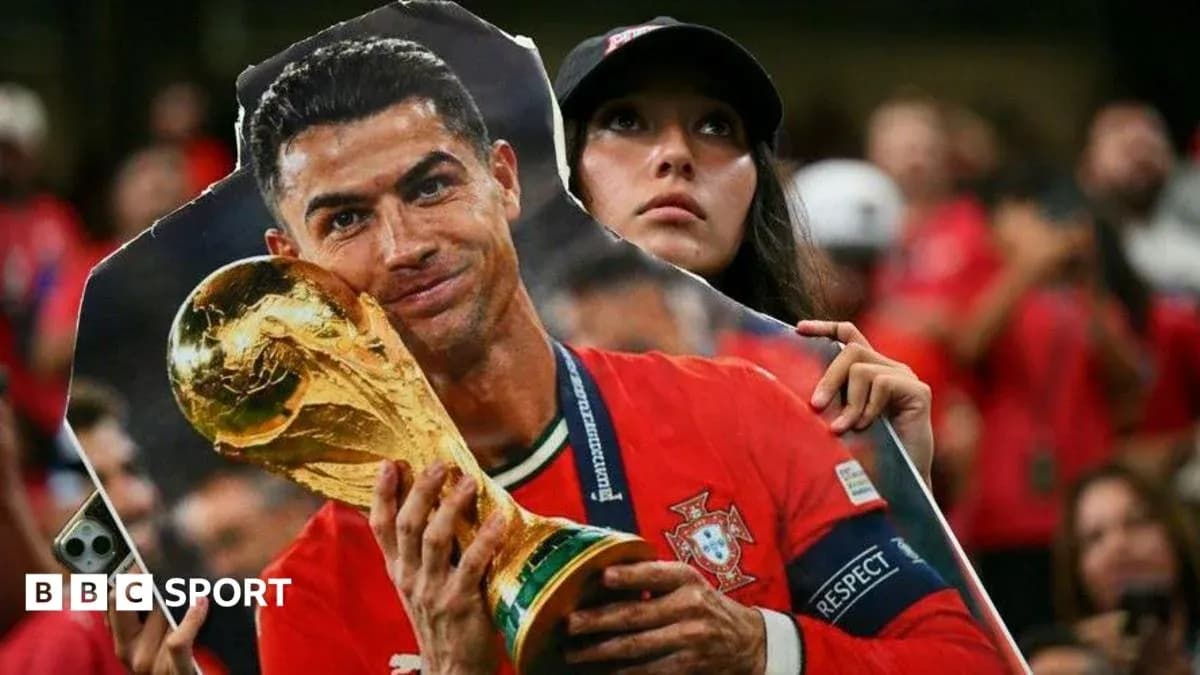
Cristiano Ronaldo sat down, looked the room in the eye and stripped away the myth.
“I am not the player I used to be.”
No spin. No pretence. Just the 41-year-old captain of Portugal, seven months from turning 42, walking straight into the debate that has followed him across this World Cup in the United States and Canada.
This is his last World Cup. He confirmed it again before Portugal’s last-16 meeting with Spain in Texas on Monday night. Three goals in the tournament, but long stretches where he has drifted on the edge of the contest. A legend under the microscope.
“You have been trying to kill me for the past 23 years,” he told the media on Sunday. “But you must have seen that is not worth it, it's a waste of time, but you try and try and try and try and try.
“As I said before, [I will stop] when I choose, not when you choose. You always ask the same question.
This will be my last World Cup, but let's hope tomorrow isn't my last game.”
A giant at the end of the road
The numbers alone feel surreal. All-time leading scorer in international football with 146 goals. Six World Cups, a goal at every one of them. Five-time Champions League winner. The man who dragged Portugal from plucky outsiders into 2016 European champions and permanent contenders.
Now, though, the end is no longer a theory. It’s here, in real time.
Before last week’s last-32 tie with Croatia in Toronto, his sister called this World Cup his “last dance”. When Ivan Perisic put Croatia ahead in the 53rd minute, it looked like that dance might end abruptly, with Ronaldo’s 232nd cap for his country doubling as his farewell.
He refused to go quietly. He buried a penalty for his first-ever World Cup knockout goal. Then came the decision that hung over everything: Roberto Martinez took him off.
Ronaldo’s face told its own story as he walked to the touchline, anger and disbelief flickering beneath the applause. Yet the move worked. Goncalo Ramos, the man many see as his natural heir, stepped into the chaos and fired Portugal into the last 16.
Now the question dominates every conversation: does Ronaldo start against Spain? Or does Martinez lean into the future and reward Ramos?
The numbers that won’t go away
The debate is not built on sentiment. It’s built on data that keeps stacking up against him.
He is Portugal’s top scorer at this tournament with three goals. But he has needed 15 shots to get there, almost twice as many as any of his team-mates, and he has not created a single chance. No other player at this World Cup has taken that many shots without fashioning an opening for someone else.
Touches? In three of Portugal’s four matches, he has had fewer than 25. One of those came off the bench, but even so, these are the lowest touch counts of his World Cup career. He is averaging fewer touches per match than at any of his previous five tournaments.
Against Croatia, his only touch in the opposition box was the winning penalty.
His movement tells its own tale. He is averaging just 4.4 runs in behind per match, a sharp drop from his previous two World Cups, when he also played as a lone striker. The volume is down. The explosiveness has ebbed.
The team’s biggest wins of this cycle? A 9-0 demolition of Luxembourg in Faro and a 9-1 thrashing of Armenia in Porto. Ronaldo played in neither. Each time, the same question resurfaced: are Portugal more fluid, more dangerous, without their captain?
Martinez, though, has nailed his colours to the mast.
“His leadership and that work in the final third is still one of the best in the world,” the coach said when asked why Ronaldo continues to start.
Since taking over in 2023, Martinez has used Ronaldo in 36 of Portugal’s 44 matches. When he has missed out, it has usually been down to injury or suspension, not selection.
“He plays to be the main figure”
For some, the issue is not just physical. It’s philosophical.
“He doesn't play to win, he plays to be the main figure,” argued Antonio Simoes, a member of the Portugal side that finished third at the 1966 World Cup. “Do you understand that it's the opposite of Eusebio?
“Let's call things by their name. I have nothing against him. I can still see, I can still hear and I can still think. But I can't run away from the reality of the facts.”
Those “facts” are stark. A team that occasionally looks quicker, more balanced, more unpredictable without him. A superstar who still commands the ball, the spotlight, the narrative.
At previous World Cups, Ronaldo arrived untouchable. The idea of him stepping back, accepting a reduced role, felt unthinkable. Now, the calls are louder. The evidence is clearer. The conversation is unavoidable.
He hears it all. And he bites back.
“I am not going to be more Cristiano Ronaldo or less because I win the World Cup,” he said. “I even say thanks for the attacks I feel after I turned 40... the criticism is how you grow, so thank you for doing this.
“Whatever happens tomorrow, Cristiano Ronaldo will leave with a clear conscience -- not 100% but 1,000% because in life and football I gave everything.”
He walked out of that press conference to applause.
A country that still belongs to him
For all the tactical arguments, one thing has not shifted: the bond between Ronaldo and Portugal’s people.
“Global icon” and “national treasure” are clichés until you see the reality up close. In Toronto, it was harder to spot a Portugal shirt without his name on the back. On matchday, fans spilled into the streets, bringing a major highway to a standstill just to glimpse the team bus and, if they were lucky, the man in the No. 7 shirt.
My taxi driver from the airport was not a football fan. He still knew Ronaldo was in town.
“The local TV and radio have been going nuts about him for days,” he said. “He must be special.”
One local supporter said she had spent an entire month’s wages on a ticket to see him at a World Cup, just once, in person. Not Portugal. Not Croatia. Ronaldo.
Among the Portugal fans, the devotion borders on reverence.
“What he has done for Portugal as a nation, he should dictate [his future] 100%,” said Angelo before the Croatia match. “I feel he should dictate whether he wants to stay on or not.”
“On the world stage we didn't really have anyone after Eusebio,” said Joao. “Ronaldo came in and made us dream.”
Lucilia went even further.
“People talk about Portugal because of him. He doesn't forget where he's from, he remembers the people. I love him. Ronaldo means more to Portugal than any politician.”
Diana, another supporter, is already bracing for the moment he calls time on his international career.
“Of course I'm going to be sad,” she said. “The whole world will be sad because it doesn't matter who you support. Ronaldo has had a wonderful career and been an exemplary player.
“I would say to him: ‘Well done, Cristiano. Enjoy your retirement. You deserve it after entertaining the world.’”
The last stand?
Strip it all back and Monday in Texas feels like a crossroads.
On one side stands a 41-year-old forward who has scored at six World Cups, who turned a footballing nation into a global brand, who still believes he decides when the curtain falls. On the other stands a coach trying to build a team for tomorrow, with a hungry striker like Ramos waiting in the wings and a squad that has shown it can run riot without its captain.
Will Martinez lean on history, leadership and the aura that still bends stadiums around Ronaldo? Or will he gamble that the future starts now, even if it means leaving the greatest player in Portugal’s history on the bench for what could be his final World Cup match?
Ronaldo insists he will walk away with a “1,000%” clear conscience.
The real question is whether Portugal, when this World Cup is over and the last dance finally stops, will feel the same.
Related News
Anthony Joshua Names Murat Gassiev as Next Opponent if He Defeats Tyson Fury
UFC 332: Start Time and Fight Highlights for Natalia Silva vs. Wang Cong
Court McGee Opens Up About Choosing UFC 332 as His Final MMA Fight
WBC Orders Lightweight Title Unification: William Zepeda vs Jadier Herrera
BCCI Pension List: Monthly Payments to Retired Indian Cricketers in 2025
Why Fury vs Joshua Is Set for Cardiff, and Dua Lipa’s Unexpected Role