
Curaçao's Journey to the World Cup: The Stories of Tahith Chong and Joshua Brenet
The road from Curaçao to the World Cup has never been straightforward. It runs through Rotterdam and Amsterdam, through academy pitches in Eindhoven and Manchester, through German training grounds and Scottish winter nights. It is a story of migration, identity and second chances, and right now it wears a blue shirt with a lion on the chest.
Curaçao, still part of the Kingdom of the Netherlands but long since its own footballing universe, has quietly become a backbone of Dutch football. Generations of Curaçaoan families moved to the Netherlands; their children and grandchildren filled youth academies, national youth teams, and now World Cup squads. Of the 26 players heading into this tournament under Curaçao’s flag, only one was actually born on the island. Ironically, he is also the one most people know.
Tahith Chong.
The winger with the unmistakable hair once walked through the doors at Manchester United as one of the most talked-about prospects of his age group. He made 16 competitive appearances for the club, enough to taste the pressure and the expectation but not enough to truly settle. A short, unconvincing loan at Werder Bremen in 2021 followed. The move was supposed to sharpen him; instead, it stalled him. Now at Sheffield United, he arrives at this World Cup as a symbol of a squad that has scattered across Europe, learned the hard way, and come back under a different flag.
Chong is not alone in carrying Bundesliga scars and memories. Curaçao’s 26-man squad features six players with German chapters in their careers. Gervane Kastaneer passed through 1. FC Kaiserslautern. Riechedly Bazoer wore the green of VfL Wolfsburg. Roshon van Eijma worked his trade at Preußen Münster. Jürgen Locadia and Joshua Brenet both landed at TSG Hoffenheim, though only one of them arrived with the kind of pedigree that usually guarantees a long stay.
Brenet’s Journey
Brenet’s journey is something else entirely.
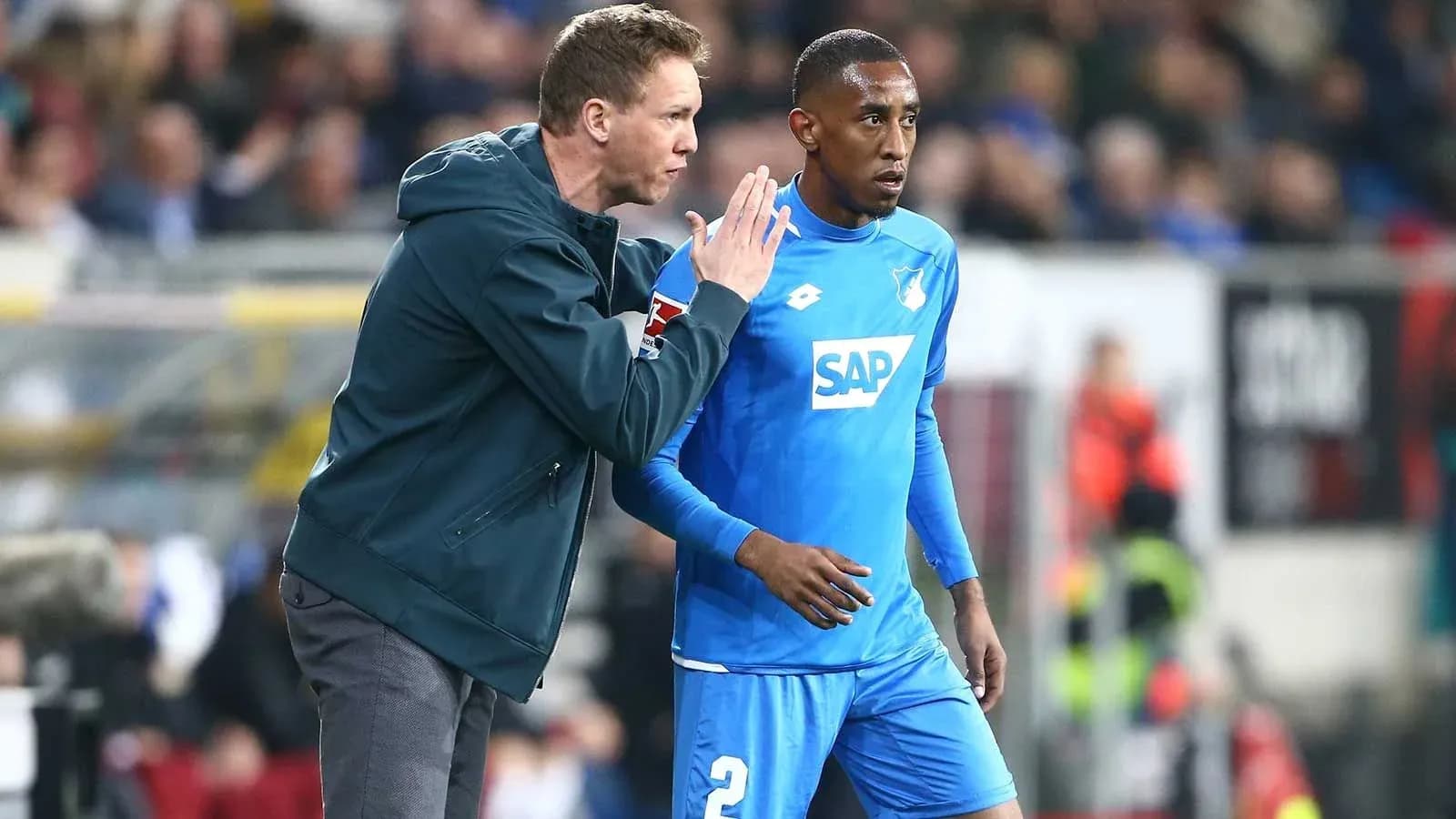
When he left PSV Eindhoven for Hoffenheim in 2018, the move looked like the next logical step in a rising career. A €3.5 million fee. Three Eredivisie titles on his CV. Two caps for the Netherlands. And a coach in Julian Nagelsmann who believed enough in him to push the transfer through. Everything pointed up.
Then the slide began.
Brenet started his Bundesliga life on the bench, waiting for his moment. It never really came. Before Hoffenheim’s first-ever Champions League game, against Shakhtar Donetsk, he skipped a video session. Nagelsmann responded by dropping him from the squad entirely. The message was clear. The relationship never fully recovered.
Nagelsmann did bring him back into the fold, but only at the edges. Cameos, not trust. When Alfred Schreuder took over — the same Schreuder who now works alongside Nagelsmann with Germany — Brenet disappeared from the first-team picture altogether. Under Sebastian Hoeneß, the fall became brutal: demotion to the reserves in the Regionalliga Südwest, Germany’s fourth tier.
The problems were no longer just tactical. Repeated disciplinary issues, persistent lateness, and a reputation that hardened with every missed meeting and every internal sanction. Hoffenheim wanted to move him on, but no one was willing to pay for the risk. Only in 2022, when he left on a free to Twente Enschede, did the club finally cut the cord.
On the pitch in Enschede, Brenet reminded people why he had once been so highly rated. Dynamic down the right, aggressive, influential. Off the pitch, he unravelled again.
In January 2023, he was caught driving without a licence. Twice. In two weeks. The licence had already been taken from him in 2020 after a drink-driving offence. This time, the consequences were far heavier. A court handed him a one-month prison sentence in 2024. The presiding judge did not mince words: “He clearly has no regard for authority. It seems to me as though he is continuing to play football after receiving a red card.”
It was not his first appearance in front of a judge. In 2021, he had received a suspended sentence, a fine and community service for domestic violence. The driving sentence was later converted to community service on appeal, but by then Twente had already reached their own verdict. Contract terminated. Career in freefall.
Brenet’s next stops felt like exile. Al-Rayyan in Qatar, where he made just six appearances in the 2024/25 season. A short spell at Livingston FC in Scotland. Then a move to Kayserispor in Turkey for the second half of the campaign. No stability, no long-term project, only fleeting chances to remind people of the player he once promised to be.
And yet here he is, back on a major stage, in the blue of Curaçao.
Despite a long youth career with the Netherlands and a senior debut in the 2016 World Cup qualifiers for Oranje, FIFA eventually granted his request to switch national allegiance to his parents’ homeland. Since his Curaçao debut in 2024, he has scored six goals in 17 appearances — an impressive return for a right-back. In the final warm-up match before this World Cup, against Aruba, he started on the right of defence and scored again.
For Curaçao, his story is both warning and weapon. They know the baggage. They also know the talent.
On Sunday at 7 pm, the 32-year-old will stand in the tunnel alongside his teammates, ready to open Curaçao’s World Cup campaign against Germany. On the opposite side: Nagelsmann, now the national coach of Germany, and Schreuder at his shoulder. The same men who once froze him out at Hoffenheim now stand between him and the biggest statement of his career.
From the Regionalliga to the world stage, from courtrooms to a World Cup opener, Joshua Brenet has burned through chances most professionals never get once. Now he faces the country that shaped him, the coaches who doubted him, and a tournament that rarely forgives. What does he do with this one?
Related News
UFC 332 Preview: Natalia Silva vs. Wang Cong Fight Card, Odds, Start Time, and Details
Andy Roddick Responds to Andre Agassi’s Comments on Alexander Zverev at the Laver Cup
Knicks Prepare for Flexible Roles in Title Defense
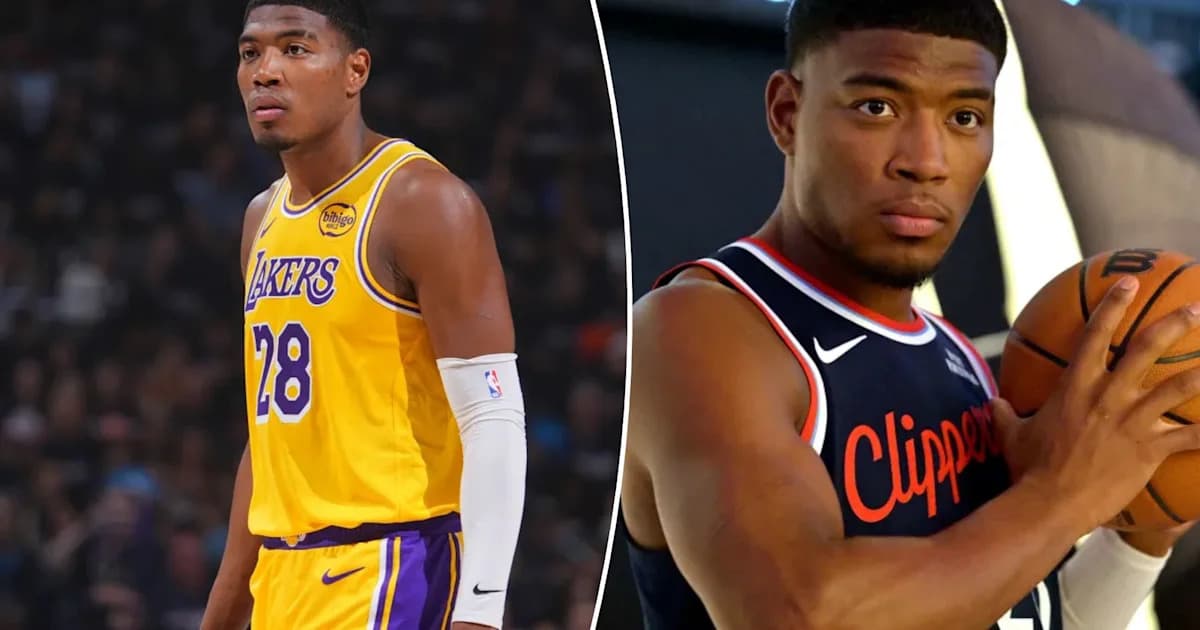
Rui Hachimura Swaps Lakers Fans to Clippers in Surprising Jersey Exchange

Who Will Be the NBA's Next First-Time All-Stars? Top Picks and Long Shots for 2027

How Strong Is Your Team at Home? Check Out the 2026 Brasileirão Home Standings