
Denver Summit W's Statement Victory Over Orlando Pride W

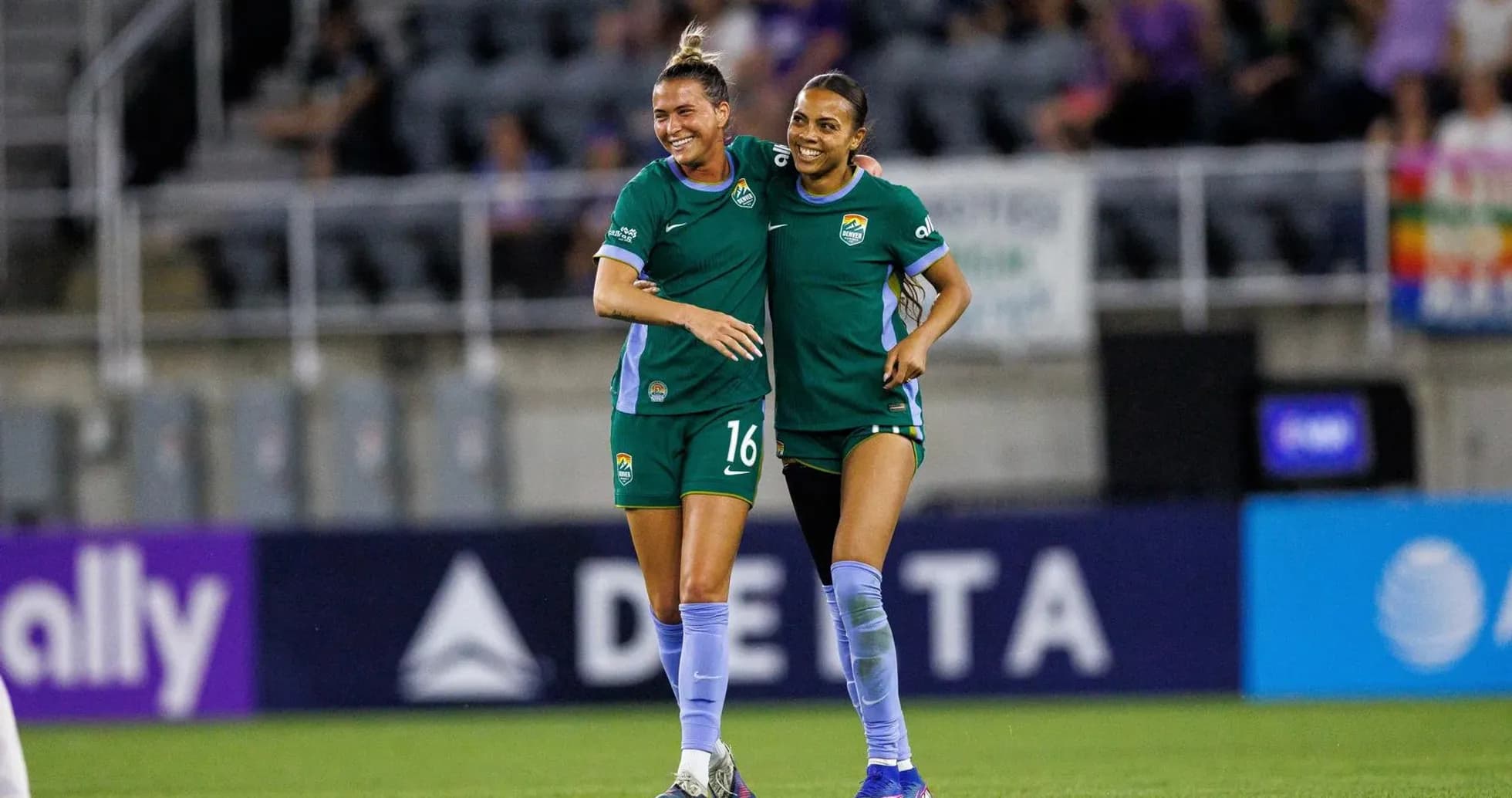
Under the lights at Centennial Stadium, Denver Summit W’s 3–1 victory over Orlando Pride W felt less like an upset and more like a statement of identity. In a league defined by fine margins, this was a night where structure, discipline, and a quietly maturing attacking core tilted the Group Stage narrative in favor of the expansion side from Commerce City.
I. The Big Picture – Two Different Trajectories Converge
Heading into this game, Denver sat 7th in NWSL Women with 12 points from 9 matches, their overall goal difference a tidy +4 (15 scored, 11 conceded). That balance has been their seasonal DNA: both at home and on their travels they average 1.7 goals for per match, conceding 1.3 at home and 1.2 away. They are not explosive, but they are consistently dangerous.
Orlando arrived in Colorado 9th with 11 points from 10 matches, carrying a negative overall goal difference of -2 (14 for, 16 against). On their travels, they had split their returns evenly: 7 goals scored and 8 conceded across 5 away fixtures, an average of 1.4 scored and 1.6 conceded. They are a side that can hurt anyone going forward but rarely emerge unscathed.
The full-time scoreline – Denver 3, Orlando 1 – perfectly mirrored those season-long themes. Denver leaned into their balanced profile, while Orlando’s defensive frailty once again undercut the brilliance of their star forward.
II. Tactical Voids and Disciplinary Undercurrents
There were no listed absences in the data, so both coaches effectively had full decks to play with. Yet the way those decks were used told a story of contrasting cohesion.
Seb Hines stayed loyal to Orlando’s season-long template, rolling out the familiar 4-2-3-1. A. Moorhouse anchored the back, shielded by a back four of O. Hernandez, C. Dyke, H. Anderson, and H. Mace. Ahead of them, the double pivot of H. McCutcheon and A. Lemos was tasked with both screening and initiating play, with S. Castain, S. Yates, and J. Doyle supporting lone striker and league top scorer B. Banda.
Denver, by contrast, were listed without a formal formation, but the personnel sketched a clear outline: A. Smith in goal behind a defensive core of A. Oke, E. Gaetino, and K. Kurtz, with J. Sonis and D. Lynch providing flexible width and bite. The midfield triangle of D. Sheehan, Y. Ryan, N. Flint, and N. Means fed into focal point forward M. Kossler.
The disciplinary subtext mattered. Season-long, Denver have shown a tendency to ignite in the middle of games: 44.44% of their yellow cards arrive between 46–60 minutes, with another 22.22% in the 76–90 window and 22.22% deep into 91–105. This is a side that plays on the edge once the match settles into its most intense phases. Orlando’s yellow-card profile is even more back‑loaded: 30.77% between 61–75, 23.08% from 76–90, and 15.38% in 91–105. Their one red card this season came between 61–75, a reminder that frustration can spill over just as opponents are ramping up.
In a match where Denver led 1–0 at half-time and then stretched the game after the break, those tendencies were always likely to surface. Denver’s capacity to absorb pressure and then commit tactical fouls in the middle third, versus Orlando’s propensity to accumulate cards late, tilted the emotional control of the contest toward the hosts.
III. Key Matchups – Hunter vs Shield, and the Engine Room
Hunter vs Shield was always going to be B. Banda against the Denver back line. Banda’s season numbers are elite: 8 goals in 10 appearances, 39 shots with 22 on target, and a rating of 7.69. She has drawn 22 fouls and committed 15, operating as both finisher and chaos engine. She arrived at Centennial as the league’s most ruthless attacker.
Her opposite number was not a single player but a structure led by K. Kurtz. Across the season, Kurtz has been Denver’s defensive metronome: 470 passes at 89% accuracy, 13 interceptions, and 13 blocked shots. That last figure is crucial – every block is a shot that never tests A. Smith. With Denver conceding only 11 overall in 9 matches, the partnership between Kurtz and E. Gaetino formed a compact shield designed to funnel Banda into traffic rather than space.
Banda still found a way to score – predators of her calibre almost always do – but Denver’s plan was about limiting volume, not eliminating threat. Orlando’s total of 14 overall goals in 10 matches before this fixture was built on her shoulders; keeping the supporting cast quiet was as important as dealing with the star.
In the Engine Room, the duel was between creators and enforcers. For Denver, Y. Ryan and N. Flint have defined their attacking identity. Ryan, with 3 assists and 15 key passes from 203 total passes at 79% accuracy, is the side’s primary progressor between lines. Flint, with 3 goals, 2 assists, and 8 key passes from 223 passes at 78% accuracy, is the hybrid eight‑ten who both finishes and knits play. Together they have contributed directly to 5 of Denver’s 15 overall goals, and their combined 25 key passes illustrate how much of Denver’s chance creation runs through them.
Orlando’s counterweight was H. McCutcheon, whose season reads like a classic two-way midfielder: 302 passes at 75% accuracy, 15 key passes, 30 tackles, 6 blocked shots, and 9 interceptions. Her job at Centennial was brutally complex: protect the back four from Ryan and Flint’s rotations while also linking quickly into Banda’s feet and the three attacking midfielders. When Denver’s press forced her deeper and wider, Orlando’s 4-2-3-1 often bent into a 4-3-3 in buildup, leaving Banda isolated and reducing the threat of those vertical combinations.
IV. Statistical Prognosis and What This Result Tells Us
Following this result, the underlying numbers still frame Denver as a side trending upward. Overall they average 1.7 goals for and only 1.2 against, and they have already delivered 3 clean sheets and failed to score only twice. Their biggest overall home win prior to this was 3–1; matching that scoreline against an Orlando side with a proven scorer suggests that their attacking output is sustainable, not a one-off spike.
Orlando, meanwhile, remain stuck in their paradox. Overall they score 1.4 per match but concede 1.6. They have 3 clean sheets in total but have also shipped 3 or more in multiple fixtures, and their away profile – 7 scored, 8 conceded – was again reflected in conceding three on their travels. Banda’s individual xG profile (implied by 39 shots, 22 on target, and 8 goals) suggests her finishing is broadly in line with expectation; the structural problem lies behind her.
Tactically, this match underlined that Denver’s spine – A. Smith, Kurtz, Ryan, Flint, and Kossler – is now coherent enough to handle elite individual threats while still imposing their own rhythm. Orlando’s 4-2-3-1 remains dangerous, but unless the double pivot receives more protection and their disciplinary curve flattens in that 61–90 window, their defensive xG against will continue to outstrip what even a striker of Banda’s calibre can rescue.
In the arc of the Group Stage, Denver Summit W walked off their home pitch looking less like a plucky newcomer and more like a playoff-calibre unit whose numbers – and now results – are beginning to align. Orlando Pride W left Centennial reminded that in this league, one unstoppable scorer is not enough if the shield behind her keeps cracking.
Related News
Portland Thorns W vs Houston Dash W: NWSL Women Clash
Kansas City W vs Denver Summit W: NWSL Women Showdown
Portland Thorns W vs Houston Dash W Prediction: Key Stats and Tips
Washington Spirit W vs Angel City W Prediction: Key Stats and Betting Tips

Racing Louisville W vs San Diego Wave W Predicted Lineups and Team News
Kansas City W vs Denver Summit W Prediction: Key Stats and Betting Tips