
San Diego Wave W Defeats Washington Spirit W in Tactical Showdown
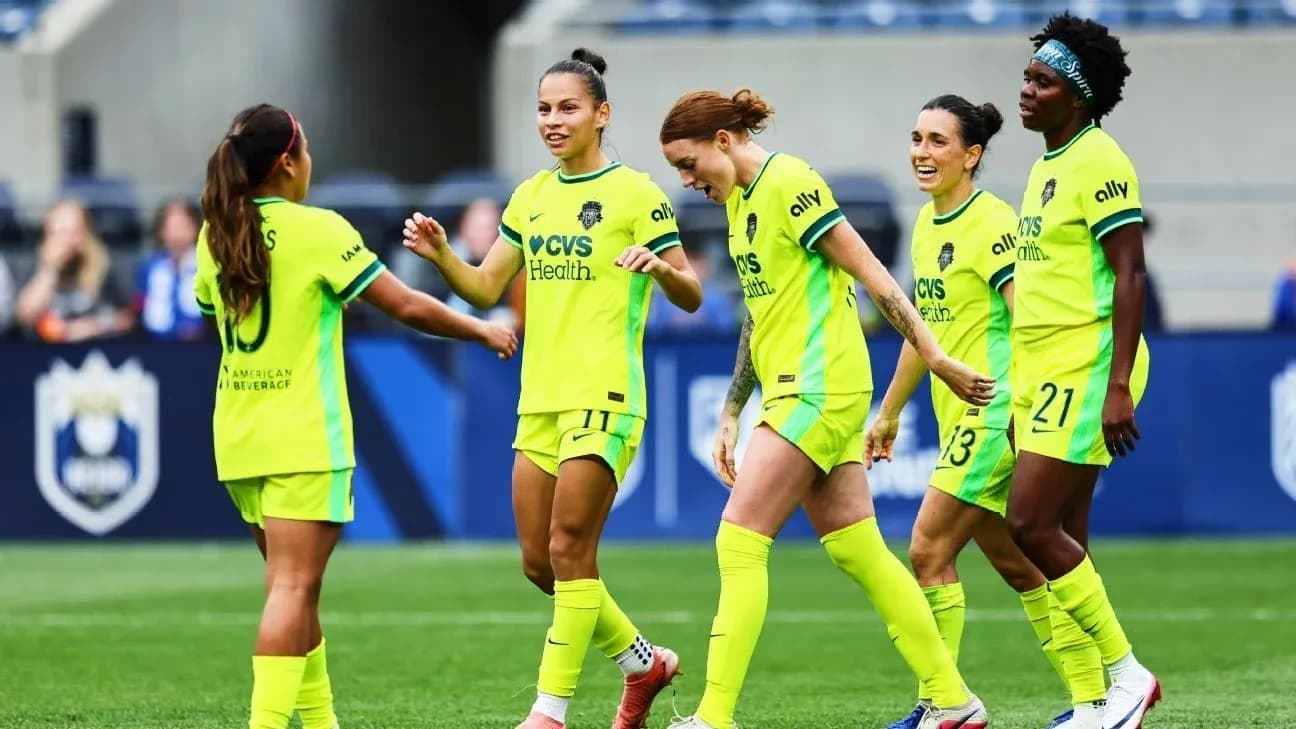
On a warm night at Snapdragon Stadium, San Diego Wave W and Washington Spirit W walked out knowing this was more than just another Group Stage fixture in the NWSL Women season. It was first against third, two sides shaped by similar systems but very different footballing identities, colliding in a 4-2-3-1 mirror that promised fine margins and demanded clarity of roles.
Heading into this game, San Diego sat top of the table on 21 points from 10 matches, with a goal difference of 5 built from 15 goals for and 10 against. Their seasonal DNA was clear: assertive, front-foot football, with an overall scoring average of 1.5 goals per match and 1.0 conceded. At home, they had been slightly more controlled, averaging 1.4 goals scored and 0.8 conceded, winning 3 of 5. Washington arrived as the league’s quietly ruthless machine: 18 points from 10 games, a superior overall goal difference of 8 (16 scored, 8 conceded), and a defensive record that spoke of structure and discipline, conceding just 0.8 per match overall and only 0.5 at home. On their travels, they still kept things tight, allowing 1.0 goal per game while scoring 1.7.
The 2-1 full-time scoreline in favor of San Diego confirmed what the standings had hinted: the Wave can bend games to their will at home, even against an in-form opponent. But the story of how they did it is written in the roles and relationships across the pitch.
San Diego Wave W
Jonas Eidevall’s choice of a 4-2-3-1 leaned into his side’s evolving dual identity. In the back line, D. Haracic in goal sat behind a defensive unit of A. D. Van Zanten, K. Wesley, K. McNabb, and Perle Morroni. Morroni, already one of the league’s most combative full-backs with 29 tackles and 2 blocked shots this season, brought her usual edge. Her 3 yellow cards in total underline a defender who lives on the line, and Eidevall’s structure asked her to both compress the flank defensively and provide width when San Diego built through the left.
Ahead of them, the double pivot of K. Ascanio and K. Dali was the hinge of the entire plan. Ascanio’s profile this season — 292 passes at 86% accuracy, 18 tackles, 2 blocked shots and 7 interceptions — screams metronome-with-bite. She is the balancing weight in a side that otherwise teems with vertical runners. Dali, more advanced by nature, connected to the line of three: Gabi Portilho, G. Corley, and Dudinha, with T. Byars as the lone striker.
Dudinha, one of the league’s standout attackers, entered the night with 3 goals and 4 assists in total, plus 39 dribble attempts and 23 successes. She is San Diego’s chaos engine, equally capable of running in behind or driving at a retreating back four. Her presence on the left of the three behind Byars turned the Wave’s shape into a tilted 4-2-2-2 in possession, with Portilho and Corley rotating pockets and Byars pinning the center-backs.
On the bench, L. E. Godfrey — 4 goals and 1 assist overall from midfield, with 13 key passes — waited as the change-of-pace option, a late-game controller who can also arrive in the box.
Washington Spirit W
Across from them, Adrian Gonzalez’s Washington Spirit also lined up in a 4-2-3-1, but with a different rhythm. Sandy MacIver in goal marshalled a back four of L. Di Guglielmo, T. Rudd, E. Morgan, and G. Carle. In front, the double pivot of R. Bernal and H. Hershfelt was more conservative than San Diego’s, designed to protect a potent line of three — T. Rodman, L. Santos, C. Martinez Ovando — behind central forward S. Cantore.
Bernal, with 2 goals, 329 passes at 84% accuracy, 17 tackles and 2 blocked shots overall, is Washington’s quiet enforcer. Her disciplinary record — 2 yellow cards in total — hints at a player who times her aggression, and in this structure she had to constantly step into the half-spaces where Dudinha and Corley drifted. Rodman, with 3 goals and 3 assists and 25 shots (13 on target) overall, is the primary outlet: a wide midfielder on paper, but a transition spear in practice. L. Santos, also on 3 goals and 2 assists, offers Washington’s most complete midfield profile: 403 passes at 78% accuracy, 18 tackles, and 49 duels won in total.
Match Context
The tactical voids in this fixture were less about absences — with no listed injuries or suspensions — and more about risk management. San Diego’s season-long yellow card distribution shows a clear disciplinary spike between 46-75 minutes, where 66.66% of their total yellows arrive (33.33% from 46-60, 33.33% from 61-75). Washington’s own bookings peak in the same 46-60 and 76-90 windows, each accounting for 25.00% of their total yellows. That overlap created a predictable storm: the hour around halftime, and the closing quarter-hour, were always likely to be scrappy, whistle-heavy phases where control could be lost.
Within that context, the key matchups defined the contest.
The “Hunter vs Shield” duel was Dudinha and the San Diego front line against a Washington defence that, heading into this game, had conceded just 8 in total and only 6 on their travels. Washington’s back four is not spectacular individually, but collectively drilled: the line rarely over-commits, trusting Bernal and Hershfelt to absorb central pressure. San Diego’s answer was to stretch them horizontally, dragging Bernal out of the pivot lane and forcing Rudd and Morgan to defend wider than they prefer. The 2-1 scoreline suggests the Wave found enough cracks, and the seasonal numbers back the idea that their 1.4 home goals-per-game baseline was always likely to be matched or exceeded if the wide overloads worked.
In the “Engine Room” battle, Ascanio and Dali faced Santos and Bernal. Ascanio’s blend of high passing accuracy and 18 tackles overall matched up intriguingly against Santos’s dual role as creator and presser. The Spirit’s midfield, with Santos and Rodman both aggressive in duels (Santos has 91 total duels, 49 won; Rodman 87 total, 39 won), tried to turn the central zone into a turnover factory. But San Diego’s structure, with two natural ball-players in the pivot and three technical midfielders ahead, was built to resist that pressure and then spring quickly into the spaces behind Washington’s full-backs.
From a statistical prognosis point of view, this fixture always leaned toward a narrow, high-quality contest rather than a chaotic shootout. San Diego’s overall defensive average of 1.0 goals against, combined with Washington’s 1.6 goals scored but only 0.8 conceded per match, pointed toward a game where xG would cluster around a handful of big chances rather than a flood of half-opportunities. Washington’s 5 clean sheets in total and San Diego’s 2 clean sheets suggested that breaking the deadlock would be significant; once the Wave did, their home scoring profile and Washington’s willingness to keep a high line on their travels tilted the balance.
Following this result, the 2-1 home win fits the broader statistical arc: San Diego protect top spot by leaning into their attacking talent, Washington remain a formidable but slightly more vulnerable side away from home. In tactical terms, the night underlined a simple truth: when two 4-2-3-1s collide, the team with the more creative, better-balanced band of three — and the pivot brave enough to feed them — usually writes the story. Here, that story belonged to San Diego Wave W.
Related News
Portland Thorns W vs Houston Dash W: NWSL Women Clash
Kansas City W vs Denver Summit W: NWSL Women Showdown
Portland Thorns W vs Houston Dash W Prediction: Key Stats and Tips
Washington Spirit W vs Angel City W Prediction: Key Stats and Betting Tips
Racing Louisville W vs San Diego Wave W Predicted Lineups and Team News
Kansas City W vs Denver Summit W Prediction: Key Stats and Betting Tips