
Egypt Advances Over Australia in Tactical Round of 32 Clash
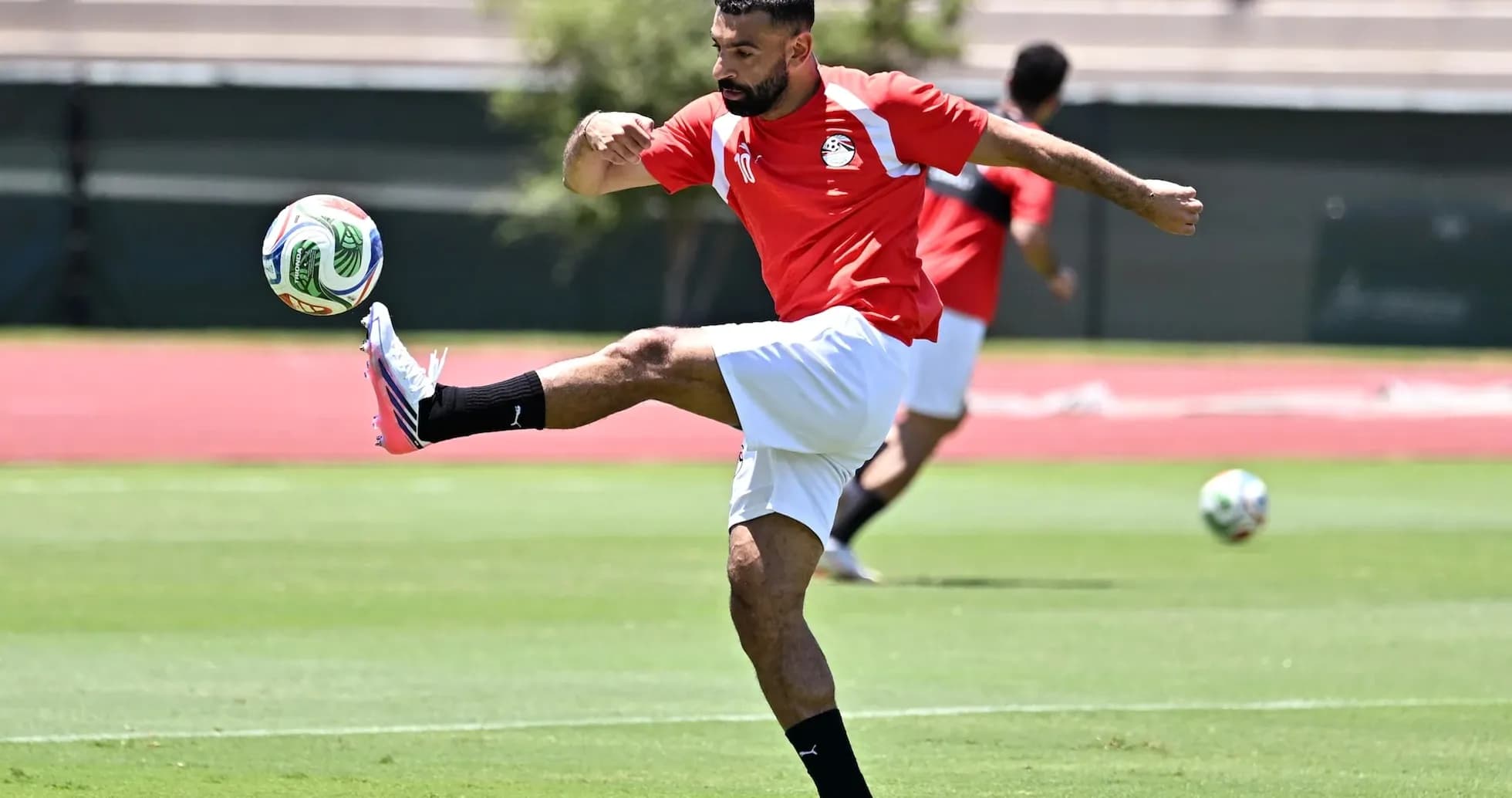
Australia and Egypt produced a tactically tight Round of 32 tie at AT&T Stadium, finishing 1-1 after extra time before Egypt advanced 4-2 on penalties. The match was a clear clash of styles: Australia in a 3-4-2-1 looking to compress space and break with vertical runners, Egypt in a 4-4-2 that morphed into a possession-heavy 4-2-3-1 around Mohamed Salah’s movements.
Egypt’s control of the ball was the defining structural feature. With 58% possession and 723 passes (614 accurate, 85%), Hossam Hassan’s side built patiently from the back. The centre-back pair Yasser Ibrahim and Rami Rabia, supported by Hamdy Fathy and Marwan Attia at different phases, consistently created a 2+2 platform to beat Australia’s first line of pressure. Full-backs Mohamed Hany and Karim Hafez pushed high, stretching Australia’s wing-backs and pinning the wide midfielders, which helped Egypt generate 14 shots, including 8 from inside the box.
Australia’s 3-4-2-1 under Tony Popovic was designed to congest central zones and protect the box. The back three of Alessandro Circati, Harry Souttar and Lucas Herrington sat relatively deep, with Jackson Irvine and Aiden O’Neill screening in front and Jordan Bos and Aziz Behich tasked with handling Egypt’s width. That structure produced volume rather than quality: 16 total shots but only 1 on target, with a striking 9 blocked efforts. The Socceroos reached 10 shots inside the box but their xG of 0.87 underlines how often those attempts came under heavy pressure or from poor body positions.
First Half
The game’s first major tactical dividend came from Egypt’s left side. At 13', Emam Ashour’s goal, assisted by Karim Hafez, reflected Egypt’s superiority in wide overloads. Hafez’s advanced positioning drew out Australia’s right-sided defender, opening a lane for Ashour to arrive from midfield. It was a textbook exploitation of Australia’s wing-back line: once the first press was bypassed, the back three were forced to defend laterally, and Egypt’s midfield runner attacked the gap.
Chasing the game, Popovic’s adjustments were aggressive but coherent. The half-time change saw Kai Trewin (IN) come on for Jordan Bos (OUT) at 46', a move that signalled a desire for more defensive stability on the flank and cleaner first passes from the back. The key turning point, though, came from sustained Australian pressure rather than a crafted pattern: at 55', an own goal by Mohamed Hany brought Australia level. The sequence underlined the cumulative effect of Australia’s territorial play and crossing from wide areas; even without a registered assist, it stemmed from forcing Egypt to defend deeper and more reactively.
Second Half
Egypt’s response was to refresh their central structure. At 67', Hossam Abdelmaguid (IN) replaced Hamdy Fathy (OUT), and Haissem Hassan (IN) came on for Mostafa Ziko (OUT). The first change injected new legs and physicality into the defensive line, while Hassan’s introduction alongside Salah altered the front line’s reference points, with more roaming and channel runs. Later, at 80', Mahmoud Trézéguet (IN) replaced Karim Hafez (OUT), shifting Egypt’s left side from a full-back-driven lane to a more winger-oriented threat, with Salah and Trézéguet able to interchange and attack Australia’s half-spaces.
Australia’s substitutions at 74' were clearly aimed at increasing attacking dynamism. Mohamed Touré (IN) came on for Nestory Irankunda (OUT), and Ajdin Hrustić (IN) replaced Cristian Volpato (OUT). Hrustić’s entry added a more natural playmaker between the lines, but Egypt’s compact 4-4-2 block limited his influence. At 91', Awer Mabil (IN) for Connor Metcalfe (OUT) and Paul Okon-Engstler (IN) for Aiden O’Neill (OUT) further tilted Australia toward an attacking posture, sacrificing some central control to chase transitions late in normal time and into extra time.
Extra Time
In extra time, the pattern of the match sharpened: Australia, with only 42% possession and 507 passes (404 accurate, 80%), were increasingly reactive, while Egypt continued to probe. The introduction of Hamza Abdelkarim (IN) for Omar Marmoush (OUT) at 106' and Mahmoud Saber (IN) for Marwan Attia (OUT) kept Egypt’s midfield intensity high and preserved their capacity to circulate the ball under fatigue.
Defensively, both sides showed contrasting profiles. Australia’s low block and back-three density were effective at protecting the central channel, as evidenced by limiting Egypt to 14 shots and forcing 6 of those to be blocked. Yet the Socceroos’ inability to transform turnovers into high-quality chances was stark: 1 shot on goal from 16 attempts, despite their structural emphasis on transitions from the front three. Egypt, by contrast, produced 4 shots on goal from 14 attempts and an xG of 1.36, reflecting more consistent access to good shooting zones.
Goalkeepers
In goal, Patrick Beach (Australia) and Mostafa Shobeir (Egypt) had relatively light but decisive workloads. Beach (Australia) made 3 saves, a solid return that kept Australia alive despite Egypt’s territorial dominance. Shobeir (Egypt) needed just 1 save across 120 minutes, which underlines how effectively Egypt’s defensive line and midfield screen limited Australia’s clean looks at goal. Both keepers are credited with identical goals prevented figures of -0.9, indicating that the finishing on the night marginally outstripped the shot quality they faced.
Discipline
Discipline tilted slightly against Egypt: they committed 14 fouls to Australia’s 12 and received both yellow cards. In extra time, Haissem Hassan (Egypt) was booked at 105' — Foul — a reflection of the physical edge in Egypt’s attempts to disrupt Australian counters. At 120', Yasser Ibrahim (Egypt) also received a yellow card — Foul — as Egypt defended aggressively to prevent late Australian surges before penalties.
Set Pieces
Set pieces were another subtle battleground. Egypt’s 7 corner kicks to Australia’s 4 matched the general territorial trend, but Australia’s aerial presence through Souttar and the back three helped neutralize many of those deliveries. Conversely, Australia’s inability to generate more corners and second-phase chaos around the box further limited their route to goal, especially once Egypt adjusted personnel at the back.
Over 120 minutes, the underlying numbers validate the tactical story: Egypt’s superior possession structure, passing accuracy, and shot quality gradually wore down Australia’s resilient but blunt 3-4-2-1. Australia’s defensive organisation and work rate were enough to force penalties, but the imbalance in chance creation and control made Egypt’s eventual 4-2 shootout success a logical extension of the match’s tactical arc.
Related News
Brazil's First Post-World Cup Friendly: What Should the Lineup Be?
Harry Kane Calls England’s World Cup Exit to Argentina His Deepest International Pain
Estevao Opens Up on World Cup Heartbreak and His Unexpected Return to Brazil Under Ancelotti
Thomas Tuchel Shares Unusual Regret After England's 10-Man World Cup Victory Over Mexico
South Korea Names Robert Moreno as Interim Coach After World Cup Exit

Jude Bellingham Returns to Form at Real Madrid Following World Cup Success