
Egypt Edges Australia in World Cup Round of 32
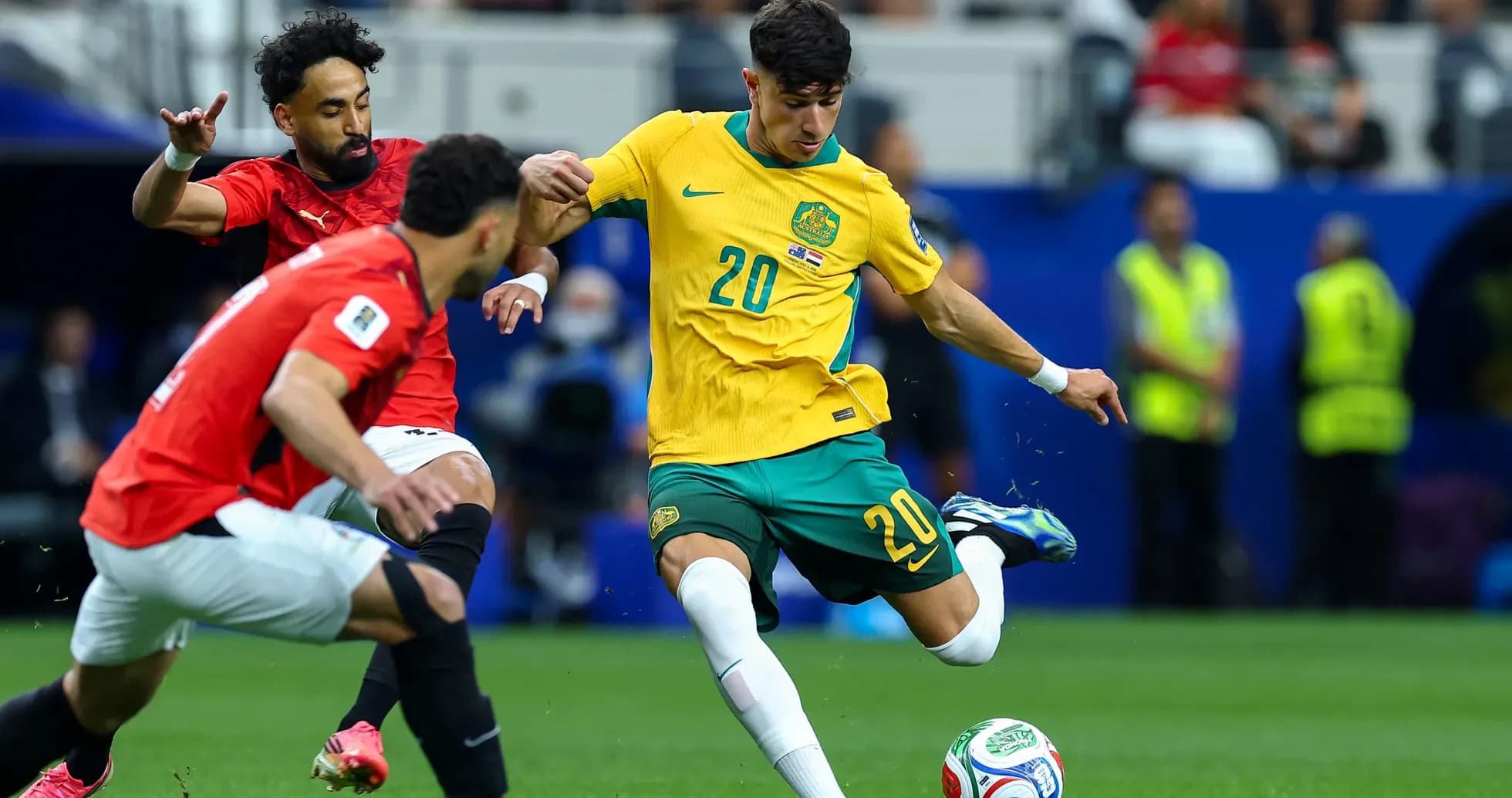
Under the cavernous roof of AT&T Stadium in Dallas, Australia and Egypt played out a World Cup Round of 32 tie that refused to yield to 90 minutes, 120, or even the psychological strain of a shootout until Egypt finally edged it 4–2 on penalties after a 1–1 draw. It was a contest shaped as much by structural choices and absences as by individual quality, and by the end it felt like two very different footballing identities had gone the distance against each other.
Australia arrived as a functional, tournament-tough unit. Heading into this game, they had played 4 matches in total, winning 1, drawing 2 and losing 1. Their attacking profile was modest: 3 goals in total, all at home venues, with a total home average of 1.5 goals for and 0.0 on their travels. Defensively, they were balanced but not impermeable, conceding 3 in total at an overall rate of 0.8 goals against per match, split as 0.5 at home and 1.0 away. The goal difference across the campaign to this point was exactly 0 (3 scored, 3 conceded), a reflection of a side that tends to live in tight margins and low-scoring battles.
Egypt, by contrast, carried the air of an unbeaten group winner in all but name. Heading into this game, they had played 4 matches in total, without a single defeat: 1 win and 3 draws. Their attack was more productive, with 6 goals in total, powered largely by their away record of 5 goals on their travels at an average of 1.7, and 1 at home at an average of 1.0. Defensively, they had conceded 4 in total, at an overall rate of 1.0 goals against per match, split evenly between home and away. Their total goal difference stood at +2 (6 scored, 4 conceded), underlining a side that tends to score more freely than Australia but still gives opponents chances.
Those broad identities were mirrored in the lineups. Tony Popovic rolled out a bold 3‑4‑2‑1 for Australia, trusting a back three of P. Beach behind H. Souttar, A. Circati and L. Herrington to hold firm. The width and running came from J. Bos and A. Behich as nominal midfielders, with J. Irvine and A. O’Neill forming a central box. Ahead of them, C. Volpato and C. Metcalfe floated behind the lone spear of N. Irankunda. It was an adventurous shape from a coach whose team had been more conservative earlier in the tournament, but one that made sense: at home venues so far they had both scored more (3 goals) and conceded less (1 goal) than on their travels.
Hossam Hassan answered with a more orthodox 4‑4‑2 for Egypt, but one that carried a heavy creative burden on the right boot of M. Salah. In front of O. Shobeir, the back four of M. Hany, Y. Ibrahim, R. Rabia and K. Hafez was tasked with controlling Australia’s transitions. The midfield band of E. Ashour, H. Fathy, M. Attia and O. Marmoush had to both screen and supply, while Salah and M. Ziko formed a front two that blended world-class movement with penalty-box instincts.
Egypt’s selection was forced into a more delicate balance by notable absences. Hossam Abdelmaguid was suspended through a sports court decision, removing a defensive option. More significantly for the midfield battle, Mohanad Lasheen, one of the tournament’s standout ball-winners with 13 tackles and 4 interceptions across his campaign and 2 yellow cards already collected, was out through suspension after a yellow card. His ability to break up play and launch counters was sorely missed in the engine room. There were further defensive and structural hits: Ahmed Abou El Fotouh (hamstring), Mohamed Abdelmonem (ankle problems) and the industrious midfielder Hamdi Fathy (muscle bruise) all sidelined, forcing Egypt to lean heavily on the positional discipline of M. Attia and the reading of the game from Y. Ibrahim and R. Rabia.
Australia had their own voids to navigate. M. Leckie, a natural leader in the front line, missed out with a hamstring injury, while J. Italiano’s ankle problems reduced options in goal and build-up. The result was a front three where Irankunda’s raw dynamism had to be balanced by the more cerebral movements of Metcalfe and Volpato, without a proven tournament scorer to lean on.
In the “Hunter vs Shield” duel, all roads led to Salah. Heading into this game, he had already produced 1 goal and 2 assists in 4 appearances, with 16 key passes and 13 attempted dribbles, 6 of them successful. His duel numbers – 37 contested, 19 won – painted the picture of a forward who does not merely wait for service but actively shapes the game. Against an Australian defence that, in total, had conceded 3 goals at a rate of 0.8 per match and kept 2 clean sheets overall, Salah’s capacity to receive between the lines and run at the outside centre-backs was the central tactical question.
The other key matchup lay in the engine room. Without Lasheen, Egypt’s midfield aggression dropped a notch. His 7.00 average rating and 2 yellow cards in the tournament spoke of a player who lived on the edge but controlled central zones. That responsibility shifted towards M. Attia and H. Fathy, who had to contain the surges of Irvine and the screening presence of O’Neill. Australia, whose disciplinary profile showed a clear late-game edge – 40.00% of their yellow cards coming between 76–90 minutes – were always likely to turn this into a contest of attrition, pushing their line higher and increasing the tempo as legs tired.
Egypt’s own card distribution hinted at how they would manage the rhythm. With 25.00% of their yellows coming between 16–30 minutes and another 25.00% between 31–45, they tend to front-load their aggression, then manage the game more cautiously until very late, where another 25.00% of yellows arrive in extra time between 91–105 minutes and 12.50% between 106–120. That pattern matched the narrative of a side prepared to suffer early, then lean on structure and the individual brilliance of Salah to carry them into deep water.
In the end, the match played out almost exactly along those lines. Australia’s three-at-the-back system gave them phases of territorial control, but their total attacking record – 0.8 goals for per match overall heading in – hinted at the struggle to turn pressure into clear chances. Egypt, with their 1.5 goals for per match in total and unbeaten form, were always more likely to find a moment, even if the defensive absences meant they could not fully lock the game down.
The penalty shootout, with both sides having taken no penalties in the tournament before this (0 total penalties, 0 scored, 0 missed for each), was a step into the unknown. There was no prior record to suggest an edge. Yet the broader statistical story – Egypt’s superior attacking output, positive goal difference and unbeaten run against Australia’s finely balanced but limited offence – suggested that if the tie went to the thinnest of margins, the North Africans might just carry the extra ounce of belief.
Following this result, that intuition was borne out in the most brutal way for Australia. Their campaign, built on structure and collective effort, ended from twelve yards. Egypt’s, built around Salah’s star power and a resilient, if patched-together, spine, marched on – a reminder that in knockout football, the smallest statistical edges, when married to elite individual quality, often decide the longest nights.
Related News
Brazil's First Post-World Cup Friendly: What Should the Lineup Be?
Harry Kane Calls England’s World Cup Exit to Argentina His Deepest International Pain
Estevao Opens Up on World Cup Heartbreak and His Unexpected Return to Brazil Under Ancelotti
Thomas Tuchel Shares Unusual Regret After England's 10-Man World Cup Victory Over Mexico
South Korea Names Robert Moreno as Interim Coach After World Cup Exit

Jude Bellingham Returns to Form at Real Madrid Following World Cup Success