
Elliot Anderson: Manchester City Push for Record Transfer
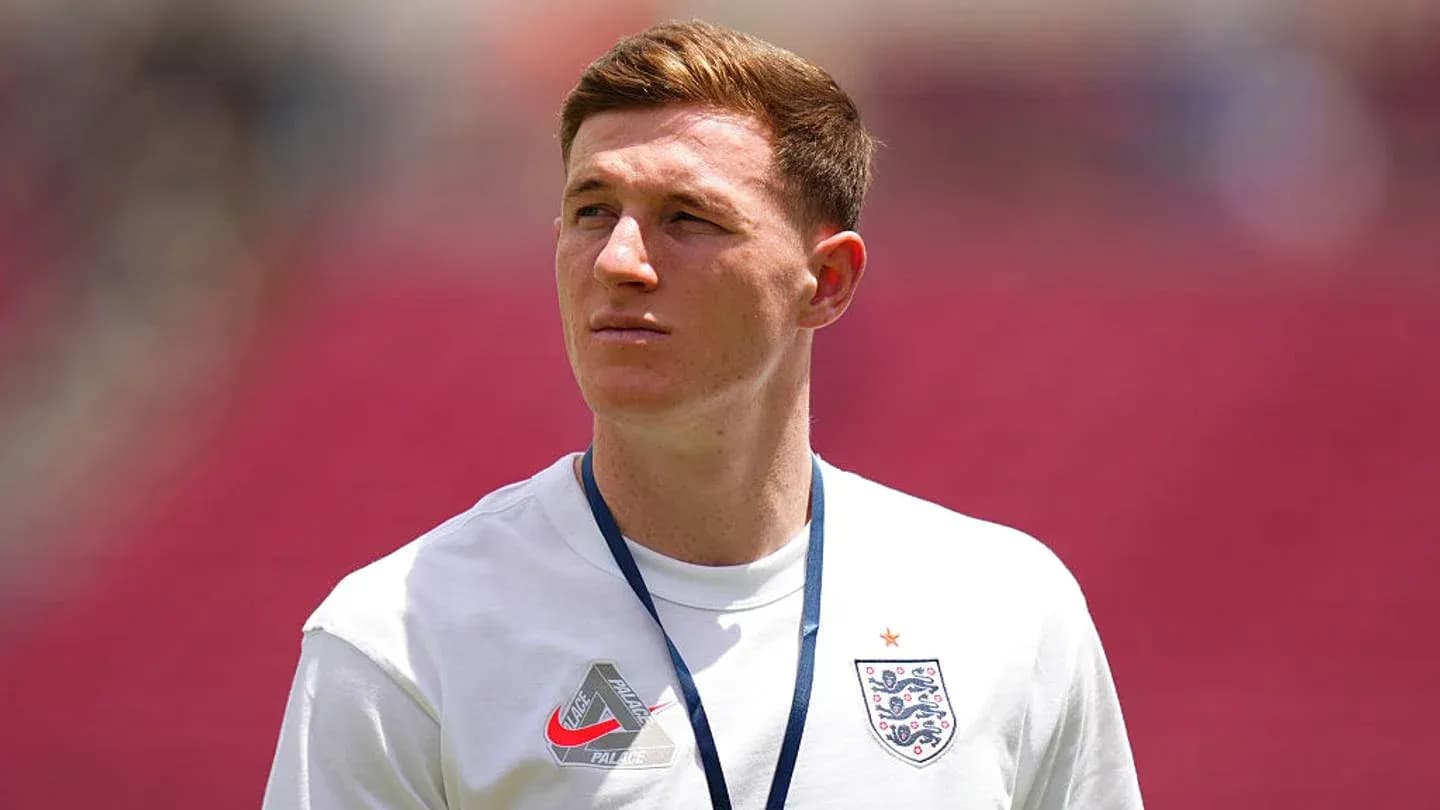
Manchester City are testing the limits of the modern transfer market again, and this time the spotlight falls on Elliot Anderson.
The Premier League champions have moved to make the Nottingham Forest midfielder the most expensive English player in history, tabling an offer that underlines both their faith in his talent and the scale of the post-Pep Guardiola rebuild.
City Push Towards a Record
Anderson’s rise across the 2025–26 season has been sharp and relentless. By spring he was no longer just Forest’s heartbeat; he had forced his way into England’s plans for the 2026 World Cup and looked entirely at home at that level. At 23, he has become the kind of all-purpose midfielder elite clubs build around, not around.
City have identified exactly that profile. A player who can glide between lines, press, pass, carry, and still have the legs to do it for a decade. He fits the blueprint for the next era at the Etihad, the one that must live without Guardiola on the touchline but still dominate the ball and the league.
He is not the only one watching. Manchester United are also tracking Anderson, a familiar subplot in a city where every major deal now feels like a tug-of-war across town. But it is City who have moved first and hardest.
Transfer reporters Fabrizio Romano and David Ornstein reported on Wednesday that City’s proposal starts at $141.7 million (£106 million) guaranteed, with conditional add-ons that could push the total beyond $160.4 million (£120 million). The guaranteed portion alone edges past the package Arsenal agreed with West Ham in 2023 for Declan Rice, the current benchmark for an English player.
For most clubs, that would be an irresistible number. For Forest, it is only the start of the conversation.
Forest Stand Their Ground
Nottingham Forest are not blinking. Not yet.
The club are understood to be holding out for more guaranteed money, using another recent mega-deal as their compass. Ornstein points to Alexander Isak’s 2025 move from Newcastle United to Liverpool: $167.1 million guaranteed, with only minor add-ons. That fee set a new standard for the Premier League.
Forest believe Anderson belongs in that bracket or above. Matching or surpassing the Isak fee would not only establish a new Premier League record, it would place Anderson behind only Neymar and Kylian Mbappé in global transfer history before add-ons are counted.
They can argue the case. Anderson is under contract for three more years, so there is no clock ticking towards a cut-price exit. His performances, including standout displays against both Manchester clubs in recent months, have not just showcased his quality but his temperament. He has looked like a player who relishes the biggest stages rather than shrinks from them.
From Forest’s perspective, this is a rare position of strength. They do not want to sell. But if nobody hits their number, they keep a top-level midfielder in his prime years for at least another season. If someone does, they bank a fee that would transform their ability to reshape and deepen the squad.
Either outcome is palatable. That is why they can afford to be stubborn.
The Logic Behind the Numbers
On the surface, a valuation nudging $170 million for a midfielder who has only just broken into the England setup feels extreme. The market context makes it less so.
Clubs have already redrawn the lines in this area of the pitch. Rice to Arsenal, Enzo Fernández to Chelsea, Moisés Caicedo to Chelsea – all in 2023, all for sums that would have seemed wild a decade earlier. Caicedo’s case is particularly instructive: Liverpool matched Chelsea’s offer for the Ecuadorian, proof that this was not just one club inflating prices in isolation.
Those deals shifted the entire conversation about what an elite, peak-age midfielder costs. Since then, the money in the game has only grown. Broadcast deals, commercial revenue, and Champions League reforms have continued to pump cash into the top end of the sport. Clubs have moved the goalposts again.
Forest have seen the same numbers as everyone else. They have also lived this story before. In 1993, they sold Roy Keane to Manchester United for a then-British record fee of £3.75 million, with Blackburn Rovers having actually offered more in an attempt to land him. That sum looks tiny now, but in its time it felt significant. The scale changes. The principle does not.
In that light, Forest’s stance on Anderson is not an outlier. It is a logical extension of where the market has gone.
Why City Are Prepared to Pay
So why are City willing to go this high?
Because they are not just buying a player for 2026. They are buying a cornerstone for 2030 and beyond.
Anderson turns 24 in November. If he settles, stays fit and continues to develop, City could realistically get eight, nine, even ten years of top-level service from him. The club have done this before. David Silva, Yaya Touré, Sergio Agüero, Kevin De Bruyne, John Stones, Bernardo Silva – all arrived for big money, all justified the investment over long, trophy-laden spells.
City’s model allows for churn on the fringes of the squad, but the core tends to stick. When they commit huge fees, they usually do so for players they expect to anchor the team for years. That is the lens through which they can view a deal that may approach $170 million as rational rather than reckless.
Of course, there are no guarantees. Anderson still has to prove he can handle the weight of a record fee, the expectations of a dressing room full of serial winners, and the tactical demands of a side that monopolises the ball. But City’s recruitment department has built a reputation on getting these calls right more often than not.
They see an all-rounder who can bridge eras, link lines, and keep their midfield at the cutting edge of European football. They see value over time, not just sticker shock in the moment.
A Deal That Will Define a Market
For now, the gap between City’s offer and Forest’s demand lies in the structure: how much is guaranteed, how much is tied to performance, how much risk each side is willing to carry.
But the direction of travel is clear. City are already close to Forest’s valuation. Forest are emboldened by precedent and by their own leverage. Other suitors, like United, lurk in the background, knowing that one decisive move could tilt the whole saga.
Somewhere in that tension lies the next great Premier League benchmark. The question now is simple: who blinks first, and how high does the ceiling go for a midfielder who has only just begun to test it?
Related News

UFC 332 Preview: Natalia Silva vs. Wang Cong Fight Card, Odds, Start Time, and Details
Andy Roddick Responds to Andre Agassi’s Comments on Alexander Zverev at the Laver Cup

Knicks Prepare for Flexible Roles in Title Defense
Rui Hachimura Swaps Lakers Fans to Clippers in Surprising Jersey Exchange

Who Will Be the NBA's Next First-Time All-Stars? Top Picks and Long Shots for 2027

How Strong Is Your Team at Home? Check Out the 2026 Brasileirão Home Standings