
England Faces Panama: Key Tactical Adjustments Needed
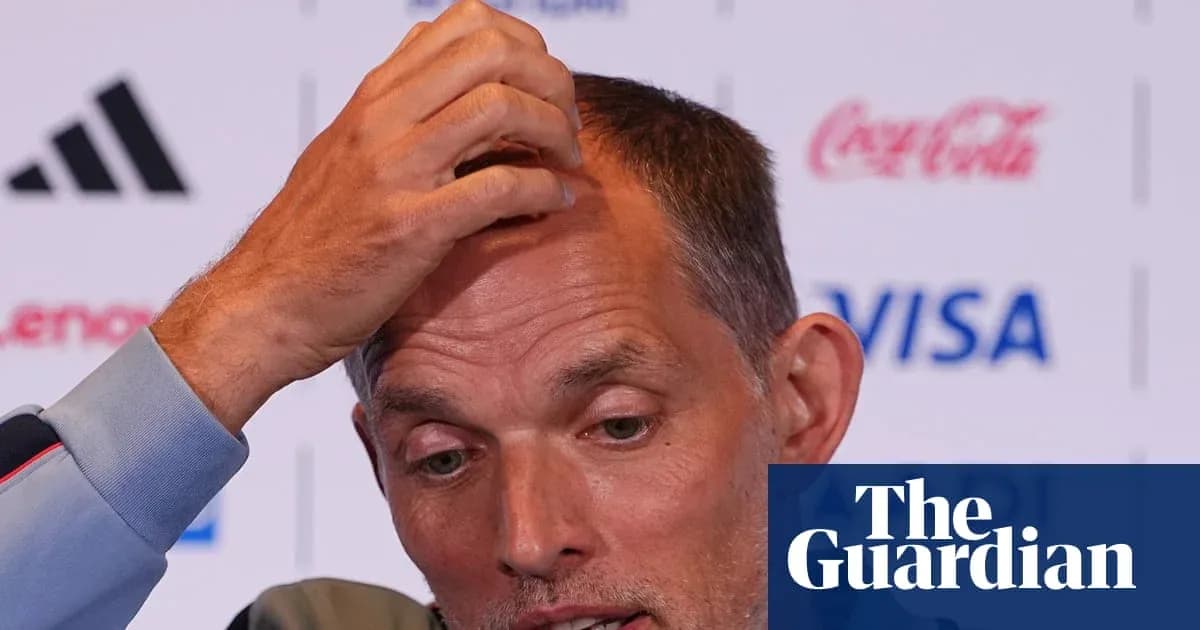
In another universe, England would be strolling into New Jersey with their feet up and a calculator out, working out how many goals Harry Kane needs to keep pace with Lionel Messi, Erling Haaland and Kylian Mbappé in the Golden Boot race. Panama would be a gentle tune‑up, a dead rubber, a chance for the back‑ups to feel the grass.
That world vanished with the goalless grind against Ghana.
Thomas Tuchel’s side failed to finish the job with a game to spare, and the draw has turned what should have been a stress‑free group finale into something altogether more awkward. Top spot is still on the line. The schedule is unforgiving: potentially four games in 13 days. Rotation is no longer a luxury, it’s a risk calculation.
This was the one Ollie Watkins and Ivan Toney would have circled as Kane’s breather. Instead, the captain may have to go again. So might Jude Bellingham. Tuchel cannot afford to let England slip into second and skew their route through the knockouts. Momentum, already jolted after the high of beating Croatia, needs restoring, not further erosion.
Injuries, bookings and a right‑back riddle
Changes are coming against Panama, some forced, some tactical, none straightforward.
Declan Rice is a yellow card away from a ban and finished the Ghana game with strapping on his left calf. Losing him for the last 32 would be a major blow. Losing Reece James already is worse. The right‑back’s latest hamstring problem will keep him out for at least two matches and has ripped another hole in Tuchel’s plan to prise open deep defences.
Nobody can claim surprise. James has lived with hamstring issues for years and missed almost two months at the end of the club season. Tuchel gambled on his fitness and on a lean group of attacking full‑backs. It is coming back to bite him.
Tino Livramento, another fragile option, has already left the camp and been replaced not by a like‑for‑like runner but by centre‑back Trevoh Chalobah. The onus to provide thrust from full‑back now falls heavily on Nico O’Reilly’s young shoulders. The remaining alternatives on the right – Ezri Konsa, Jarell Quansah, Djed Spence – are all more comfortable defending than raiding. Every minute James spends in the treatment room will sharpen the glare on Tuchel’s decision to discard Trent Alexander‑Arnold.
What should have been a straightforward assignment against Group L’s fourth seeds suddenly feels laced with jeopardy. The price of that 0-0 with Ghana is clear: England cannot ease off.
Low blocks, old scars
Tuchel is not panicking, but he is not blind either. England’s issues against low blocks are real, and Ghana under Carlos Queiroz exposed them again.
Ghana’s compact 4-5-1 smothered England’s rhythm. Thomas Partey shadowed Kane, choking off the captain’s habit of dropping deep to knit play. The numbers told the story. Kane had only 19 touches and traded just three passes with Bellingham. England hogged 78.8% of the ball yet failed to register a shot on target before half-time.
This is not an isolated irritation. England have sparkled when given grass to gallop into – against Croatia, Serbia, Wales – but the memory of plodding, predictable displays against Andorra, Albania and Latvia in qualifying lingers. Ghana were cut from the same cloth: disciplined, delighted to defend, celebrating every counterattack as if it were a goal. They celebrated the 0-0 like a famous win. Tuchel recognised the type immediately from his Champions League nights.
Now comes Panama, and the pattern will be similar. Thomas Christiansen’s side are out after 1-0 defeats by Ghana and Croatia, yet they were stubborn and organised in both. They are a long way from the naive team that shipped six to England at the 2018 World Cup. Tuchel expects a back five that sometimes looks like six or seven, a wall that shuffles rather than breaks.
He craves control, rehearsed movements, carefully designed overloads in key zones before the tempo spikes. Against Ghana, those overloads never arrived. Against Panama, he is not banking on them appearing either.
So he knows what has to change: more risk with the ball, more daring from deep, more one‑against‑one duels embraced, not avoided.
Selection calls and fraying connections
The adjustments start at the base. If Rice is wrapped in cotton wool, Kobbie Mainoo’s composure in tight spaces offers a different profile. England’s centre‑backs must step into midfield with greater conviction, not simply recycle possession. The wingers must attack their full‑backs, not just wait for overlaps that never come.
On the right, Tuchel hopes Bukayo Saka is ready to replace Noni Madueke. On the left, the picture is even murkier. Anthony Gordon has laboured in both group games and the fluency he once showed with Nico O’Reilly has evaporated.
After a bright friendly against Costa Rica, Tuchel thought that flank was solved. It isn’t. The penetration and vertical running he praised back then has disappeared in competitive action. The same stasis reappeared against Ghana.
Spence, a right‑footer asked to operate at left‑back after O’Reilly went off, struggled to offer any attacking punch. Marcus Rashford, held back until the 83rd minute, has yet to convince Tuchel that he can dictate a game from the start, yet remains firmly in the frame. “He’s a candidate to start,” Tuchel said, before underlining the bigger point: the entire left side must carry more threat, whoever plays.
There are other cards on the table. Eberechi Eze or Morgan Rogers could be used to drift inside and link with Bellingham, who constantly showed for the ball against Ghana but was too often ignored. His irritation grew, spilling into a needless free‑kick conceded just before the interval. England cannot afford that kind of lapse if Panama succeed in dragging the tempo down and breaking the game into fragments.
Tuchel wants his players to relish the duels, to force the issue. Can they arrive more aggressively onto crosses? Can they shoot more from distance, hunt deflections, turn half‑chances into scruffy goals? Against a low block, sometimes the perfect pattern never appears. Sometimes you have to kick the door in.
No room for a handbrake
Tuchel is honest enough to admit he has not yet found a simple, repeatable recipe for these games. There is no neat “if they do this, we do that” solution. He will not fling seven players onto the last line and leave three to cope with counters; he knows that would be naive. Control still matters. So does security.
But England cannot go into the knockouts with the sense that every deep defence is a puzzle they cannot solve. Expectations are higher than that, from the stands and within the dressing room.
Panama, already out, will not care about the aesthetics. They will sit, spoil, spring, and if they walk away with another 0-0, they will celebrate just as Ghana did.
England, by contrast, need more than qualification. They need a performance that loosens the shoulders and sharpens the edge. They need their stars to look like stars again, even if Tuchel has to juggle minutes with the schedule looming over his shoulder.
Above all, they need to prove to themselves that they can lift the handbrake without losing their balance. If they cannot do it against Panama, when will they?
Related News
Anthony Joshua Names Murat Gassiev as Next Opponent if He Defeats Tyson Fury
UFC 332: Start Time and Fight Highlights for Natalia Silva vs. Wang Cong
Court McGee Opens Up About Choosing UFC 332 as His Final MMA Fight
WBC Orders Lightweight Title Unification: William Zepeda vs Jadier Herrera
BCCI Pension List: Monthly Payments to Retired Indian Cricketers in 2025
Why Fury vs Joshua Is Set for Cardiff, and Dua Lipa’s Unexpected Role