
England's Resilience, Norway's Rise, and World Cup Shifts
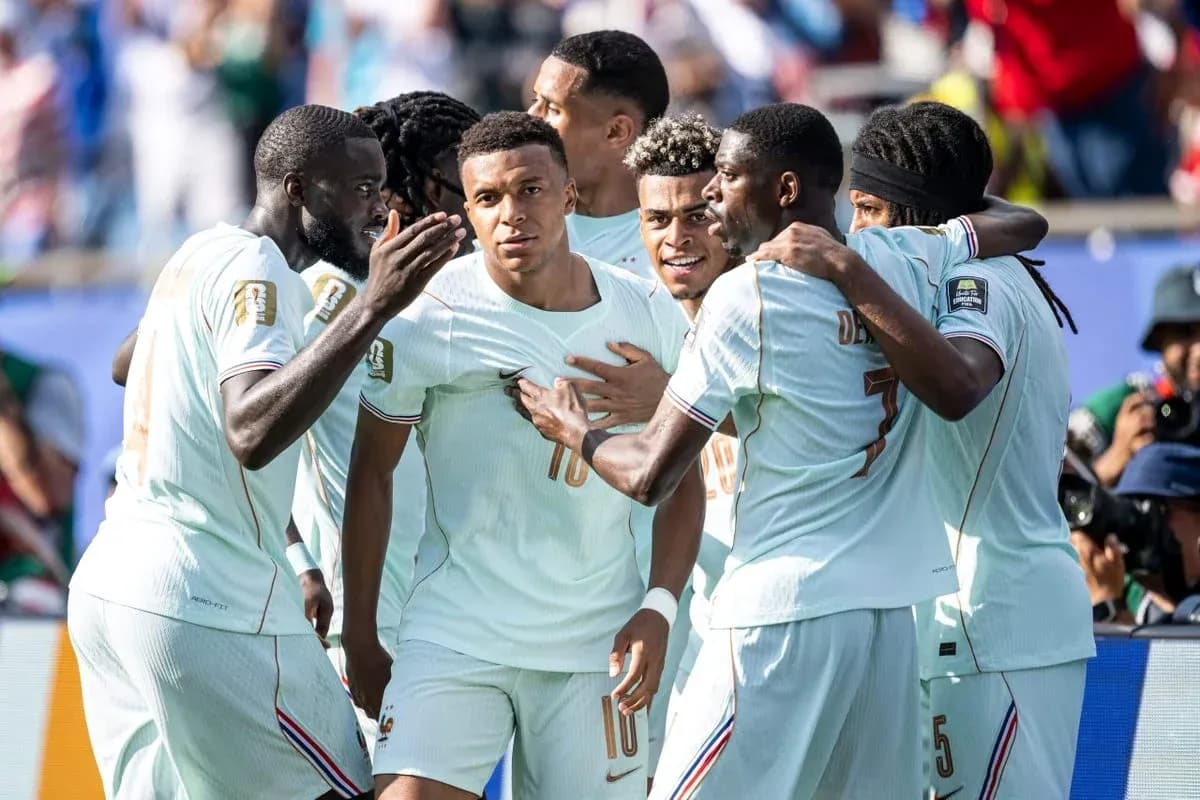
England’s statement win, Norway’s rising threat and a World Cup shaking off its old order
England: scars, steel and a date with Haaland
England arrive at the quarter-finals bruised but emboldened. The 2-0 victory over Mexico was more than a win; it was a flex of nerve and structure in a stadium where the hosts simply do not lose.
They did this the hard way. Jarell Quansah’s red card before the hour mark has now brought a two-game ban, stripping Thomas Tuchel of a defender who had quietly become central to England’s build-up play. As if that were not enough, there are fitness worries over Marc Guehi, Declan Rice and Reece James ahead of Saturday’s tie with Norway.
Yet the way England held on at the Azteca will fuel belief. Jude Bellingham and Harry Kane rolled on with the authority of men who know this tournament belongs to them as much as to anyone. Behind them, the real story came in England’s resistance. Jordan Pickford’s handling was immaculate, his decision-making sharp. Dan Burn came on and played like a man who had been waiting his whole life for this kind of firefight.
Down to 10, England did not fold. They adjusted, dug in, and saw it out. That will linger in the minds of every opponent left in this competition.
Now comes Erling Haaland. Tuchel has time – and just enough defensive depth – to design a plan to contain the world’s most ruthless striker. At the start of the tournament, England would have snatched your hand off for a quarter-final against Norway. Now, with suspensions and knocks accumulating, it feels less like a gift and more like an examination of their nerve.
Norway: Haaland, Nyland and a team that suddenly believes
Norway have spent years as a theory. In Brazil, they became a fact.
Haaland’s double dragged them to their first-ever World Cup quarter-final and underlined what everyone already knew: with him on the pitch, no game is safe for the opposition. Give him a yard, he takes a tie.
Behind him, though, this is not a one-man show. Orjan Nyland is playing like a goalkeeper in the form of his life, flinging himself at everything, turning solid saves into momentum-changing moments. Martin Odegaard, the conductor, dictates the rhythm, sliding between lines, deciding when Norway slow the game and when they rip into space.
This is a side that can keep the ball, but also relish a physical scrap. They showed against Brazil that they can live with the chaos of the very best. That matters now, because England will not be fazed by a straight shootout.
Manchester City’s Haaland and Arsenal’s Odegaard will stare across at a familiar core in that England side. Old Premier League storylines, new World Cup stakes.
Belgium: written off, then suddenly dangerous
Belgium were supposed to be done. Too old, too slow, too many memories and not enough miles left in the legs.
Then came New Zealand. A 5-1 hammering to close the group stage jolted them awake, and from there the tournament changed. They followed it up with an absurd comeback against Senegal in the round of 32, turning 2-0 down in the 86th minute into a win in extra time. Those are the kind of nights that shift a team’s sense of what is possible.
They then took out the United States in the last 16 to reach the quarter-finals. For a side that had been dismissed as a fading force, Belgium suddenly look like a problem again.
There is a cloud, though. Amadou Onana, so important for Aston Villa and increasingly central for his country, has suffered an anterior cruciate ligament injury. Losing that kind of presence in midfield strips them of energy and bite in the very zone they will need to control if they are to upset Spain.
They are on a roll. Whether that roll is strong enough to derail Spain is the question that now defines their World Cup.
Switzerland: finally breaking the glass ceiling
Switzerland always seem to be there when the knockout rounds begin, and gone by the time the real arguments start. Not this time.
Against Colombia, they stepped through a door that had been bolted shut for 70 years. Their penalty shootout win delivered a first World Cup quarter-final since 1954, when they hosted the tournament.
They did it without Johan Manzambi, their breakout star of this World Cup, sidelined after three goals and two assists. Without his spark, their creativity dipped badly; they mustered only two shots on target. But they compensated with what they have always done well: structure, discipline, an almost stubborn refusal to be pulled out of shape.
Colombia had the better chances. Switzerland had the cooler heads.
Argentina await next. On paper, it looks like a step too far. On the pitch, this Swiss side will back themselves to drag the world champions into exactly the kind of attritional, nervy contest they hate. They have already broken one barrier. Why stop there?
Morocco: not 2022, but still history
Morocco could not repeat the miracle of 2022, when they surged to the semi-finals, yet they still carved another line into the history books by becoming the first African nation to reach successive World Cup quarter-finals.
Their route was not glamorous, but it was effective. They emerged from a gentle group, held Brazil to a draw in their opener, then edged past the Netherlands on penalties. Against co-hosts Canada, they were ruthless: three goals from only five attempts, a 3-0 win that silenced a home crowd and ended the dream of a host nation on the rise.
France stopped them cold. The performance disappointed, the gulf in attacking quality obvious. Ismael Saibari’s absence up front hurt them badly.
Even so, this was a respectable campaign under heavy expectation. Morocco have moved from dark horses to a team judged by how far, not whether, they progress.
Mexico: Azteca finally breached
For Mexico, this was supposed to be the World Cup where home advantage roared them into something special. Instead, it ended with a first-ever World Cup defeat at the Azteca.
They arrived at the last-16 tie against England without having conceded a goal. Jude Bellingham shredded that record in a flash with a quickfire double, and when England went down to 10 men before the hour, the stage was set for a famous Mexican comeback.
It never came. Cross after cross rained into the box, but they lacked the incision and variety to unpick England’s reshaped defence. The co-hosts had territory and pressure, but not the edge.
Julian Quinones leaves with his reputation enhanced: four goals in five games and the standout figure of Mexico’s campaign. The country, though, will remember this tournament for the night the fortress finally fell.
Colombia: promise without payoff
Colombia’s exit will sting for a long time. Against Switzerland, they created the better openings, carried the greater attacking threat and still went out on penalties.
They had circled a potential quarter-final with Argentina in red. The Copa America final defeat two years ago still burns, and this was their chance to settle a score on the biggest stage. They never got that far.
Yet their body of work in this tournament was strong. They outplayed Portugal in a goalless draw to top Group K, then beat Ghana in the round of 32. The talent is there, the structure too. This felt like a team ready to go deeper than the last 16.
Instead, they go home knowing they were a few kicks from something much bigger.
United States: a step forward, a step back
The United States rode a wave of optimism through the group stage and into the last 32, where they dispatched Bosnia and Herzegovina. Then Belgium arrived and stripped away the illusion.
Even with the controversy of Folarin Balogun’s inclusion simmering in the background, this was about performance. They were outclassed, outmanoeuvred and beaten comfortably. The old problem resurfaced: when it really matters, against the top European sides, the U.S. still look short.
How much the Balogun saga affected them may never be fully clear. What is clear is that, on home soil, this exit felt flat and deflating.
Egypt: history made, hearts broken
Egypt came into this World Cup with the tag of perennial underachievers. They leave it with that label finally shaken off.
They won their first-ever World Cup match against New Zealand. They followed it with a first knockout victory, beating Australia on penalties in the round of 32. Then they took on reigning champions Argentina and led for most of the game, cutting them open on the counter and threatening a seismic upset.
At 2-0 up, they had the tie in their hands. Game management deserted them. They failed to close it down, failed to suffocate Argentina’s rhythm, and were punished late on.
The collapse was brutal, but the impression they left was powerful. This was an Egypt side that had already rewritten their own history before the final whistle fell.
Canada: progress or illusion?
Canada’s tournament sits awkwardly between achievement and frustration. They earned their first-ever World Cup point, then went one better by reaching the knockouts for the first time. That, on paper, is a breakthrough.
They then lost 3-0 to Morocco in the last 16, a scoreline that disguised a first half strewn with missed chances. The story of their World Cup is similar: plenty of endeavour, flashes of quality, not enough ruthlessness.
Their group was forgiving. Their only wins came against Qatar and South Africa. Given the years of investment and the ambition of a co-hosting nation, questions linger over how impressive this run really was.
The true victory may not be in the results at all, but in whether this campaign cements Canada as a regular World Cup presence rather than an occasional guest.
Cape Verde: the tournament’s soul
Cape Verde arrived as a curiosity and left as a sensation.
They opened by holding European champions Spain to a 0-0 draw, then somehow finished above Uruguay to escape the group having drawn all three matches. That alone would have been a fairy tale.
They saved the best chapter for Argentina. Twice they trailed the world champions and twice they clawed their way back. Vozinha, the breakout goalkeeper of this World Cup, made eight saves, including a superb one-on-one stop from Lionel Messi. Roberto “Pico” Lopes again anchored the defence with calm authority.
Then came the moment that will live longest: full-back Sidny Lopes Cabral bending in a finish from an angle that almost defied geometry. It will be replayed whenever this tournament is remembered.
Cape Verde depart with nothing tangible, but with something every neutral treasures: they made the World Cup feel magical.
Brazil: giants on a long drought
Brazil go home early again, and the numbers are starting to bite. The five-time champions will arrive at the next edition staring at 28 years without a World Cup title, their longest barren spell.
Carlo Ancelotti, hired to steady and elevate, could not prevent a round-of-16 exit. Against Norway, Brazil looked curiously passive, second-best in duels, second to loose balls, and once again unable to solve a team they have now failed to beat in five meetings.
Neymar’s late appearance brought drama but not salvation. His consolation penalty came with trash talk aimed at Nyland, and he clashed with Odegaard before the final whistle. When it did come, he was in tears.
For Brazil, this was not a catastrophe on the scale of 2014, but it was another World Cup that slipped away without ever truly feeling like theirs.
Portugal: Ronaldo’s last World Cup ends with a whimper
Portugal arrived stacked with talent and left with a nagging sense of underuse.
Outside of a 5-0 dismantling of debutants Uzbekistan, they rarely looked clearly superior to their opponents. In the round of 16 against Spain, Roberto Martinez’s side drifted through long stretches of the game, trapped in a lull, only sparking into life after conceding a stoppage-time goal.
Cristiano Ronaldo’s World Cup story is now complete. He scored at a record sixth tournament, finally added a knockout goal – a penalty against Croatia – and yet from open play he offered little.
His era on this stage ends not with a final flourish, but with Portugal wondering how a squad this rich never quite clicked.
Netherlands: promise undone from the spot
The Netherlands looked the part in the group stage. They tore through Sweden 5-1, with Cody Gakpo, Brian Brobbey and Crysencio Summerville combining in an attack that seemed to have everything.
Then the draw handed them Morocco in the last 16, another top-10 side. Ronald Koeman blinked. He shifted to a back five, sacrificing some of the fluency that had defined their group success. It almost worked: Morocco needed a late equaliser to stay alive.
The shootout was a disaster. Three misses from five attempts ended their World Cup and, soon after, Koeman’s tenure. For a nation that had waited to see this new wave on the biggest stage, the sense of waste is hard to ignore.
Germany: another early exit, another inquest
Germany’s World Cup story has become a loop of false dawns and abrupt endings.
They started brightly, hammering Curacao and edging Ivory Coast with a late winner. Then came a 2-1 loss to Ecuador with something close to their strongest XI, a warning they failed to heed.
In the last 32, Paraguay – who had been thrashed 4-1 by the U.S. earlier in the tournament – sent them home. Jonathan Tah’s extra-time goal was ruled out for blocking the goalkeeper, a decision that will be debated, but Germany should never have let it reach that point.
This was their first penalty shootout defeat in World Cup history, another unwanted line in a growing list of disappointments since their 2014 triumph. Julian Nagelsmann has now gone. The reset button is being hit again.
Japan: style, injuries and a near miss
Japan lit up the group stage with an egoless, energetic style that won admirers across the tournament. They were so highly regarded that many believed they would seriously trouble Brazil in the last 32.
They did. Kaishu Sano put them ahead, and for long stretches they matched Brazil’s intensity. In the end, the South Americans’ attacking depth told, with a winning goal in added time.
Injuries gnawed at Japan’s ceiling. Kaoru Mitoma, Takefusa Kubo and Wataru Endo all suffered before or during the tournament. You are left wondering what this side might have done at full strength.
Senegal: one collapse, huge regret
Senegal were minutes from the quarter-finals. Leading Belgium 2-0 in the 86th minute, they could almost feel the next round.
Then everything fell apart. Belgium roared back, forced extra time, and Youri Tielemans’ penalty completed a comeback that left Senegal’s players in tears. It came only months after they had been stripped of their AFCON title. The emotional toll is heavy.
For long spells, they had been excellent. Ismaila Sarr’s goal – a chest control and thunderous finish – was one of the strikes of the tournament. They had also pushed France hard in the group phase.
But tournaments are defined by moments, and Senegal’s defining one will be a collapse they will replay in their minds for years.
Ivory Coast: talent, youth and a missing striker
Ivory Coast leave with their heads high but their flaws exposed. They only lost to Germany in the group stage and Norway in the last 32, beating Ecuador and Curacao along the way. Among the “best of the rest”, they looked near the top.
They brought the youngest squad in the tournament, and it showed in both the energy and the rawness. Amad shone, scoring a winner against Ecuador and a stunning solo goal against Norway. Yan Diomande flashed the kind of ability that could earn him a major move this summer.
Yet none of their strikers scored. That lack of a reliable finisher proved fatal, forcing too much of the creative and scoring burden onto Amad and Diomande.
Croatia: the end of an era looms
For once, Croatia could not bend a tournament to their will.
Runners-up in 2018, third in 2022, they went out in the round of 32 this time, undone late by Portugal. They had already been second-best to England in a 4-2 group-stage defeat but recovered to beat Panama and Ghana to finish behind Tuchel’s side in Group L.
All eyes now rest on Luka Modric. At 40, the 2018 Ballon d’Or winner may have played his last game for his country. There is no obvious successor. His departure would not just close a chapter; it would end a book.
Sweden: from qualifying misery to cautious optimism
Less than a year ago, Sweden finished bottom of their qualifying group behind Kosovo, Slovenia and Switzerland without a single win. That context matters.
Under Graham Potter, they beat Ukraine and Poland in the play-offs to get here, then opened the tournament with a 5-1 win over Tunisia and a draw with Japan. The progress is real.
France ended their run in the last 32, but with Alexander Isak, Viktor Gyokeres and Anthony Elanga in the ranks, Sweden finally look like a team with a platform rather than a problem.
Ecuador: solid, stubborn, but too blunt
Ecuador’s backbone kept them competitive; their lack of goals sent them home.
Across four games, they scored only twice. Both came in a superb 2-1 win over Germany, their standout performance. Against Curacao, they could not find a way through. In the knockouts, they ran into Mexico and were punished for their lack of ruthlessness.
Enner Valencia, now 36, never got going. Their key outfield players – Moises Caicedo, William Pacho, Piero Hincapie – are all defensive anchors. Hincapie’s late red card against Mexico, for covering his mouth in a confrontation, summed up a campaign that ended in frustration.
Ghana: ranking shattered, reputation restored
Ghana arrived as the 73rd-ranked team in the world, the second-lowest at the tournament. It always felt wrong.
They proved it. A win over Panama set them on their way, and a gutsy 0-0 draw with England followed, a game in which they were desperately unlucky not to win a late penalty. Qualification was secured, and with it a sense that Ghana were back on the global stage.
Colombia eventually overpowered them in the knockouts, and without the injured Mohammed Kudus they lacked a cutting edge. Still, after years of inconsistency, this felt like a foundation, not a one-off.
Austria: back on the big stage, not yet at the level
Austria clawed their way out of the group in dramatic fashion against Algeria, only to be comfortably dispatched by Spain in the round of 32.
Ralf Rangnick’s side showed they could score – twice netting three goals in the group stage – but when they ran into Argentina and Spain, the gap in class became obvious. At their first World Cup since 1998, they did not embarrass themselves, but nor did they truly threaten the elite.
Australia: punching up, again
Australia’s 2-0 win over Turkey was one of the tournament’s first genuine shocks and set the tone for another campaign where they refused to accept their supposed limits.
Tony Popovic’s team sat deep, soaked pressure and tried to spring forward quickly. The final ball deserted them too often after that opening win, but they still dragged Egypt into a penalty shootout in the round of 32 before bowing out.
Back-to-back knockout appearances underline a simple truth: Australia are no longer here to make up the numbers.
Algeria: between generations
Algeria’s World Cup never quite caught fire. Switzerland snuffed them out in the round of 32, restricting them to half-chances and hopeful moments.
There were positives. Riyad Mahrez, at 35, finally scored his first World Cup goals. Anis Hadj Moussa, the 24-year-old Feyenoord winger, hinted at a future beyond the current core.
But too many of their key players are edging past their peak, and compared to Senegal, Ivory Coast and Morocco, Algeria looked a step behind.
DR Congo: a new name, a new impression
At only their second World Cup – and their first since playing as Zaire in 1974 – DR Congo did more than just turn up. They reached the knockouts as one of nine African nations in the last 32, drawing with Portugal and beating Uzbekistan to get there.
Against England, they struck first through Brian Cipenga and briefly rattled one of the favourites. Lionel Mpasi seemed set to join Vozinha and Eloy Room in the cult-hero goalkeeper club, producing big saves before England finally broke through.
They go home with pride and with the sense that this will not be their last appearance on this stage.
Bosnia and Herzegovina: a first step into history
Bosnia and Herzegovina reached their first knockout game as an independent nation, thanks to a win over Qatar and a draw with Canada. That alone marks this World Cup as a success.
The U.S. ended their journey, but their place in the story is secure. They will always be the team that knocked Italy out in UEFA’s play-offs to get here.
South Africa: so close to something bigger
South Africa were not expected to escape their group after losing to Mexico in the opener. They did, and in doing so reached the knockout phase of a World Cup for the first time.
Morocco eventually ended their run in stoppage time. That kind of exit always leaves a sour taste, the mind instantly wandering to what extra time – and possibly penalties – might have brought.
Hugo Broos leaves as the oldest man to coach in a World Cup knockout game. His team leave having altered expectations of what South Africa can be.
Iran: unbeaten and still out
Iran’s campaign was defined by fine margins and cruel timing.
They thought they had beaten Egypt with an added-time winner, only for a marginal offside to intervene. Moments later, they hit the crossbar. Victory would have secured a place in the knockouts. Instead, they had to wait and hope that three points and a neutral goal difference would be enough as one of the best third-placed teams.
For a while, it was. When Algeria scored a late goal in their final group match, Iran were going through. Austria’s even-later equaliser ended that dream.
All this came against the backdrop of an unprecedented situation: in military conflict with co-hosts the United States, flying in and out of the country just hours before and after matches until that policy was scrapped. They leave without a defeat, and with a sense of injustice that will be hard to shake.
New Zealand: a glimpse of the future
New Zealand’s World Cup will be remembered for Elijah Just’s three goals and for those delicate Chris Wood touches in the opener against Iran.
From there, reality bit. Egypt and Belgium were simply too strong, and the All Whites were brushed aside.
Still, this was their first World Cup since 2010, and they produced their own viral moment in Tim Payne. The next target is clear and simple: reach the knockouts for the first time.
Turkey: expectation crushed
Turkey arrived with serious outside backing to progress ahead of Australia and Paraguay. Instead, they were out with a game to spare.
They at least salvaged some dignity with a 3-2 win over the U.S. in their final match, finally scoring their first goals of the tournament. It was too late. For a team that promised so much on paper, this was as underwhelming as it gets.
Uruguay: implosion on the big stage
Uruguay needed a result against Spain after drawing with Saudi Arabia and Cape Verde. They never looked likely to get it.
This is a team that finished level on points with Brazil and Colombia in qualifying, but they never showed that standard here. A goalkeeping error and a red card capped a self-inflicted collapse.
For Marcelo Bielsa, this was a tournament of what-ifs and wasted potential.
Saudi Arabia: hard to beat, still short
Saudi Arabia regressed from their 2018 and 2022 performances, when they at least won a group game. They have still only reached the knockouts once, back in 1994.
Yet they were awkward opponents, earning two draws and refusing to fold. With the rapid growth of their domestic league and the 2034 World Cup to come on home soil, their next appearance on this stage may look very different.
South Korea: from hope to flatline
South Korea started with a 2-1 win over the Czech Republic and seemed on track for another run like 2022, when they advanced ahead of Uruguay and Ghana.
Then the goals dried up. They lost limply to Mexico and South Africa without scoring, finishing on three points and minus one goal difference – not enough to progress as one of the best third-placed sides.
Son Heung-min struggled to influence games and was dropped from the starting XI for the final match. For a team used to punching above its weight, this was a step backwards.
Scotland: 28 years of waiting, 3 games of regret
Scotland waited nearly three decades to return to a World Cup. Their stay was brief and bittersweet.
They beat Haiti, but a heavy 3-0 defeat to Brazil wrecked their goal difference. Three points were not enough to qualify as one of the best third-placed teams, and when other results confirmed their exit, Steve Clarke resigned after seven years in charge.
The drought is over, but the sense of a missed opportunity is acute.
Curacao: the smallest nation, a big impression
Curacao, the smallest nation ever to appear at a World Cup, leave with a point, a goal and a story.
Their 7-1 defeat to Germany could have broken them. It did not. They regrouped, drew with Ecuador thanks to Eloy Room’s heroics, and saw Livano Comenencia score their first World Cup goal. Ivory Coast eventually ended their run.
They exit with pride and with the feeling that they belonged.
Czech Republic: fight to get here, flat when they arrived
The Czech Republic’s path to the World Cup was full of grit, beating the Republic of Ireland and Denmark in the European play-offs. The finals themselves told a different story.
They took just one point – against South Africa – and then lost 3-0 to Mexico when they needed a win to survive. Bottom of Group A, they return home knowing they never truly showed their best.
Uzbekistan: harsh lessons at a first World Cup
Uzbekistan’s debut ended without a point, but not without moments.
They pushed Colombia, took the lead against DR Congo, and then ran into Portugal on the night Cristiano Ronaldo scored at his sixth World Cup. Fabio Cannavaro’s presence in the dugout could not stop them conceding 11 goals in three games.
The experience will sting. It should also harden them.
Panama: no goals, but growth
Panama leave as the only team not to score at this World Cup, a stark statistic that overshadows some of the nuance.
They were stubborn, losing by a single goal to both Ghana and Croatia, a significant improvement on 2018 when they shipped 11 goals. England beat them 2-0 in a dead rubber, but Panama still managed to show flashes of attacking intent.
If they can add a little more threat in the final third, there is a base here to build on.
Jordan: always in the game, never in control
Jordan’s first World Cup ended with a game to spare after defeats to Austria and Algeria, but they did at least score in every match, including against Argentina in their final outing.
They could not, though, smother opponents the way some of the other debutants managed. Without that defensive stubbornness, their attacking efforts were never quite enough.
Haiti: joy in defeat
Haiti returned to the World Cup for the first time since 1974 and found themselves in a brutal group with Morocco and Brazil.
Already eliminated, they played with freedom against Morocco, losing 4-2 but scoring one of the goals of the tournament through Sunderland forward Wilson Isidor. They will hope the next draw is kinder. The experience, at least, is now in the bank.
Qatar: from promise to collapse
Qatar started with a credible point against Switzerland, then imploded. Julen Lopetegui watched his side lose 6-0 to Canada, finish with nine men, and never recover.
A 3-1 defeat to Bosnia and Herzegovina sealed their exit. The hosts of 2022 looked a shadow of the side that had been built up for years.
Iraq: outclassed, but not silent
Iraq’s group featured Haaland and Kylian Mbappe. The gap in quality showed.
Their highlight came against Norway, when captain Aymen Hussein scored after being detained for several hours by U.S. immigration officials on arrival. It was a moment of defiance in a tough campaign.
They still had a shot at qualification if they could beat Senegal, but conceded after four minutes and went down to 10 men soon after. A 5-0 defeat closed their first World Cup since 1986.
Tunisia: nothing to cling to
Tunisia endured a miserable tournament from start to finish.
A 5-1 thrashing by Sweden cost Sabri Lamouchi his job. Herve Renard arrived and could not stem the tide, suffering further heavy defeats to Japan and the Netherlands.
They finished with a minus-10 goal difference, better only than Iraq. There is no hiding place from that kind of campaign.
Across this World Cup, reputations have been rebuilt, dynasties questioned and new names etched into the global game’s memory. England now brace for Haaland, Switzerland stare down Argentina, Belgium eye Spain, and Norway walk into a quarter-final carrying the weight of a striker who changes everything.
The giants are wobbling. The middle class is rising. Who blinks next?
Related News

Anthony Joshua Names Murat Gassiev as Next Opponent if He Defeats Tyson Fury

UFC 332: Start Time and Fight Highlights for Natalia Silva vs. Wang Cong

Court McGee Opens Up About Choosing UFC 332 as His Final MMA Fight
WBC Orders Lightweight Title Unification: William Zepeda vs Jadier Herrera
BCCI Pension List: Monthly Payments to Retired Indian Cricketers in 2025

Why Fury vs Joshua Is Set for Cardiff, and Dua Lipa’s Unexpected Role