
Everton's Season Review: From European Dreams to Mid-Table Reality
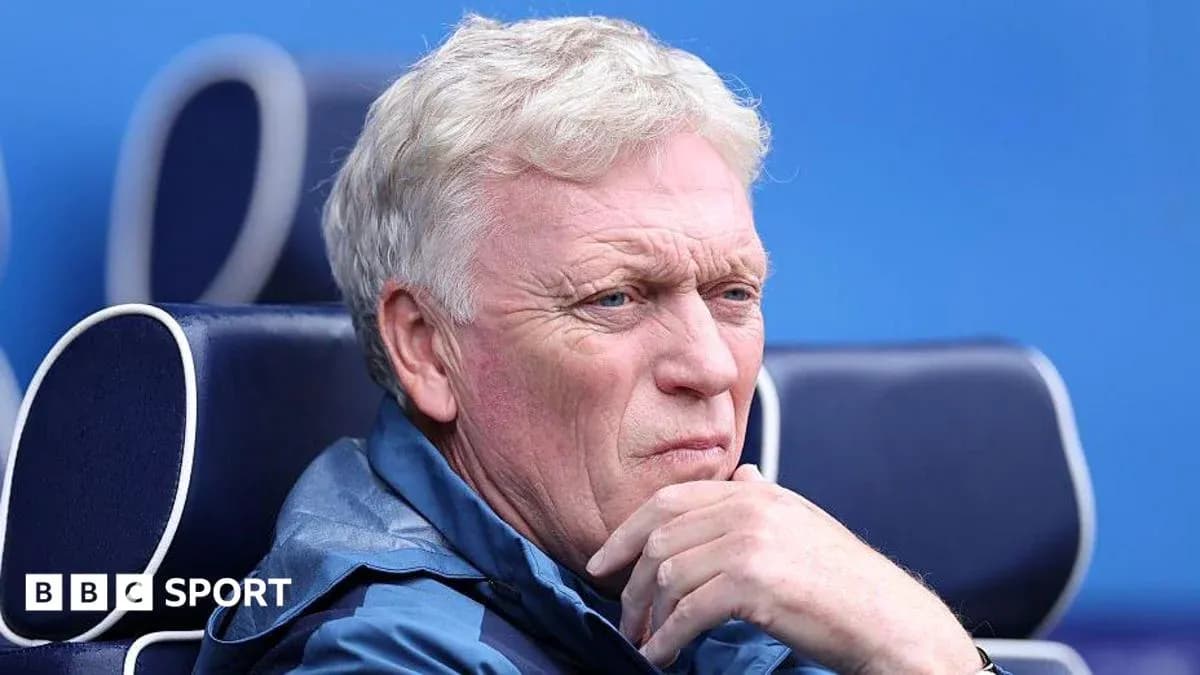
For much of last season, Everton’s gaze was fixed upwards.
Jack Grealish arrived on loan and lit the place up. Kiernan Dewsbury-Hall kept deciding tight games. Thierno Barry and Beto, once clumsy and short of confidence, suddenly found the net with regularity. When Chelsea were swept aside 3-0 on 21 March, Everton sat eighth, three points off the Champions League with seven games to go.
The Hill Dickinson Stadium hummed with possibility. Europe felt close enough to touch.
Then the season fell apart.
Everton did not win another league match. Not one. It became the longest winless run since David Moyes walked back through the doors in 2025. The turning point came quietly enough: a 2-2 draw at Brentford on 11 April. From there, form collapsed. Over the rest of the campaign, the numbers placed Everton among the bottom three sides in the division.
They were in grim company. Only relegated Burnley and Wolves matched their failure to win during that stretch.
Yet even as the wheels loosened, hope lingered. When Sunderland came to Merseyside for the final home game of 2025-26, European football still flickered on the horizon. In his programme notes, CEO Angus Kinnear described himself as “happily dissatisfied” with the season. Within hours, the phrase felt badly misjudged. Promoted Sunderland won 3-1, then rode that surge all the way to seventh and a first European campaign in 53 years.
Everton’s season ended with a whimper and a familiar league position: 13th.
That is the irony for Moyes. Two full seasons into his second spell, two 13th-place finishes – but received in entirely different moods. When he returned 18 months ago, Everton were a point above the drop. They finished that campaign 23 clear of the bottom three. Stability had been restored, panic averted.
Last summer, the club pushed on. A record net spend of £97m signalled intent from the Friedkin Group. New stadium, new money, new optimism. The league table, however, told a blunt story: 13th again, albeit with one more point than the year before.
To Leon Osman, that still counts as progress after years of financial breaches, points deductions and relegation battles.
“When David Moyes first came in, we flew out the blocks and had a great start,” the former Everton midfielder said. “That continued for well over a year before the first sort of low period, which was the end of last season. I still feel that we made progress last season, which is what we wanted, along with stability.”
Moyes, now 63, has been open about the financial reality. Over the past five years, Everton rank only 15th for net spend among the current Premier League clubs. Others have done more with less. Bournemouth, who actually made a profit of £81m last summer, finished sixth. Brighton took £41m more in than they spent and still claimed eighth.
The Hill Dickinson Stadium was meant to reset Everton’s trajectory. Instead, it exposed a different problem. Their home return of 1.2 points per game was the worst of any side in Premier League history starting life in a new ground. Away from home, they looked like a top-seven team. At home, the new arena never quite felt like a fortress.
Osman sees clubs such as Bournemouth and Brighton as simply further down the line in their development, while Everton still adjust to a new stadium and the scars of recent turmoil. He also circles one moment as decisive: Grealish’s injury in January.
With Grealish, Everton won 45% of their league games and averaged 1.6 points per match. Without him, that win rate dropped to 22%, the points return to one per game. The creative spark vanished. So did the sense of control.
“David Moyes is an intense manager and by the end of the season, a small squad couldn't quite last,” Osman said. The legs went, and with them the early-season verve. “Changes take time. No one is thinking about relegation which shows you what Moyes has done. He's got 12 months remaining and I'd expect him to see that out.”
Recruitment remains the fault line. Under Farhad Moshiri, eight players signed for at least £20m walked away for nothing. Years of scattergun spending forced a spell of austerity. Then came the Friedkin Group, nine signings last summer and a clear tilt toward youth.
The hit rate has been mixed. Grealish and Dewsbury-Hall worked. Others are still in the “maybe” pile. Tyler Dibling, a £35m winger from Southampton, started only six league matches. Left-back Adam Aznou, recruited from Bayern Munich, has yet to make his Premier League debut. Barry, 23, dominated in the air – no player won more aerial duels in their first Premier League season – but his finishing veered from ruthless to erratic. Merlin Rohl struggled for minutes until May, then impressed across four late starts.
The plan is visible. The execution, less so.
Everton’s summer is already being shaped by familiar dilemmas. BBC Radio Merseyside’s Giulia Bould reports that Grealish is expected to re-sign on loan later in the window as he recovers from a stress fracture in his foot, his wages staying around £200,000 a week. Iliman Ndiaye has been linked with a move to Saudi Arabia.
“I'd welcome Grealish back but only at a price that suits Everton,” Osman said. “Ndiaye, I'd hate to lose him. There may come a point that the price is right and Everton can reinvest in two or three players but I think they should do everything they can to keep him.”
At the same time, experience is draining away. Seamus Coleman and Idrissa Gueye have gone, taking more than 600 Premier League appearances with them. That explains the interest in a player like Christian Norgaard. It also sharpens the blow of James Garner’s groin surgery, which will rule out a key midfielder at the start of the season.
For Moyes, the equation grows more complicated. On paper, he has a crop of young players. In practice, he has often looked reluctant to trust them.
“They need to show they're capable and deserve to play,” Osman said. That is the manager’s demand and the players’ challenge. “I'm hoping that a year in, understanding the demands that are required, players like Dibling and George will make that progression and then suddenly our squad looks more trustworthy.”
Everton stand at an awkward crossroads: a big stadium, a big wage bill, a mid-table reality. The fear of relegation has gone. The fear of drifting, of becoming just another club in the pack, now takes its place.
Related News
Carlos Alcaraz Calls for Change After Laver Cup Court Conditions
Alexander Zverev Secures Laver Cup Victory for Team Europe with Straight-Set Win Over Learner Tien
Novak Djokovic Shares Fitness Update Before China Open Return After US Open Upset
Shubman Gill's Captaincy Record Across All Formats: Tests, ODIs, T20Is, and IPL
Kuldeep Yadav Named Player of the Match Over Virat Kohli Despite Century in IND vs WI 1st ODI
India Advances to Asian Games 2026 Cricket Semi-Finals After Rain Washout Against Afghanistan