
Everton's Season Review: From Revival to Stagnation
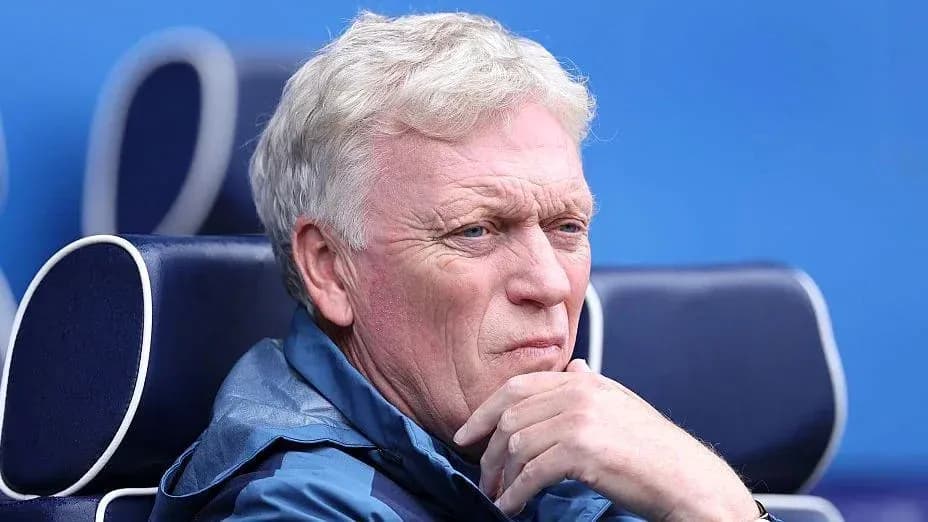
Everton’s season turned on a night that was supposed to confirm their revival.
On 21 March, they dismantled Chelsea 3-0. Hill Dickinson Stadium crackled. Jack Grealish, the loan gamble, looked every inch the superstar signing. Kiernan Dewsbury-Hall kept deciding tight games. Thierno Barry and Beto, once misfiring, had finally found the net with something like regularity.
Eighth in the Premier League. Three points off the Champions League places. Seven games to go.
Supporters started to talk about Europe again, not survival. Then the whole thing collapsed.
From that Chelsea win onwards, Everton did not win another league match. It was the longest run without a victory since David Moyes walked back through the door in 2025. A 2-2 draw at Brentford on 11 April, a game they should have closed out, became the starting point for a run-in that ranked them in the division’s bottom three over the final stretch.
Only Burnley and Wolves, both winless in that spell, matched their slide. One of those clubs went down. Everton, somehow, still finished 13th.
Two 13ths, two very different clubs
On paper, it looks static. Thirteenth in 2024-25. Thirteenth in 2025-26. One extra point, £97m spent, and the same postcode in the table.
In reality, the mood around those identical finishes could not be further apart.
When Moyes returned 18 months ago, Everton were one point above the relegation zone and emotionally battered by financial breaches, points deductions and endless firefighting. He dragged them 23 points clear of danger. That first year felt like a rescue mission completed ahead of schedule.
Last season was supposed to be the next step. A record net spend in a summer window under the Friedkin Group. A new stadium. A squad that, on paper, looked deeper and more balanced. This time, 13th landed with a thud.
The tension crackled before the final home game of the season against Sunderland. In his programme notes, CEO Angus Kinnear described himself as "happily dissatisfied" with the campaign. It was an awkward phrase for an awkward moment. Ninety minutes later, promoted Sunderland had won 3-1, Everton’s European hopes were gone, and the visitors were on their way to seventh and a first continental adventure in 53 years.
Same position for Everton. Very different neighbours.
Former midfielder Leon Osman, who knows Moyes as well as anyone, sees it another way. For him, two mid-table seasons after years of chaos still represent a kind of progress.
"When David Moyes first came in, we flew out the blocks and had a great start," he said. "That continued for well over a year before the first sort of low period, which was the end of last season.
"I still feel that we made progress last season, which is what we wanted, along with stability."
Stability, though, can quickly start to feel like stagnation when others overtake you.
New home, old problems
Moyes, 63, has been blunt about the financial landscape. Over the past five years, Everton rank only 15th among current Premier League clubs for net spend. The era of Farhad Moshiri’s wild outlays left them with scars and little resale value: eight players signed for at least £20m departed for nothing.
Now, as Everton try to act more sensibly, they are watching leaner models race ahead. Bournemouth made a profit of £81m on transfers last summer and finished sixth. Brighton banked £41m and still took eighth. Both clubs have built clear recruitment structures and sell high without losing their identity on the pitch.
Everton’s reset is more jagged. The move to Hill Dickinson Stadium, a state-of-the-art symbol of a supposed new era, has not yet brought the expected edge. Their points-per-game tally of 1.2 at home last season was the lowest by any team starting life in a new Premier League ground. Away from home, they ranked in the top seven. The fortress is on the road, not on the waterfront.
Osman argues that Bournemouth and Brighton are simply "further along in their development" than a club still getting used to its surroundings and its scars. He also points to the moment the season truly turned: Grealish’s injury in January.
The numbers are stark. With Grealish, Everton won 45% of their league games and averaged 1.6 points per match. Without him, the win rate dropped to 22%, the points return to one per game. One player should not define a club of Everton’s size, but in the second half of the season, he did.
"David Moyes is an intense manager and by the end of the season, a small squad couldn't quite last," Osman said. The data backs him up. Moyes used just 22 players in the league, the fewest of any manager, and made 128 substitutions, at least six fewer than anyone else.
Intensity and trust in a core group had powered the initial surge. By May, it looked like a burden.
Recruitment that hasn’t quite joined up
The Friedkin Group’s first full summer brought nine new faces and a clear tilt towards youth. The execution has been uneven.
Grealish and Dewsbury-Hall hit immediately. Behind them, the picture is muddier. Tyler Dibling, a £35m signing from Southampton, started only six league games. Highly rated left-back Adam Aznou, brought in from Bayern Munich, is still waiting for his Premier League debut.
Barry, at 23, led the division in aerial duels won in his first top-flight campaign but remained erratic in front of goal. Merlin Rohl, 24, barely featured before finally impressing with a late run of four starts in May.
The youth focus has not yet translated into minutes. Players aged 21 or under accounted for just 1,088 league minutes last season, leaving Everton 17th in the Premier League by that measure. The average age of signings under Moyes’ second spell is under 24, including three players aged 20 or younger, but the pathway to the pitch still looks blocked.
That tension will only grow now. Seamus Coleman and Idrissa Gueye have gone, taking more than 600 Premier League appearances out of the dressing room. James Garner, a key presence in midfield, will miss the start of the season after groin surgery. The response has been to keep buying around the same profile.
Central midfielder Hayden Hackney, 24, has arrived from Middlesbrough for £16.5m. Tyrique George, 20, returns permanently from Chelsea for £18m after a loan spell. Celtic’s Alistair Johnston is the latest name linked to the long-standing problem at right-back. Christian Norgaard, 32, from Arsenal, is reportedly close, a rare nod to experience and a clear attempt to plug the leadership gap.
As it stands, Moyes finds himself in a paradox: a manager reluctant to lean heavily on youngsters, yet increasingly dependent on them to fill holes.
"They need to show they're capable and deserve to play," Osman said. "I'm hoping that a year in, understanding the demands that are required, players like Dibling and George will make that progression and then suddenly our squad looks more trustworthy."
Grealish on the horizon, Ndiaye in doubt
The next few weeks in the transfer window will shape how daring Everton can be.
BBC Radio Merseyside’s Giulia Bould reports that Grealish is set to re-sign on loan towards the end of the window as he continues his recovery from a stress fracture in his foot. His wages are expected to stay at around £200,000 per week, a huge commitment for a club still trying to tidy its books.
Osman is clear: "I'd welcome Grealish back but only at a price that suits Everton." The emotional pull is obvious; the financial risk is, too.
At the same time, Iliman Ndiaye has been linked with a move to Saudi Arabia. For a squad already short on elite quality, losing him without precise reinvestment would be a major blow.
"Ndiaye, I'd hate to lose him," Osman said. "There may come a point that the price is right and Everton can reinvest in two or three players but I think they should do everything they can to keep him."
Those two calls – how hard to push for Grealish, how firmly to resist for Ndiaye – will say a lot about where Everton see themselves on the risk-reward spectrum.
Moyes, the clock and the next step
Moyes has 12 months left on his contract. Osman expects him to see it out. The manager has restored order, removed the constant fear of relegation and, for long stretches, made Everton look upwardly mobile again.
"No one is thinking about relegation which shows you what Moyes has done," Osman said. It is a fair point. That alone is no small achievement given where the club stood when he walked back in.
Yet the Premier League does not stand still. Bournemouth and Brighton have shown what can be done with clarity and conviction. Sunderland have just leapt from promotion to seventh. Everton, with their new stadium and their history, do not want to become the team everyone else overtakes while they talk about stability.
The squad is thin. The manager leans heavily on those he trusts. The club keeps buying youth but rarely hands it the keys. Grealish may return. Ndiaye may leave. Norgaard might arrive to steady a midfield stripped of experience.
The numbers say Everton are treading water. The question now is simple: in Moyes’ final contracted year, do they finally start to swim, or risk being dragged back into the tide they thought they had escaped?
Related News
Carlos Alcaraz Calls for Change After Laver Cup Court Conditions
Alexander Zverev Secures Laver Cup Victory for Team Europe with Straight-Set Win Over Learner Tien
Novak Djokovic Shares Fitness Update Before China Open Return After US Open Upset
Shubman Gill's Captaincy Record Across All Formats: Tests, ODIs, T20Is, and IPL
Kuldeep Yadav Named Player of the Match Over Virat Kohli Despite Century in IND vs WI 1st ODI
India Advances to Asian Games 2026 Cricket Semi-Finals After Rain Washout Against Afghanistan