
Diego Forlan's Tactical Advice for Cristiano Ronaldo
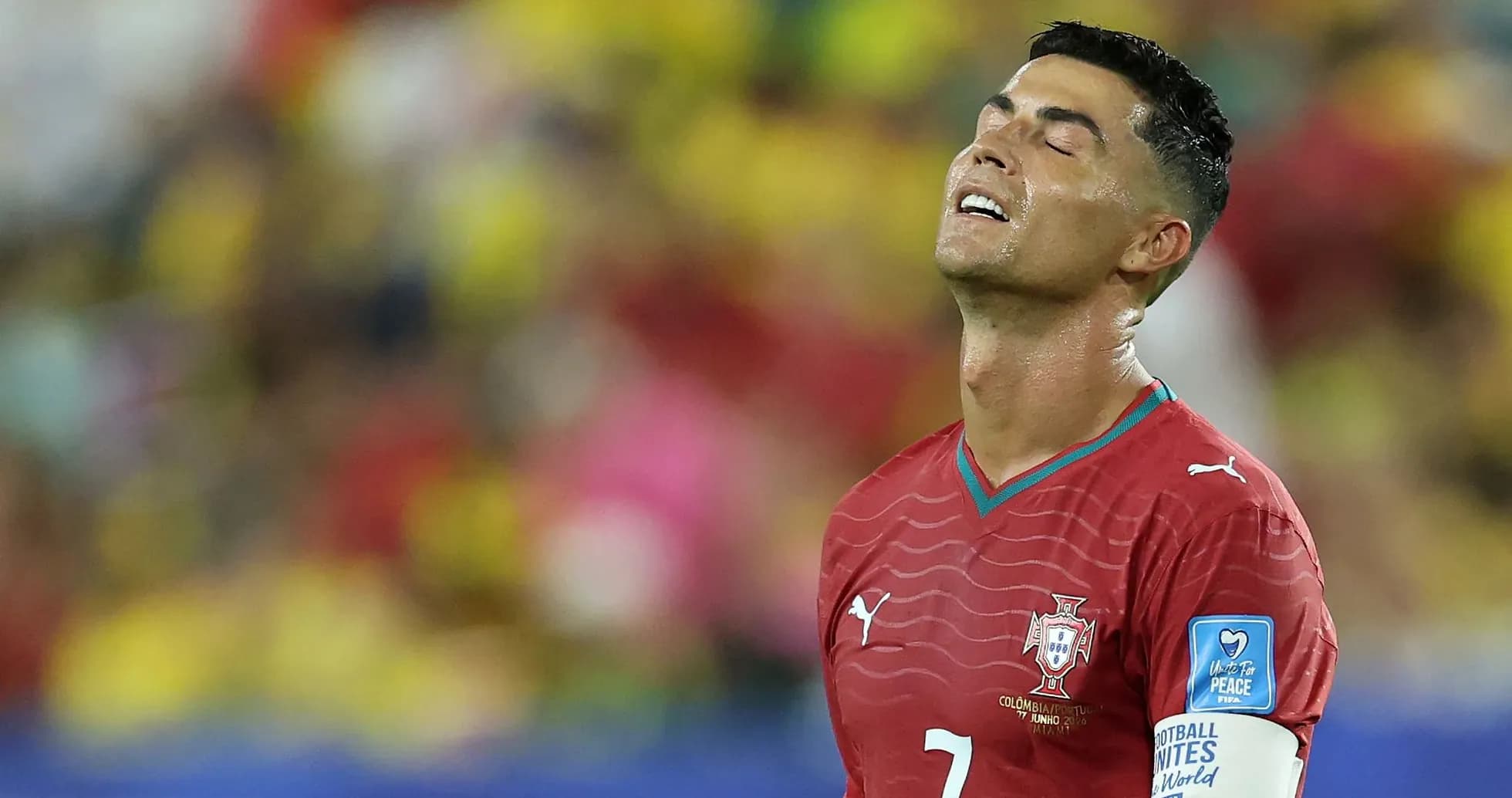
Diego Forlan knows what it means to live inside the penalty area, to feel defenders breathing down your neck and still find a yard to finish. So when he looks at Cristiano Ronaldo’s role for Portugal and sounds an alarm, people listen.
On ESPN’s La Casa del Kun, the former Manchester United forward and 2010 World Cup Golden Ball winner stripped the debate down to something brutally simple: Ronaldo’s static positioning is helping centre-backs more than it’s helping Portugal.
“I’m speaking as a striker, the problem is that Cristiano is in the center, he is who he is, he is there as a No.9, and he stays there to take advantage of the goal because he no longer goes out to look for the ball, but he ends up conditioning Portugal,” Forlan said.
That word – conditioning – cuts to the heart of it. Ronaldo still lives for the box, still lurks for that half-chance, that loose ball, that cut-back. But he now does it almost exclusively between the posts. He plants himself, waits for service, and trusts his instincts. Forlan’s argument is that this version of Ronaldo, the pure reference point, is shrinking the pitch for his own teammates.
“It’s the typical situation where we used to say, ‘I’m staying here because I’m close to the goal to score,’ but you don’t understand that you end up hurting your team because both center backs stay there, you don’t move,” he explained. “The center backs stay put, one becomes a reference point and the other is left out. You have no one who can get to you because you start closing down that space.”
In other words, defenders can hold their line, mark zones, and rest. There’s no chaos, no dragging markers into places they don’t want to go. The very presence that once terrified back fours is now giving them something predictable to lean on.
And that, Forlan insists, is a waste of the talent around him.
Portugal’s squad is loaded with players who thrive in broken lines and shifting angles. Bruno Fernandes wants pockets between midfield and defence. Bernardo Silva loves to drift inside, to receive in tight spaces and dictate. Rafael Leao is at his most dangerous when the pitch opens up and he can attack gaps at speed.
Right now, too many of those gaps are closing before they even appear.
With that context, Forlan’s advice to his former Old Trafford teammate is pointed but practical, less a criticism than a tactical plea.
“If he moved a little to the wings, the others could get in and he could be involved,” he said. “That’s where Portugal falters because they don’t explode because everything ends up going to one side, which is actually a funnel. I wouldn’t say it’s a problem, it’s about making him understand. Telling him: ‘Move, get out of there so you can do something’.”
The image is vivid: Portugal’s attack narrowing into a funnel, everything channeled into one predictable zone where defenders can crowd Ronaldo and wait. The solution, in Forlan’s eyes, is not to remove Ronaldo from the centre altogether, but to get him moving in and out of it. Start wide, drag a centre-back with you, create a lane for a runner, then arrive in the box instead of living there.
For Roberto Martinez, that’s not a theoretical discussion anymore. Portugal are into the knockout rounds, their path now unforgiving, their margin for error thin. The captain has already shown he can still find the net; the instinct is intact, the hunger obvious. But knockout football is cruel to teams that attack in straight lines.
The “bottleneck” Forlan describes becomes lethal against elite opposition. Top defences won’t chase Ronaldo into dead zones or bite on decoy runs that never come. They will sit, screen the passing lanes into him, and dare Portugal to find another way.
And so the pressure builds, not just on Ronaldo but on Martinez. How do you manage a five-time Ballon d’Or winner who remains a threat in the box, yet risks making your attack easier to read? How do you ask the greatest player in your country’s history to tweak his game at 39, on a stage where every touch is magnified?
Portugal’s immediate test is Croatia in the round of 32, a side hardened by tournament football and comfortable in long, tense matches where one moment decides everything. Against that kind of opponent, predictability is a gift you simply cannot afford to hand over.
Forlan’s message is blunt: Ronaldo doesn’t need to score less; he needs to move more. To stop being just a static reference point and start tearing open the spaces his teammates are built to exploit.
If he does, Portugal’s attack could finally stretch to its full width. If he doesn’t, the funnel might close on them instead.
Related News

Anthony Joshua Names Murat Gassiev as Next Opponent if He Defeats Tyson Fury

UFC 332: Start Time and Fight Highlights for Natalia Silva vs. Wang Cong
Court McGee Opens Up About Choosing UFC 332 as His Final MMA Fight
WBC Orders Lightweight Title Unification: William Zepeda vs Jadier Herrera

BCCI Pension List: Monthly Payments to Retired Indian Cricketers in 2025

Why Fury vs Joshua Is Set for Cardiff, and Dua Lipa’s Unexpected Role