
England's World Cup Journey: Finding the Right Back Four
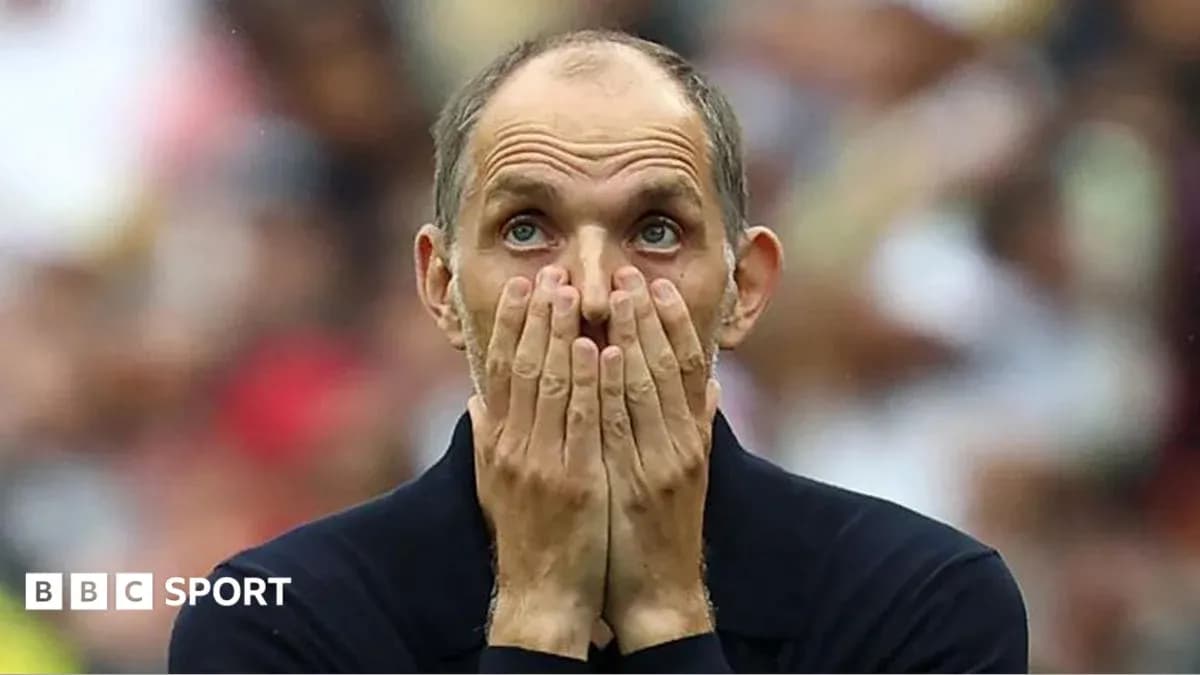
England’s World Cup campaign has plenty going for it. Momentum. Match-winners. A group topped with something to spare.
What it does not have is a settled team.
Three games in, Thomas Tuchel still looks like a coach rummaging through a toolbox, pulling out different pieces, never quite convinced he’s found the right fit. England have reached the last 32, but they have done it with so much chopping and changing that the identity of their best XI remains a mystery.
A Team Still Taking Shape
Tournament football rarely runs in straight lines. Injuries, suspensions, fatigue – they all force managers to improvise. Tuchel’s problem is that too many of his changes feel like guesswork rather than refinement.
Across 270 minutes, England have already used nine different full-back–winger combinations on the two flanks, involving eight players. That is not rotation. That is a search party.
The disruption has roots. Reece James and Jarell Quansah have both been sidelined at right-back, while Bukayo Saka has been short of full fitness. Those issues would unsettle any manager. But the consequence is clear: England have not carried a consistent threat out wide, and the revolving door in the back four has chipped away at their defensive stability.
Whenever opponents have gone at them, England have looked uneasy. That is not a feeling you want to carry into the knockouts.
The Spine You Can Trust
And yet, amid the uncertainty, a core has emerged that feels utterly dependable.
Jordan Pickford. Declan Rice. Jude Bellingham. Harry Kane. Add Elliot Anderson, who was outstanding against Panama, and you have the steel and stardust that has dragged England through their group.
Bellingham was the standout performer against Panama, and deservedly took the man-of-the-match honours. Kane scored again, as he so often does when the air gets heavier and the stakes rise. Anderson’s display offered a glimpse of a player ready to shoulder responsibility on this stage.
This is England’s spine, the group you can trust when the game starts to fray and the plan doesn’t quite hold. Even when the structure misfires, those players have the quality to rip up the script and decide it themselves.
Of course, that is not how Tuchel would want his side to live. No manager wants to rely on a moment of genius to rescue a flat performance. But that is exactly what happened when Bellingham forced in Saka’s corner against Panama.
The move did not come at the end of a wave of pressure. England had not been swarming all over their opponents. The set-piece itself was nothing special. The difference was Bellingham. He turned an ordinary delivery into a decisive one with strength, balance and timing. Once he scored, there was only ever going to be one winner.
Lessons for DR Congo
Next up is DR Congo in Atlanta on Wednesday, and the pattern is unlikely to be unfamiliar. Expect banks of defenders, limited ambition in possession, and quick counters when England overcommit. Ghana and Panama have already shown that blueprint.
The challenge is not new. The question is whether England have learned from it.
Some of the answers may be as simple as how they deliver the ball into the box. Against Panama, Marcus Rashford and Saka often drifted inside onto their stronger feet, swinging in inswinging crosses that defenders could read and clear.
England looked far more dangerous when the wide players went on the outside and whipped crosses in from the byline. Bellingham did exactly that for Kane’s goal – a classic centre-forward’s situation where the striker knows the cross is coming and can attack the space with conviction.
That is the kind of repeatable pattern Tuchel needs more of. Not a flash of brilliance, but a habit.
Fragility at the Back
For all the talk about attacking rhythm, the more pressing concern lies at the other end. England have been opened up in every game they have played.
Croatia exposed them badly in the first half of the opener, scoring twice and finding gaps with worrying ease. Ghana and Panama both created chances and found joy against a back line that never quite looked sure of itself, even if England ultimately escaped unpunished.
That cannot continue. The deeper you go in a World Cup, the more ruthless the opposition becomes. The mistakes that went unpunished in the group stage will be seized upon by better forwards. Recovery missions become harder, margins slimmer.
In past tournaments, England’s defence was not always stellar, but it was usually settled. Partnerships had time to breathe. This time, the back four feels like a weekly experiment.
It is likely to change again against DR Congo. Djed Spence could return at right-back, or Ezri Konsa may be shifted across from centre-back, with John Stones potentially partnering Marc Guehi – if Stones is fit enough to start. These are not minor tweaks; they are structural decisions.
Some of Tuchel’s selections have been forced on him by injuries. Others are gambles on players with known fitness issues. That is the risk he has taken.
Time to Choose a Back Four
Tuchel does not need every problem solved by Wednesday night. No coach ever does at this stage of a World Cup. But he does need to start closing the book on his defence.
Whoever he trusts across that back line against DR Congo has to give England a platform, not just for one match, but for the next couple of rounds. If, as expected, Mexico or Ecuador await, the standard will rise again.
England have the spine. They have the match-winners. They have the momentum of a group topped and a path opening up.
Now they need something less glamorous and far more important: a back four that stops changing, and starts convincing.
Related News

Anthony Joshua Names Murat Gassiev as Next Opponent if He Defeats Tyson Fury

UFC 332: Start Time and Fight Highlights for Natalia Silva vs. Wang Cong

Court McGee Opens Up About Choosing UFC 332 as His Final MMA Fight
WBC Orders Lightweight Title Unification: William Zepeda vs Jadier Herrera

BCCI Pension List: Monthly Payments to Retired Indian Cricketers in 2025

Why Fury vs Joshua Is Set for Cardiff, and Dua Lipa’s Unexpected Role