
France vs England: A 6–4 Epic in the 3rd Place Final
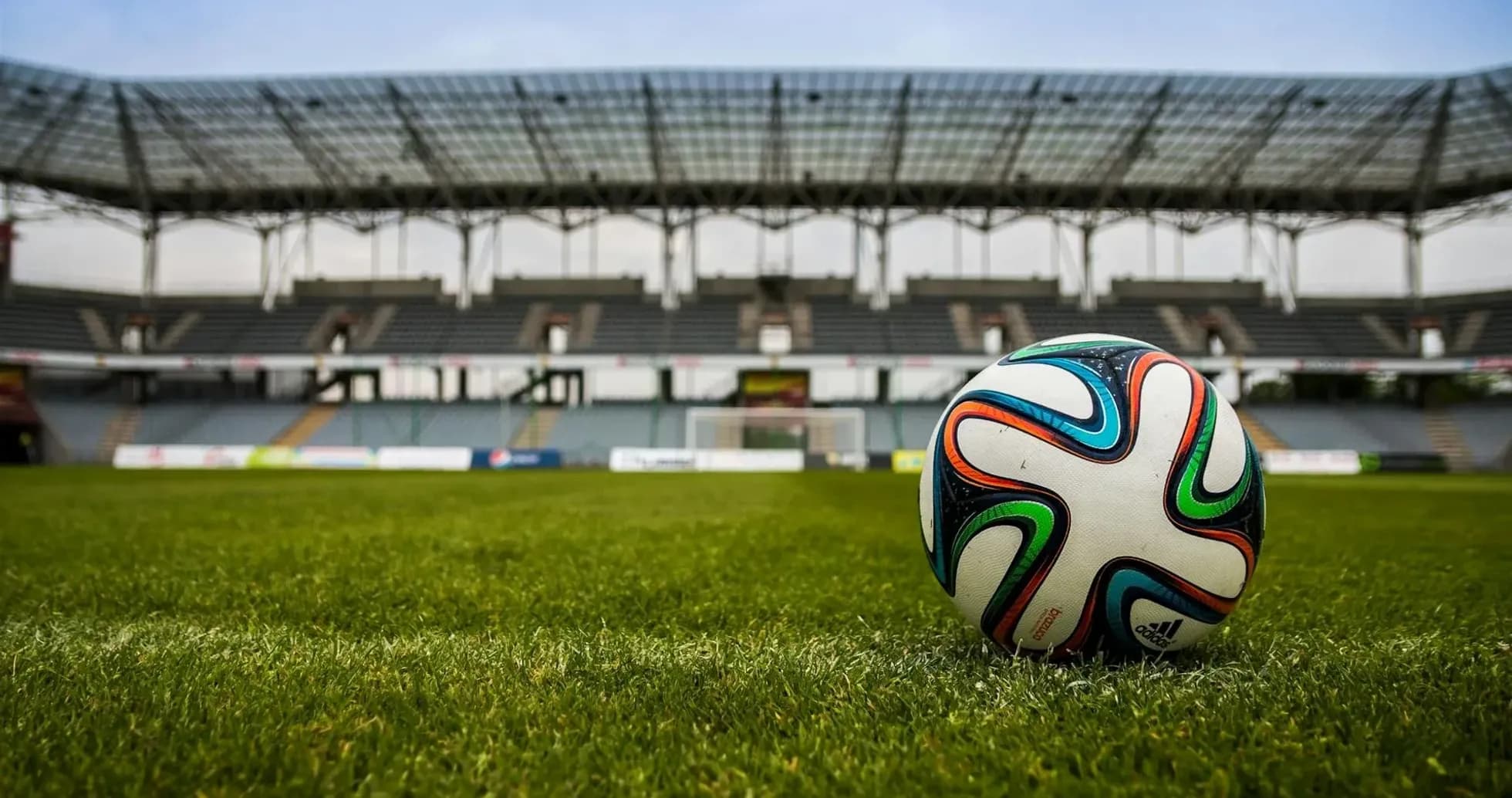
Under the Miami lights at Hard Rock Stadium, the 3rd Place Final brought together two nations who had travelled very different emotional arcs but arrived with the same demand: finish this World Cup with a statement. France and England, both group winners and both bruised by late-stage defeats, produced a 6–4 epic that felt less like a consolation and more like a cathartic release.
I. The Big Picture – Two heavyweights who only know one gear
Heading into this game, the numbers already hinted at chaos. Overall this campaign, France had played 8 matches, winning 6 and losing 2, with no draws. They had scored 20 goals in total and conceded 10, giving them a goal difference of +10. At home they had averaged 2.5 goals for and 1.5 against; on their travels they had matched that 2.5 going forward but tightened to 0.5 conceded. England’s profile was eerily similar in attack but more volatile in defence: 8 matches in total, 6 wins, 1 draw and 1 defeat, with 20 goals for and 12 against overall, a goal difference of +8. At home they had averaged 1.8 goals for and 1.3 against, but away they had been a whirlwind, scoring 3.3 and conceding 1.8 on their travels.
This was, in essence, a meeting between two sides whose offensive ceilings were elite and whose defensive numbers suggested that if the game opened up, it might never close again. The 4–6 full‑time scoreline simply confirmed the seasonal DNA.
Deschamps stayed loyal to France’s tournament backbone: a 4‑2‑3‑1 that had been used in all 8 matches. Thomas Tuchel, in contrast, leaned into England’s more recent tactical evolution, rolling out a 4‑1‑4‑1 that he had only used twice this World Cup but which offered an aggressive, front‑foot press.
II. Tactical Voids – Absences and disciplinary shadows
Both squads arrived close to full strength but not untouched. For France, William Saliba was ruled out with a back bruise. On paper, he is only one name on a long substitutes list; in reality, his absence removed Deschamps’ most natural organiser if the back line needed shoring up mid‑game. Instead, the central pairing of Ibrahima Konaté and Maxence Lacroix had to manage the entire storm without that safety net, supported by the attacking full‑back thrust of Théo Hernandez and the young dynamism of Malo Gusto.
England were without Kobbie Mainoo, sidelined by a wound. Tuchel’s solution was to lean even more heavily on Declan Rice as the single pivot in front of the back four. Rice’s World Cup profile – 571 minutes, 331 passes at 92% accuracy, 11 tackles, 4 blocks and 5 interceptions – underlined that England’s entire rest‑defence and transition structure would flow through him.
The disciplinary backdrop also shaped the mood. France’s yellow cards this tournament had clustered late: 33.33% of their cautions had arrived between 76–90 minutes, a clear sign of a side that often ends games on the edge. England, by contrast, had spread their bookings more evenly but carried a sharper red‑card risk: Jarell Quansah had already been sent off once, and the team’s only red this World Cup had arrived between 46–60 minutes. That made the early second‑half phase a psychological fault line, especially with Quansah starting at right‑back.
III. Key Matchups – Hunter vs Shield, Engine Room battles
The headline duel was always going to be Kylian Mbappé against England’s defensive structure. Mbappé entered this match as the World Cup’s standout finisher: 10 goals and 4 assists in 8 appearances, with 36 shots (23 on target) and an 8.21 average rating. He had already won and scored one penalty this tournament but had also missed one, a reminder that even his brilliance comes with high‑risk, high‑reward edges. Behind him, Michael Olise – 7 assists and 411 passes at 86% accuracy – functioned as the chief architect, threading vertical passes and set‑piece deliveries into the forward line.
Tuchel’s answer was layered. In the back line, Marc Guéhi and Ezri Konsa formed a mobile central pairing, while Quansah and Djed Spence were tasked with defending huge spaces against Mbappé’s and Rayan Cherki’s rotations. In front of them, Rice stood as the shield: 17 key passes and 2 assists this tournament showed he was not just a destroyer but the first passer in transition. His duel with France’s double pivot of Warren Zaïre‑Emery and Adrien Rabiot was the engine‑room hinge on which both game plans turned.
Further up, England’s own “hunter” was less a single figure and more a collective. Ivan Toney led the line, but the real menace came from the second line: Bukayo Saka, Eberechi Eze, Morgan Rogers and Marcus Rashford. Saka, in particular, embodied England’s dual threat. With 3 goals and 3 assists, 10 shots (7 on target) and 51 duels contested (30 won), he arrived as both creator and finisher, a wide forward who could drive at Théo Hernandez and force Konaté and Lacroix to defend the channels.
On the bench, both sides had nuclear options. France could turn to Ousmane Dembélé (6 goals, 2 assists) and Bradley Barcola (3 goals, 1 assist, plus 5 tackles and 1 blocked shot) to raise the tempo and stretch tired legs. England had Harry Kane – 6 goals, 2 penalties scored, 3 shots blocked defensively – and Jude Bellingham with 7 goals and 1 assist, a late‑arriving midfielder who thrives when the game becomes fractured.
IV. Statistical Prognosis – Why this always pointed to a shootout
Strip away the drama and the numbers were already screaming goal‑fest. Overall, both teams had scored 20 goals in 8 matches, averaging 2.5 goals per game each. France’s overall goals against figure of 10 (1.3 per match) and England’s 12 (1.5 per match) suggested that neither defence was built to suffocate elite attacks for 90 minutes.
France’s biggest home defeat of the tournament – 4‑6 – was already their worst defensive output, and it arrived here, against the one side whose away attacking numbers (3.3 goals on their travels) were the most explosive in the competition. England’s best away win, 4‑6, had likewise come in this fixture, perfectly aligning their offensive peak with France’s most fragile defensive performance.
Tactically, Deschamps’ insistence on a 4‑2‑3‑1 and Tuchel’s bold 4‑1‑4‑1 meant both coaches accepted risk as the price of ambition. With France carrying the memory of a missed penalty in this campaign and England boasting a perfect record from three spot‑kicks, the margins tilted slightly towards Tuchel’s side in dead‑ball pressure moments.
Following this result, the numbers tell a simple story: two attacking machines met, neither blinked, and England’s marginally sharper edge in transition and penalty reliability carried them through a wild 6–4. In a World Cup defined by tactical caution at times, this 3rd Place Final was a reminder that when two squads stacked with finishers, creators and risk‑takers collide, the statistics do not just describe the game – they predict the spectacle.
Related News
Estevao Opens Up on World Cup Heartbreak and His Unexpected Return to Brazil Under Ancelotti
Thomas Tuchel Shares Unusual Regret After England's 10-Man World Cup Victory Over Mexico
South Korea Names Robert Moreno as Interim Coach After World Cup Exit

Jude Bellingham Returns to Form at Real Madrid Following World Cup Success

Chloe Kelly, Beth Mead and 13 Lionesses Target Big WSL Seasons Ahead of England's 2027 World Cup Campaign
Barcelona Cancels World Cup Tribute for Spain Stars Amid Political Tensions