
France Dominates Norway in World Cup Clash: Dembélé's Hat-Trick
The posters and promos had sold it as a World Cup Golden Boot duel: Kylian Mbappé on one side, Erling Haaland on the other. Superstar versus superstar.
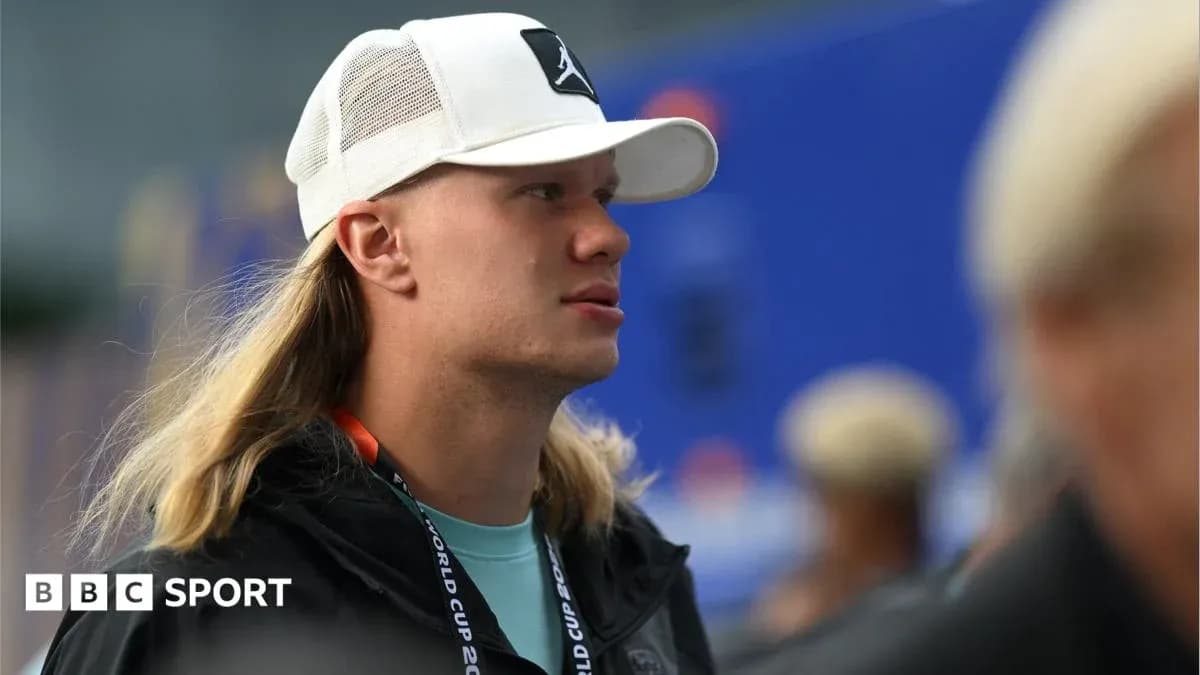
Instead, Haaland sat in a tracksuit and watched Ousmane Dembélé steal the night.
At Boston Stadium, the Ballon d'Or winner ripped through a second-string Norway with a ruthless 25-minute hat-trick in the first half, setting France on their way to a commanding 4-1 victory and a perfect record in Group I. What was supposed to be a heavyweight shootout became a one-man exhibition.
Solbakken rolls the dice
France came loaded. Didier Deschamps sent out an attacking line-up that looked every inch a rehearsal for the business end of the tournament in New Jersey on 19 July. Norway, already assured of a place in the knockouts, chose this moment to rotate almost everything that moved.
Stale Solbakken made 10 changes to his starting XI and, crucially, left Haaland out from the start for the first time since 2024.
“A no-brainer,” he called it, pointing to advice from the physio, health and medical staff, and feedback from players who had emptied the tank in the win over Senegal. The only hesitation, he admitted, was the paying public: Norway’s travelling support desperate to see Haaland and Martin Ødegaard under the lights.
The data from the Senegal game had spooked him. Five or six players, he said, were heavily affected after 80 minutes – the entire back line and a couple of midfielders. With that in mind, he ripped up the team sheet.
The consequence was immediate. Within a minute Mbappé had rattled the underside of the bar, and the tone of the evening was set. Norway’s patched-up side never looked ready for the storm that followed.
Dembélé takes centre stage
If Haaland needed a rest for the latter stages, as Ian Wright suggested on ITV Sport before kick-off, Dembélé was in no mood to sympathise. With space to attack and a weakened defensive unit in front of him, he filled his boots.
France swarmed, pressed, and played as if they wanted to end the contest before the hour mark. Dembélé obliged with a devastating first-half burst, his hat-trick turning the contest into a procession long before the interval. The World Cup Golden Boot narrative shifted in real time, away from the absent Haaland and towards a French forward line that looked ominously sharp.
On the bench, Haaland – four goals in his first two group matches – could only watch as his deputy Jørgen Strand Larsen passed up the one big chance that might have changed the mood. Early in the second half, with Norway trailing and briefly threatening a fightback, Strand Larsen stepped up from the spot with the score at 3-1. Score, and it’s 3-2, game back on.
He missed. The opportunity, and any realistic prospect of a Norwegian comeback, vanished with it.
The long road for Norway
Haaland had already been blunt about the France fixture after his double in the 3-2 win over Senegal sealed qualification.
“I couldn't care too much about that game now,” he said then. “They're probably going to win against us. They're probably going to win the whole tournament.”
Norway’s staff clearly shared the sense of inevitability. The calculation was simple: accept likely defeat to a full-strength France, protect legs and lungs, and hit the knockouts with a fresh squad.
The price is geographical as much as sporting. France, with three wins from three, top Group I and stay close to base. Their reward is a last-32 tie at the nearby New York New Jersey Stadium on 30 June, against the runners-up in Group F or G.
Norway’s path is harder and longer. Based in Greensboro, North Carolina, they now face an 1,100-mile trek to Arlington, Texas, to meet Ivory Coast on the same day. Had they topped the group, the journey would have been roughly half that distance.
Will the extra rest offset the extra miles? If they beat Ivory Coast, Norway must then head back north to New Jersey for a last-16 clash on 5 July with the winners of Brazil–Japan. The tournament is starting to look like a logistical puzzle as much as a football one.
“It is quite complicated,” Pat Nevin told BBC Radio 5 Live, highlighting the vast distances, the upheaval of uprooting a squad, and the fine line between rotation and disruption. Yet he also pointed to the brutality of Norway’s physical style: a team that leans on size, duels and intensity can’t afford to limp into the knockouts.
“If they go and try that physical style and lose two players, was it worth it?” Nevin asked. The implication was clear. From Norway’s point of view, it wasn’t.
Fans pay, France pounce
Not everyone in Boston agreed. Thousands of Norwegian fans had travelled at great expense to follow their team across the United States. When the team news dropped and Haaland’s name appeared among the substitutes, there were puzzled looks and a few furrowed brows.
Some had come for the spectacle of Haaland versus Mbappé, not a tactical rest day. Yet the mood in the stands never fully soured. The Viking-style rowing celebration rolled around the stadium before kick-off and resurfaced during the match, a reminder that for many, this World Cup is as much about the journey as the final scoreline.
On the pitch, though, the absence of Norway’s “normal side” told. Wright admitted he was “surprised” at the sheer scale of the rotation, especially after Solbakken had named an unchanged XI for the wins over Iraq and Senegal.
Nevin underlined what France had been spared: a Norway team with six players over 6ft 4in or 6ft 5in, Haaland included, all capable and all built to crowd the box and crush space. That version of Norway would have asked a very different question of France. Instead, Dembélé and company found room to run and time to pick their moments.
History’s warning – and encouragement
Norway’s gamble is not without precedent. They are only the fourth team to make 10 or more changes to their starting XI in a single World Cup edition.
Spain did it in 2006, rotating all 11 against Saudi Arabia and still winning their final group game. It didn’t spare them in the knockouts; they went out 3-1 to France in the last 16.
Belgium offer the counterpoint. In 2018, they made 10 changes, edged Japan 3-2 in a wild last-16 tie, then beat Brazil 2-1 in the quarter-finals before eventually falling to France. Heavy rotation didn’t derail them; it helped fuel a deep run.
Norway have nailed their colours to that mast. Rest over rhythm. Fitness over spectacle. They have sacrificed a marquee group-stage showdown and a shorter travel schedule in the hope of arriving in Texas with a fully charged squad and their star striker ready to explode again.
France, meanwhile, stride on. Three games, three wins, and a front line that looks primed for July in New Jersey.
Norway’s bet will be judged not on a bruising night in Boston, but on what happens when Haaland finally steps back onto the pitch with everything on the line in Arlington.
Related News
Anthony Joshua Names Murat Gassiev as Next Opponent if He Defeats Tyson Fury

UFC 332: Start Time and Fight Highlights for Natalia Silva vs. Wang Cong
Court McGee Opens Up About Choosing UFC 332 as His Final MMA Fight
WBC Orders Lightweight Title Unification: William Zepeda vs Jadier Herrera

BCCI Pension List: Monthly Payments to Retired Indian Cricketers in 2025

Why Fury vs Joshua Is Set for Cardiff, and Dua Lipa’s Unexpected Role