
France vs Paraguay: A Clash of Footballing Identities
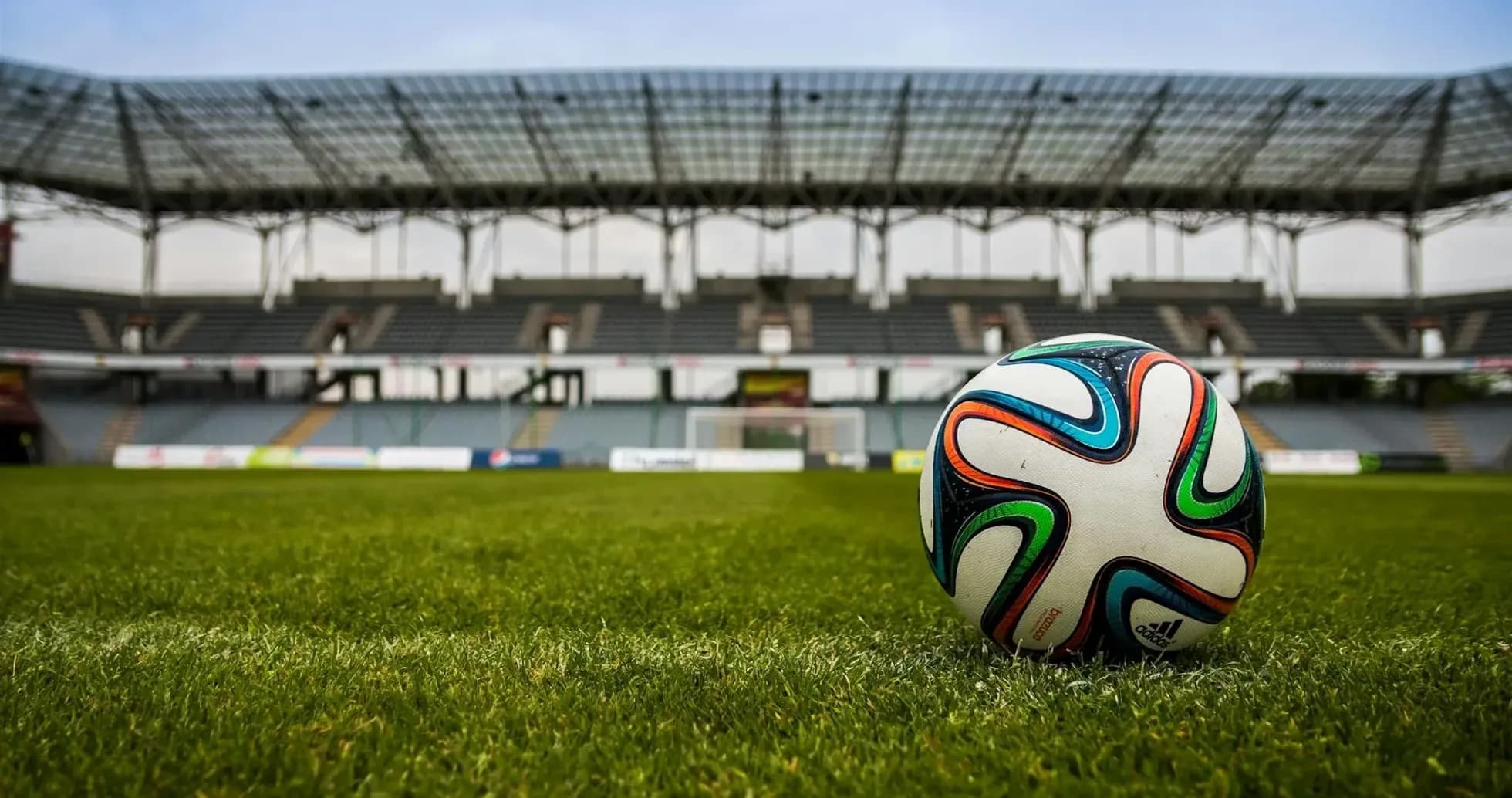
The Lincoln Financial Field lights had barely settled over Philadelphia when the contrast in footballing identities became clear. On one side, Paraguay arrived as a Round of 16 survivor forged in suffering: third in Group D with 4 points, a negative goal difference of -2 from 2 goals scored and 4 conceded overall in the group. On the other, France stepped out as the tournament’s most ruthless machine, first in Group I with 9 points, 10 goals scored and just 2 conceded overall, an imposing overall goal difference of +8.
This was not a clash of equals on paper; it was a clash of conviction. Paraguay’s campaign had been defined by narrow margins and defensive strain. Overall this tournament they had played 5 matches, winning 2, drawing 1 and losing 2. The numbers underline their fragility: overall they scored 4 goals and conceded 6, an overall goal difference of -2. At home they had failed to score in both fixtures, averaging 0.0 home goals for and 0.5 home goals against, while on their travels they were more adventurous, averaging 1.3 away goals for but also conceding 1.7 away goals against.
France, by contrast, moved like a side entirely at ease with the pressure. Across 5 matches they had won every single one, 5 wins from 5, with 14 goals scored overall and just 2 conceded. At home they averaged 3.0 goals for and 0.3 goals against; away they were scarcely less dominant, with 2.5 away goals for and 0.5 away goals against. Clean sheets in 3 of those 5 games and not a single match without scoring told the story of a team whose floor was as terrifying as its ceiling.
Into that statistical gulf stepped two sharply defined tactical plans.
Paraguay’s Gustavo Alfaro doubled down on resistance, sending his team out in a 5-4-1 that felt more like a shield than a shape. O. Gill in goal was screened by a back five of J. Alonso, O. Alderete, G. Gomez, G. Velazquez and J. Caceres, a line built to compress space and force France wide. In front, a hard-running midfield of M. Galarza, A. Cubas, D. Gomez and M. Almiron supported lone forward J. Enciso, the one genuine release valve.
The choice of personnel was not accidental. Enciso, one of the tournament’s leading creators with 1 goal and 2 assists overall, had carried Paraguay’s attacking spark. His 28 dribble attempts and 13 successful dribbles overall in the competition marked him as the one player capable of breaking France’s lines alone. Around him, the engine room was combative rather than creative. D. Gomez, who had already collected 2 yellow cards overall and committed 5 fouls, and Galarza, also on 2 yellows with 10 fouls committed overall, were tasked with turning midfield into a battlefield. Almiron, meanwhile, brought a different edge: 1 red card overall in the tournament made him Paraguay’s most combustible figure, a reminder that their aggression can easily tip into jeopardy.
Opposite them, Didier Deschamps kept faith with the 4-2-3-1 that had become France’s structural signature. M. Maignan started in goal behind a back four of L. Digne, W. Saliba, D. Upamecano and J. Kounde. Ahead, M. Kone and A. Rabiot formed the double pivot, with an electric trio of B. Barcola, M. Olise and O. Dembele supporting K. Mbappe at centre-forward.
If Paraguay’s shape was about survival, France’s was about control and incision. Mbappe arrived as the competition’s deadliest hunter: 7 goals and 2 assists overall from 5 appearances, with 24 shots and 17 on target. His efficiency from the spot — 1 penalty scored from 1 taken, with none missed — added another weapon to a side that already averaged 2.8 goals per game overall. Around him, Dembele had 4 goals and 2 assists overall, and Olise led the tournament in creativity with 5 assists overall, underpinned by 270 completed passes at 88% accuracy.
The “Hunter vs Shield” battle was stark. France’s attack, with 14 goals overall, met a Paraguay defence that had conceded 6 overall and often bent under sustained pressure, particularly on their travels. Paraguay’s reliance on deep blocks and last-ditch interventions was embodied by players like D. Gomez, who had already blocked 2 shots overall, and Galarza with 17 tackles overall. But those numbers also pointed to how frequently they were forced into emergency defending.
In the “Engine Room”, the duel was as psychological as it was tactical. Paraguay’s midfielders, especially D. Gomez and Galarza, had to disrupt the rhythm of Olise and Rabiot without crossing the disciplinary line. The data made that balancing act look precarious: Paraguay’s yellow cards peaked late, with 33.33% of their cautions arriving between 76-90 minutes overall, and they had already seen a red card between 46-60 minutes overall in the tournament. France, meanwhile, spread their yellows more evenly, with 25.00% of them in each of the 16-30, 61-75, 76-90 and 91-105 minute ranges overall, suggesting a side that knows how to foul tactically without imploding.
There was, too, the question of emotional control. Paraguay’s card profile — early yellows (22.22% in the opening 0-15 minutes overall) and a late-game surge in bookings — hinted at a team that starts on the edge and finishes exhausted. Against a France side that keeps scoring and never fails to find the net, that is a dangerous cocktail.
From a statistical prognosis, the match always leaned France’s way. Their defensive record — just 2 goals conceded overall in 5 games, with an overall average of 0.4 goals against — stood in cold contrast to Paraguay’s overall average of 1.2 goals conceded. France’s clean-sheet habit, combined with their relentless attacking output, suggested that even if Paraguay’s 5-4-1 could frustrate for long stretches, the dam was likely to break.
In the end, the 1-0 full-time scoreline to France felt less like an upset avoided and more like a restrained execution of superiority. Following this result, the numbers remain consistent with the story: France’s perfect form continues, their attacking stars justified their billing, and Paraguay’s brave, bruised block of five could not quite withstand the weight of a side built for the latter stages of a World Cup.
Related News
Brazil's First Post-World Cup Friendly: What Should the Lineup Be?
Estevao Opens Up on World Cup Heartbreak and His Unexpected Return to Brazil Under Ancelotti
Thomas Tuchel Shares Unusual Regret After England's 10-Man World Cup Victory Over Mexico
South Korea Names Robert Moreno as Interim Coach After World Cup Exit
Jude Bellingham Returns to Form at Real Madrid Following World Cup Success
Chloe Kelly, Beth Mead and 13 Lionesses Target Big WSL Seasons Ahead of England's 2027 World Cup Campaign