
France vs Spain: World Cup Semi-finals Clash
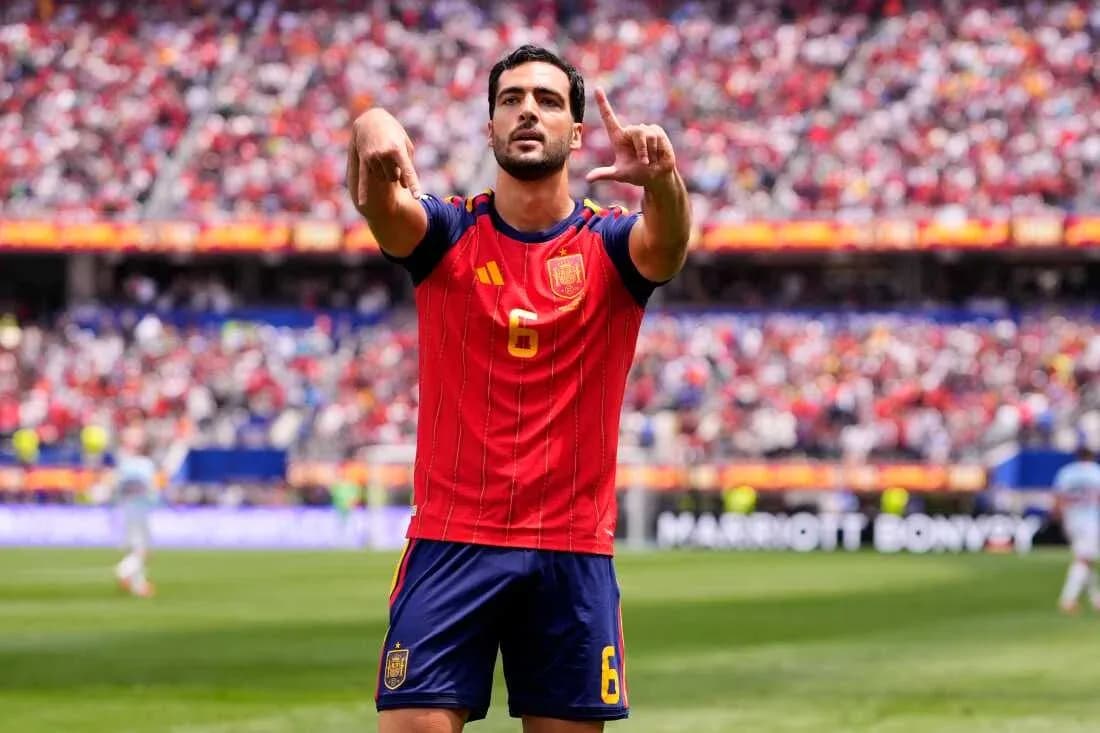
France and Spain meet on 14 July 2026 in a World Cup Semi-finals clash that effectively defines the trajectory of this generation for both nations: victory opens the door to a world title shot, while defeat turns an otherwise flawless tournament run into a bitter near-miss.
Head-to-Head Tactical Summary
Recent high-stakes history between these sides has been intense and tactically rich, with Spain often dictating control but France remaining dangerous in transitions and key moments.
On 5 June 2025 in Stuttgart (UEFA Nations League Semi-finals), Spain hosted France at MHPArena and won 5–4. Spain led 2–0 at half-time and ultimately prevailed in a wide-open game, suggesting France’s aggressive approach left space for Spain’s combination play and finishing to exploit.
On 9 July 2024 in München (Euro Championship Semi-finals), Spain again as the home side beat France 2–1 at Fußball Arena München. Spain led 2–1 at half-time and then managed the second half with control, underlining their capacity to protect a narrow lead against French pressure.
On 10 October 2021 in Milano (UEFA Nations League Final), Spain hosted France at Stadio Giuseppe Meazza and lost 2–1. After a 0–0 first half, France overturned Spain’s territorial control with clinical counter-attacks and superior efficiency in the final third.
On 28 March 2017 at Stade de France (Friendlies 1), France at home lost 2–0 to Spain, with a 0–0 half-time score before Spain’s structure and ball circulation wore France down after the break.
On 23 June 2012 at Donbass Arena (Euro Championship Quarter-finals), Spain as the home side beat France 2–0, leading 1–0 at half-time. Spain’s compact block and ball retention limited French chances and forced France into chasing the game.
Across these meetings, Spain have generally controlled rhythm and territory, while France’s best moments have come when they can spring quickly into space. That tactical tension will again define the Semi-finals tie.
Global Season Picture
- League Phase Performance: In the group stage, France topped Group I with 9 points from 3 matches, scoring 10 goals and conceding 2, an aggressive profile with a +8 goal difference that reflects dominance at both ends. Spain led Group H with 7 points from 3 games, scoring 5 and conceding none, combining solid attacking output with a perfect defensive record and a +5 goal difference.
- Season Metrics: Across all competitions in this World Cup cycle, France have played 6 matches, winning all 6 with 16 goals scored and only 2 conceded. Their average of 2.7 goals scored per match and 0.3 conceded underlines a high-risk, high-reward attacking structure backed by a compact defensive block. They have kept 4 clean sheets and failed to score in none, showing consistent offensive production. Discipline-wise, their yellow cards are spread across phases of the game, indicating an aggressive but controlled pressing approach without red cards recorded.
- Spain have also played 6 matches in this cycle, winning 5 and drawing 1, with 11 goals scored and just 1 conceded. Their scoring rate of 1.8 per match is slightly lower than France’s but paired with an even tighter defence (0.2 goals conceded on average) and 5 clean sheets. Spain have failed to score only once, reflecting a generally reliable attacking structure built on possession and positional play. Their card profile shows a concentration of yellow cards late in matches, suggesting tactical fouls to protect leads rather than systemic indiscipline.
- Form Trajectory: In the group stage, both sides showed perfect momentum: France’s form string of “WWWWW” and Spain’s identical “WWWWW” indicate they arrived at the knockouts on five consecutive wins. France’s extended tournament form of “WWWWWW” and Spain’s “DWWWWW” show that France have not dropped a single result in this World Cup cycle, while Spain opened with a draw but have since built a five-game winning streak. The trajectories converge on peak form for both heading into this Semi-finals meeting.
Tactical Efficiency
France’s attacking efficiency in this World Cup cycle is built on volume and variety. With 16 goals in 6 matches and their biggest wins stretching to 3–0 at home and 4–1 away, they are comfortable committing numbers forward, especially from wide and second-line runners. The low figure of 2 goals conceded, plus 4 clean sheets, indicates that their back line and midfield screen have largely controlled transitions despite their attacking ambition.
Spain’s tactical efficiency is more control-oriented. Eleven goals in 6 games, combined with only 1 goal conceded and 5 clean sheets, highlight a side that compresses space with and without the ball. Their best wins, such as 4–0 at home and 1–0 away, show a team that can both dismantle weaker opposition and manage narrow scorelines through possession and structure.
Comparatively, France’s attacking profile is more explosive, with higher scoring averages and a demonstrated capacity to open games up, as seen in the 5–4 defeat to Spain in 2025 where their risk-taking created chances but also exposed their back line. Spain’s attack is slightly less prolific but more tightly integrated with their defensive block, producing fewer chaotic matches and making them harder to destabilise. Defensively, Spain’s record of just 1 goal conceded in 6 games suggests a marginal edge in structural stability over France’s still-excellent 2 goals against.
The Verdict: Seasonal Impact
This Semi-finals result will define the narrative of the 2026 World Cup for both nations. For France, elimination here would turn a perfect record of 6 wins, 16 scored and 2 conceded into an ultimately unfulfilled campaign, raising questions about game management against elite, possession-heavy opponents like Spain. A win, by contrast, would confirm that their high-tempo, aggressive model can not only dominate groups but also beat the most tactically sophisticated sides in knockout football, positioning them as clear favourites in the final.
For Spain, defeat after conceding just 1 goal in 6 matches to this point would underline a familiar criticism: control without conversion in the very biggest games. It would cast their strong defensive metrics as insufficient when faced with top-tier attacking talent. Victory, however, would validate their evolution since 2024 and 2025, showing that the same structure which has delivered multiple Semi-finals wins over France can now carry them into a World Cup final. In seasonal terms, this match is less about qualification or rankings and entirely about legacy: whichever side advances will frame 2026 as a peak era, while the loser will see an outstanding statistical campaign remembered primarily for falling one step short of the ultimate prize.
Related News

Brazil's First Post-World Cup Friendly: What Should the Lineup Be?
Estevao Opens Up on World Cup Heartbreak and His Unexpected Return to Brazil Under Ancelotti

Thomas Tuchel Shares Unusual Regret After England's 10-Man World Cup Victory Over Mexico

South Korea Names Robert Moreno as Interim Coach After World Cup Exit

Jude Bellingham Returns to Form at Real Madrid Following World Cup Success

Chloe Kelly, Beth Mead and 13 Lionesses Target Big WSL Seasons Ahead of England's 2027 World Cup Campaign