
Frosinone vs Juventus: Tactical Analysis of Serie A Clash
On a hot August evening at Stadio Benito Stirpe, Frosinone’s return to Serie A met the cold efficiency of a reshaped Juventus. The 1-0 scoreline, sealed in the first half and guarded with clinical composure, tells only part of the story of two teams at very different stages of their tactical evolution.
Following this result, Frosinone sit 14th with 0 points, a goal difference of -1 (0 scored, 1 conceded overall), their opening chapter marked by industry rather than incision. Juventus, meanwhile, start the 2026 campaign in 8th, with 3 points and a goal difference of +1 (1 scored, 0 conceded overall), their away record a perfect one win from one, one goal scored and none allowed on their travels.
I. The Big Picture – Structures and Identities
Both sides lined up in a mirrored 4-2-3-1, but the systems carried very different personalities.
Massimiliano Alvini’s Frosinone built from a youthful, compact back four: L. Palmisani in goal behind I. Monterisi, G. Calvani, G. Cittadini and G. Bracaglia. In front, the double pivot of G. Calo and M. Cichella was tasked with screening and progressing, while the trio of S. Fini, R. Schmid and G. Kvernadze floated behind lone forward A. Raimondo.
Luciano Spalletti’s Juventus mirrored the shape but not the status. G. Vicario started in goal, shielded by a back line of P. Kalulu, Bremer, L. Kelly and Z. Çelik. The midfield hinge of M. Locatelli and Douglas Luiz sat underneath an aggressive band of three – F. Conceicao, W. McKennie and K. Yildiz – supporting R. Kolo Muani as the central striker.
The structural symmetry created a chess match in the central corridor: double pivot versus double pivot, three attacking midfielders trying to find pockets between the lines against disciplined defensive screens.
II. Tactical Voids – Absences and Discipline
Juventus arrived with notable absences that quietly shaped their approach. M. Di Gregorio missed out due to transfer negotiations, confirming that G. Vicario is not merely a placeholder but the de facto No. 1 for now. At the back, F. Gatti’s injury removed a rugged option from central defence, while J. Ekhator’s muscle injury trimmed depth further.
Those gaps nudged Spalletti toward a back four anchored by Bremer and L. Kelly. The decision proved pivotal: Bremer, already on the early-season top scorers list with 1 goal and an 8.2 rating, underlined his status as both organiser and threat. His 36 completed passes at 88% accuracy and 2 successful tackles, plus 1 blocked shot, illustrate a defender as comfortable suffocating danger as he is starting moves.
Discipline-wise, the story of the game aligns neatly with the early-season data. Frosinone’s yellow cards this campaign are split into two distinct spikes: 50.00% in the 31-45 minute window and 50.00% between 91-105 minutes. That profile – nerves just before the break and frustration or fatigue in stoppage time – fits a young side straining to stay in contests. R. Schmid embodies that tension: 4 fouls committed, 1 yellow card, and only 50% passing accuracy from 14 passes show both his willingness to engage and the technical risk of forcing play against superior opposition.
Juventus, by contrast, spread their cautions across the second half. Their yellow cards this season have come 50.00% between 46-60 minutes and 50.00% between 76-90. Z. Çelik and A. Cambiaso both appear among the early leaders for bookings, each with 1 yellow card. It speaks to a side that defends aggressively after the interval, shutting down transitions even at the cost of tactical fouls.
III. Key Matchups – Hunter vs Shield, Engine Room Battles
The “Hunter vs Shield” narrative was inverted here: Juventus’ most decisive finisher so far is a centre-back. Bremer’s 1 goal from 2 shots (1 on target) and 3 key passes marks him as a dual-threat. Against a Frosinone side that has failed to score at home and overall – 0 goals for, with an average of 0.0 both at home and in total – his presence at set pieces and in open play tilted the psychological balance. Every dead ball around Palmisani’s box felt like a moment of jeopardy.
For Frosinone, the attacking burden fell on A. Raimondo and the creative line behind him. But with the team averaging 0.0 goals at home and facing a Juventus defence that has yet to concede this season (0 goals against overall, 0.0 goals conceded on their travels), the margin for error was microscopic. Cittadini and Calvani could keep the back door mostly shut, but without penetration from Fini, Schmid and Kvernadze between the lines, Raimondo was often left chasing half-chances.
In the engine room, the contrast was stark. M. Locatelli and Douglas Luiz controlled rhythm and territory, ensuring Juventus’ 4-2-3-1 functioned as a platform rather than a cage. Ahead of them, F. Conceicao’s early-season numbers are already defining: 1 assist, 3 shots, 2 key passes and 9 dribble attempts with 4 successful. His ability to receive wide and drive inside tormented Frosinone’s full-backs, forcing Monterisi and Bracaglia into deeper starting positions and limiting Frosinone’s ability to push their own line up.
On the flanks, Z. Çelik’s 38 passes at 89% accuracy and 2 interceptions show a right-back who could both shut down Kvernadze and progress play. His yellow card underlines the edge he brought to duels, a necessary aggression against a home side looking to turn any turnover into a rare attacking surge.
IV. Statistical Prognosis – What This Game Tells Us
Following this result, the numbers sketch two clear trajectories.
Frosinone have played 1 league match, lost 1, scored 0 and conceded 1 overall. At home they mirror that line: 1 played, 0 wins, 0 draws, 1 loss, 0 goals for and 1 against. They have yet to keep a clean sheet and have already failed to score once at home and in total. Their defensive average of 1.0 goals conceded overall is not alarming in isolation, but combined with a 0.0 goals-for average, it leaves no buffer. In tight games, any mistake is fatal.
Juventus, by contrast, are building a template rooted in control and clean sheets. Overall they have played 1, won 1, with 1 goal scored and none conceded. Away from home they have the same record: 1 played, 1 win, 1 goal for, 0 against. The clean-sheet count stands at 1 on their travels and 1 in total. Even without penalties taken this season – both sides have 0 penalties and 0 missed – they are finding ways to edge matches through open play and set pieces.
Without explicit xG data, the qualitative indicators point in one direction: Juventus’ balance between a secure back line (Bremer, Kelly, Çelik, Kalulu) and a dynamic attacking band (Conceicao, McKennie, Yildiz, Kolo Muani) gives them multiple routes to goal while preserving defensive solidity. Frosinone, in contrast, look heavily reliant on collective effort and set-piece moments, with their young creators still searching for a cutting edge.
The narrative leaving Stadio Benito Stirpe is not just that Juventus won 1-0. It is that their structure, discipline and individual quality – Bremer’s authority, Conceicao’s invention, Çelik’s edge – already resemble a side built to grind out results. Frosinone showed heart and organisation, but until their 4-2-3-1 can threaten more consistently between the lines, their season may be defined by narrow margins and the unforgiving mathematics of a goal difference that, for now, reads 0 scored, 1 conceded.
Related News
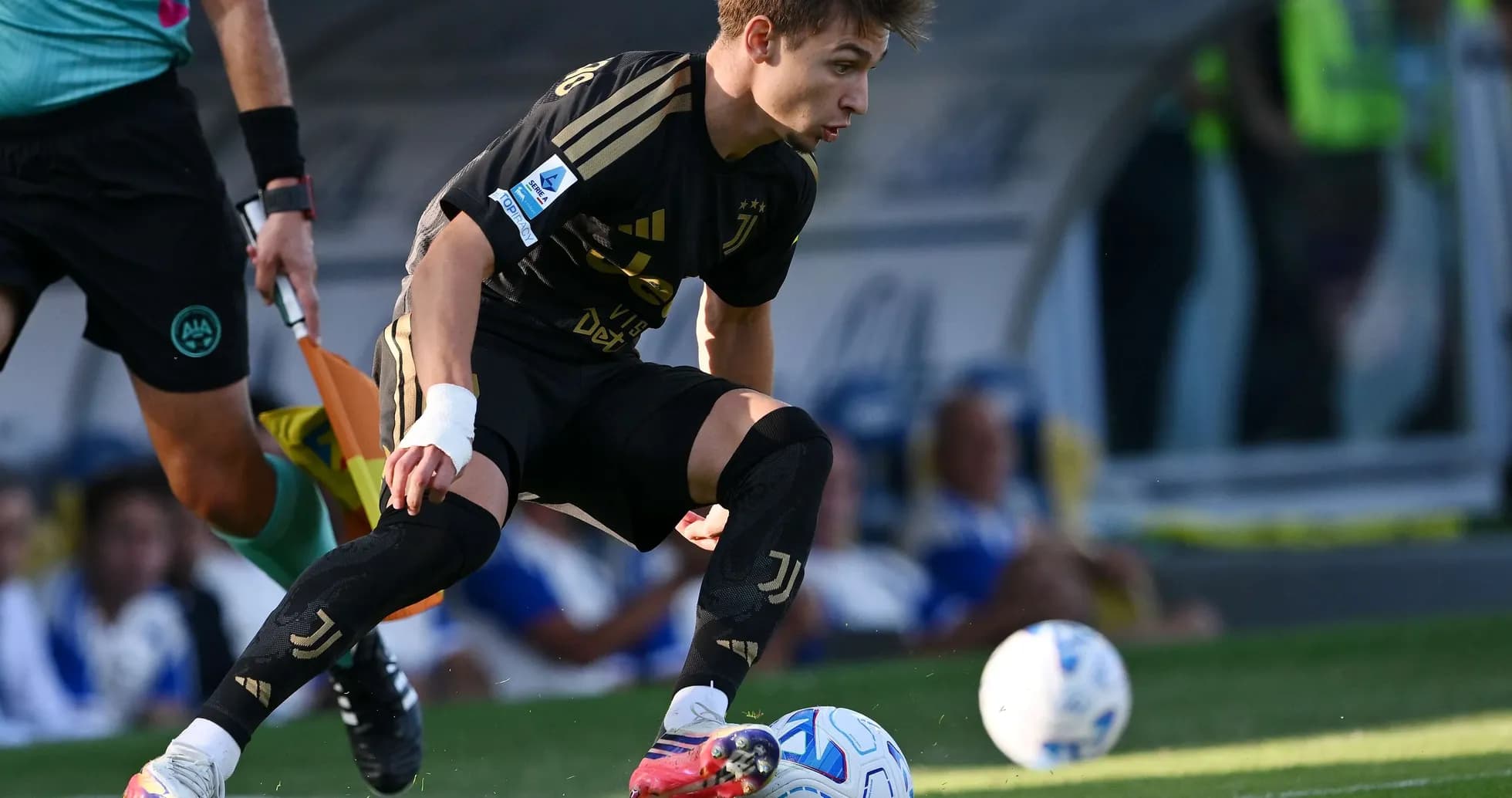
Frosinone vs Juventus: Tactical Analysis of Serie A Clash
Lazio Secures 2-1 Victory Over Pisa in Final Serie A Match
Parma vs Sassuolo: Tactical Analysis of Serie A Season Finale

AC Milan's Surprising Loss to Cagliari: A Season Finale Analysis

Napoli's Narrow Victory Over Udinese: A Tactical Analysis

Lecce Edges Genoa 1–0 in Tense Finale